Sixteenth of a Series: Different ‘Fiscal Cliff’ for New York?
Written by David Peter Alan, Contributing Editor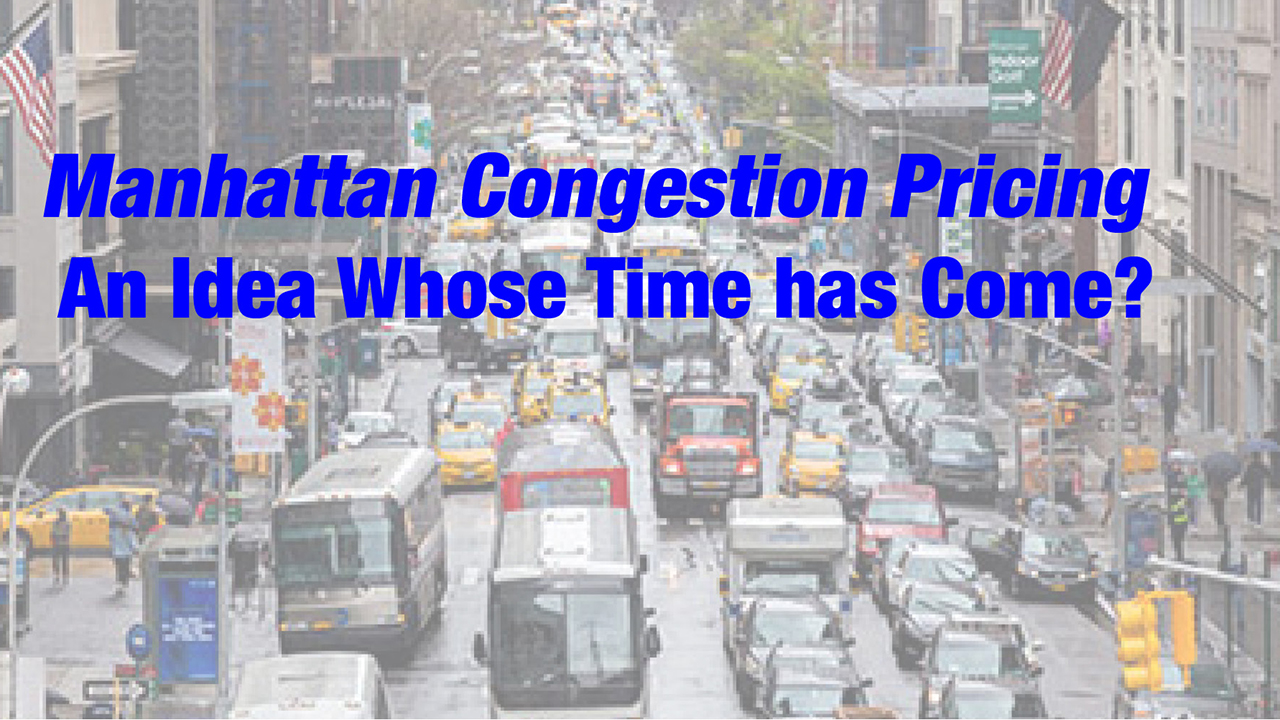
This past summer, we reported in depth about the “fiscal cliff” that now confronts essentially the entire transit industry in the United States, due to the one-shot nature of COVID-19 relief funds authorized by Congress in late 2020 and early 2021. That money is running out and, as we reported, ridership and revenue have not returned to pre-pandemic levels.
We also reported that, of the eight major transit providers we examined and some others we checked, New York’s Metropolitan Transportation Authority (MTA) seems to be doing the best on the operating side, with a balanced budget expected for the next few years, supported by new taxes and fees. Despite this apparent success, the agency might be facing a different “fiscal cliff,” this time on the capital side.
On Sept. 19, Railway Age Executive Editor Marybeth Luczak reported on the agency’s ambitious, and expensive, capital plan for the next five years in a story headlined NY MTA Eyes $68.4B Capital Plan for 2025-29. Her report described the plan in detail. It includes $47.386 billion for New York City Transit, including new rolling stock for the subway system, signal modernization, various station and infrastructure improvements, accessibility features at more stations, fare gates that are more secure, and new buses, including some electric models. The Long Island Rail Road and Metro-North are each slated to receive $6.005 billion for rolling stock and infrastructure improvements. There would also be $3 billion for bridges and tunnels and $5.25 billion for “system expansion,” particularly the proposed Interborough Express, which would be the city’s first light rail line. It would connect with several subway and elevated lines in Brooklyn and Queens. Previous plans called for the line to reach the Bronx, but the proposed line was later cut back to the current proposal.
Capital Program Official
At this writing, the MTA Board has approved the ambitious capital program, but paying for it is another matter. The MTA’s take on the plan, with a link to the plan document itself, can be found on the MTA website at https://future.mta.info/capitalplan/. Headlined The Future Rides with Us, it conveys a sense more of optimism than of urgency, with statements like “Transit makes New York possible. With investments like this Capital Plan, we make transit possible” and “There is no New York without mass transit,” concepts that are difficult to dispute. Finding those billions is another matter.
Reports in local media did not skip the concern about how the ambitious plan will be funded. Elijah Westbrook of CBS local news reported: “Transit leaders say the only way to make that a reality is if the state provides at least $33 billion toward the proposed capital plan.” He also quoted MTA Chair and CEO Janno Lieber as saying, “We’re adopting a plan recognizing that Albany ultimately has decision making over how it’s funded and how much.” Reality seems to be setting in, though, as Westbrook reported: “The transit agency says without the full funding, commuters won’t be able to ride new trains and buses, experience accessible stations, see the rollout of expansion projects like the Interborough Express, and the rebuilding of key infrastructure needed to keep the system going.” He also reported concerns expressed by advocates from organizations such as the MTA’s Permanent Citizens Advisory Committee (PCAC) and Riders’ Alliance.
For its own part, the PCAC, an advisory organization created by statute, some of whose members are rider-representatives on the MTA Board, expressed the need for the capital program this way: “Significant underfunding and disinvestment have left the MTA —and its more than eight-and-a-half million daily riders —in a precarious position. Slow rides, cancelled trains and delays shouldn’t be the norm—and they don’t have to be. It is critical that sustainable, reliable and recurring funding be identified to modernize signals, upgrade infrastructure, and improve safety, accessibility and resiliency to ensure that NYC Transit, the Long Island Rail Road, and Metro-North Railroad continue to serve the region’s riders now, and into the future.” The PCAC also has an interactive tool on its website for explaining its position at https://www.pcac-mtafundingtool.org.
WNYC transportation reporter Stephen Nessen reported the MTA Board’s approval of the plan and that the agency is “sending Gov. Hochul a $33B invoice” in Gothamist, the station’s affiliated news site. He quoted Lieber as saying: “There isn’t a lot of fat in this. This is the minimum program that we believe was necessary to achieve the goals of protecting the existing system, complying with our accessibility requirements, moving forward towards zero-emissions buses and having a signaling system that wasn’t built for Warren Harding [served as president of the United States from 1921-1923]. This is not a grandiose program” (parenthetical added).
Thomas Zambito reported from the Metro-North service area in the Rockland/Westchester Journal-News that “Now it’s Albany’s turn” and mentioned Gov. Hochul’s decision to “pause” the tolling program early in his report: “Adding to the MTA’s financial woes is Hochul’s June decision to pause a plan to toll drivers entering Manhattan’s business district at 60th Street and below, known as congestion pricing. The decision blew a $15 billion hole in the last capital plan for the years 2020-2024. The governor said her decision was influenced by the impact a $15 toll will have on New York’s working class. But it raised concerns among transportation advocates that projects not finished in the last plan will roll over into the next, shrinking the funding pool for future projects.”
Will the Billions Be Enough?
Zambito quoted Rachel Fauss, a senior policy adviser for Reinvent Albany, a policy think tank, as saying: “The Governor’s transit math simply doesn’t add up without congestion pricing.” He noted concerns about making Metro-North, especially its Hudson Line, resilient considering climate change, and said in his report: “The $68.4 billion request is on the low end of the funding needed to upgrade MTA infrastructure. Making all the fixes identified by MTA analysts would cost around $100 billion in the coming years, outside analysts project.” He concluded by quoting Jamie Torres-Springer, President of MTA Construction & Development, as saying: “We don’t want to see ourselves in a situation that New Jersey Transit and Amtrak riders found themselves in across the river this summer. A lot of that was due to inadequate state of repair for power.”
Andrew S. Rein, president of the Citizens Budget Commission, a non-partisan “watchdog” organization that focuses on government financial matters, said in a statement to the MTA Board: “Despite success in speeding capital delivery and projects being ready to go and roll—the plan is larger than can be accomplished in the next five years. Also, the $8.6 billion in proposed and previously planned expansion projects, while beneficial, diverts resources from essential rebuilding and improvement efforts. Therefore, the MTA should trim the plan to a more achievable level to reduce the funding gap and transparently present what will happen in the next five years. If the plan is not trimmed, the MTA should at least transparently schedule essential rebuild and improve projects before expansion projects. The biggest unknowns are the sources and amount of money to fill the gaping financing hole. First, the State should un-pause congestion pricing; any alternative makes financing these new projects harder.”
The situation could be more than just a policy dispute between fiscal conservatives like Rein, who believe that the MTA is spending too much, and the agency itself and transit advocates, who believe that expenditures for both the capital and operating sides of transit are essential to allow New Yorkers and others who come to the city for work or for other activities to continue having the mobility that allows them to participate in the life and economy of both the city and its surrounding region. One major official has expressed deep concern that even the $68.4 billion that the MTA believes will be needed for capital projects will not be enough.
As early as April 2021, State Comptroller Thomas P. DiNapoli expressed concern about the MTA’s Capital Program: “In a scenario with low ridership and no new capital assistance, the MTA may also be forced to reprioritize its capital program, thus pushing much-needed repairs and modernizations further into the future. A reduction in the program would risk undoing progress in making the MTA safe, accessible and reliable. All MTA stakeholders must come together to address these challenges and ensure that the system remains in a state of good repair and continues to provide services needed for the region’s economy to recover and prosper in the years ahead.”
On May 9, 2024, DiNapoli warned: “Delays, uncertainties, and lawsuits around congestion pricing’s implementation have slowed down the MTA’s capital work. Before the pandemic, the MTA averaged $7.1 billion in commitments to capital projects (2016-2019). In 2022, it put a record $11.4 billion toward capital work. However, those commitments slipped to $8 billion last year and the MTA’s target for 2024, once estimated at $12 billion, is now less than $3 billion. Congestion pricing was supposed to provide about $15 billion of the MTA’s current $54.8 billion 2020-2024 capital program. Implementation delays have pushed back much-needed projects, with $9 billion in 2024 work currently at risk.” The Release that announced DiNapoli’s report indicated that mounting debt is a huge problem for the agency: “The MTA’s total outstanding debt is expected to rise from $42.4 billion in 2023 to $59.9 billion in 2028. A small but growing portion of this is funded outside of the operating budget (known as capital lockbox debt and funded primarily by future congestion pricing revenues), which is projected to make up 5% of debt in 2023 and 32% in 2028. Non-lockbox debt, which impacts the day-to-day operating budget, comprises $40.4 billion of all debt in 2023 but is estimated to decline to $38 billion in 2030 as the MTA increasingly relies on lockbox debt. This will not only help fund the capital program but also stabilize its operating budget by reducing the impact of annual debt payments on the operating budget. Debt service, which is the amount the MTA spends to pay down debt each year (including for lockbox debt), is projected to reach $5 billion by 2031, an 83% increase over 2023’s $2.3 billion. Historically, about 16% of MTA’s annual revenue is spent on debt. Increased use of capital lockbox debt will keep that in check. If capital lockbox debt service and revenue were not kept separate from the operating budget, the MTA would be spending nearly 20% of its revenue on debt by 2031.”
DiNapoli sounded the alarm again in a report released Sept. 12: “DiNapoli’s report identifies substantial variation in the MTA’s potential capital needs and uses, ranging from $57.8 billion to $92.2 billion, with a midpoint of about $75 billion. But whether the MTA’s capital program comes in at the low end or the high end of that estimate, it will need significant amounts of new funding, including replacement of the $15 billion that congestion pricing was expected to provide.” DiNapoli’s “midpoint” exceeds the plan’s number by $6.6 billion.
Local or Nationwide Problem?
As we have reported several times recently, the Congestion Pricing program, along with the revenue it would raise for the MTA, face an uncertain future. Gov. Hochul canceled it, at least temporarily, and the “pause” she ordered could become permanent. We don’t know, but we do know that implementation of the toll was “paused” for political reasons. Politics change from time to time, but they never go away, and transit will always be subjected to political decision-making, because it’s in the public sector.
Whether a transit agency’s capital program is healthy or not, its operating side always seems to be in trouble, as providers seek funding from state and local governments, taxing authority to raise money, fare increases, and any other means they can use to scrape up the money that they need to keep their systems going, with a best-case scenario of maintaining current levels of service or even adding some enhancements, or a worst-case scenario of imposing fare increases and service cuts so severe that they would impair mobility in their service regions, with consequent damage to the regional economies.
There is no doubt that the potential demise of the Congestion Pricing plan will strike a crippling blow to the MTA’s capital program. The $1 billion per year in direct toll revenue that the program was expected to raise was also expected to generate about $15 billion worth of funds that could be used for capital projects. Still, that amount would have been only about 23% of the capital program that the MTA Board just approved. The rest must come from somewhere else. It’s not only “fiscal hawks” who are expressing concern about how much it will cost to keep the subways, buses and railroads in a state of good repair and make some structural improvements, the State Comptroller is concerned, too.
It all boils down to the same scenario. Elected officials and senior managers at the agencies make the decisions not only about how much money is needed, but also about how much money goes to both the capital and operating sides of transit. That also goes for Amtrak, but that situation is outside the scope of these reports. With a few possible exceptions, those decision-makers do not depend on the transit they govern or fund, so the riders who depend on that transit have no choice but to wait periodically in suspense to find out how much mobility they will be allowed to have.
New York’s system is different from almost all other transit systems in one important respect: a much-higher percentage of New York City residents depend on transit than is the case in other metropolitan areas. We have reported that Andrew Albert, head of the Transit Riders’ Council and a rider-representative on the MTA Board, says that the MTA had received only 16% of the federal COVID-19 operating relief for transit, while it carries 40% of the nation’s transit riders. Still, elected officials know that the New Yorkers who depend on transit constitute a strong political force, stronger than their counterparts in other cities.
There might be the rub. The MTA will get the revenue from a Congestion Pricing toll program that Hochul or a future governor could propose, but the antipathy that many voters in the city’s suburbs have for such a toll might ensure that most of us will not live to see it implemented. In that case, the city’s transit system and the railroads will need to find another source for the anticipated toll money, if indeed there is such a source. Beyond that, the huge cost of keeping the system going (operating) and keeping it in a state of good repair and making improvements (capital) could scare elected officials, despite the needs of the riders and the benefits to the local economy in and around New York City.
This is a continuing story, and we will keep you informed. We expect to report on Congestion Pricing again when Judge Gordon issues his ruling in the case brought in federal court in New Jersey, but there could be other new developments in the meantime. We remain prepared to report them as they happen.