Fourteenth of a Series: Toll Supporters Keep Fighting
Written by David Peter Alan, Contributing Editor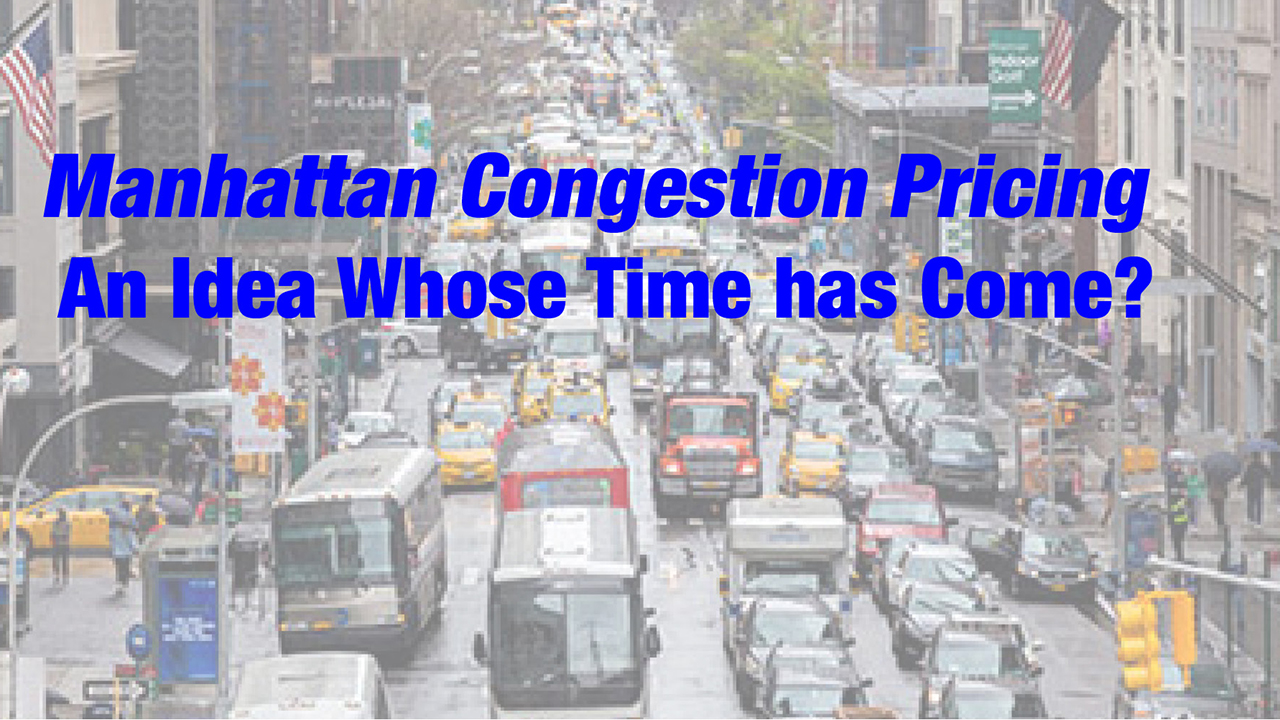
Last June, when New York Gov. Kathy Hochul ordered a “pause” on the proposed congestion toll for vehicles entering Manhattan south of 60th Street, it appeared that the court cases filed by opponents of the tolling plan in both New Jersey and New York were moot. The plan was supposed to go into effect on June 30, and the equipment that would be used to collect the tolls had already been installed. The New Jersey case, in which the State itself is the primary plaintiff, is still active, even though the ruling that was widely expected to come in June has not been issued yet.
As we reported in the previous article in this series, the New York case (three cases that were filed separately and later consolidated) was decided on June 20, when Judge Lewis J. Liman held that federal officials had not acted improperly when they approved the tolling plan. Liman had reserved decision on one count of the Complaint in each case, so it will probably be decided later. He also held that the New York case is not moot, because it concerns existing rights, and covers issues that need to be adjudicated (at 22, note 13).
The toll’s proponents have not given up, and New York’s Metropolitan Transportation Authority (MTA) continues to complain that its capital program will be severely impaired without the revenue that the toll was expected to raise. All of it was slated to go to the agency’s providers: 80% for New York City Transit and 10% each for Metro-North and the Long Island Rail Road. The agency had intended to use those funds for projects such as extending the Second Avenue Subway three more stops to 125th Street and improve more stations to make them accessible for persons with disabilities. The toll’s supporters also filed court cases for an order requiring that the toll be implemented. Meanwhile, New Jersey officials and their supporters who oppose the toll have gone back to court, as well.
Proponents Continue to Advocate
On July 25, City Comptroller Brad Lander announced two lawsuits that called for the toll to go into effect, despite the governor’s “pause” on that action on both administrative and environmental grounds. The statement on his website began: “Today, New York City Comptroller Brad Lander and a broad coalition of lawyers, plaintiffs, and advocates announced two new lawsuits challenging Governor Kathy Hochul’s indefinite pause of New York City’s congestion pricing plan just three weeks before its implementation date and seeking to compel its implementation as required by law.” The statement also gave some details about the litigation.
According to Lander: “The first lawsuit, City Club of New York et al. v. Hochul, … challenges Governor Hochul’s authority to single-handedly block implementation of the 2019 MTA Reform and Traffic Mobility Act, passed by both houses of the State Legislature and signed into law by the then-governor, which mandated the design, development, building, and operation of the Central Business District Tolling Program, commonly known as congestion pricing.”
The City Club Case
City Club was filed in State court, with a 34-page Petition, on July 25 in New York County (Manhattan, Index No. 156696/2024). The case was assigned to Judge Arthur F. Engoron, who achieved a measure of fame earlier this year, when he presided over Donald Trump’s civil trial for fraud. Along with the City Club of New York, Christine Berthet and Kathleen Treat were also Petitioners (Plaintiffs). The Respondents (Defendants) were Hochul in her capacity as Governor, the New York State Department of Transportation and its Commissioner, Marie Therese Dominguez as NYSOT Commissioner, the Triborough Bridge and Tunnel Authority (TBTA), and the Metropolitan Transportation Authority (MTA).
The City Club is a non-profit organization, founded in 1892, which advocates for reforms and projects that it believes benefit the public interest. The individual Petitioners live near the Lincoln Tunnel on the west side of Midtown Manhattan, and both depend on the city’s transit. Berthet, a member of her local Community Board, expressed concern about traffic congestion, noise, and air pollution (Petition, ¶18 at 6). Treat, whose husband is a Vietnam veteran who uses a wheelchair, complained about how the congestion toll is needed to make more of the transit system accessible to persons with disabilities. She also expressed concern about air and noise pollution, and about pedestrian safety (¶19 at 7).
The Petition began by noting the Traffic Mobility Act (TMA), which authorized the Central Business District Tolling Program (CBDTP), and criticizing Hochul for refusing to implement the toll: “But, in a shocking about-face, on June 5, 2024—less than a month before the CBDTP was scheduled to launch—Governor Hochul announced that she was purportedly ‘directing the [Metropolitan Transportation Authority] to indefinitely pause the program’” (¶5 at 2, footnote omitted). The Petitioners alleged that Hochul acted without authority when she stopped implementation of the toll: “As powerful as a governor is, this Governor has no legal authority—none—to ‘direct’ the Metropolitan Transportation Authority (the ‘MTA’) to ‘pause’ the CBDTP, much less to directly use her powers as the State’s chief executive to do so. By the express design of the New York State Legislature, the only state actor empowered to control—and mandated to implement—the CBDTP is the Triborough Bridge and Tunnel Authority (the ‘TBTA’), a creature of the MTA. The key provision is clear and unambiguous: “Notwithstanding any law to the contrary … the [TBTA] shall … plan, design, install, construct, and maintain a central business district toll collection system and implement and operate the same to collect the central business district toll.’ The mandate to implement congestion pricing rests exclusively with the TBTA; the Governor has no say in the matter. That is the law” (¶6 at 3, footnote omitted). Their conclusion was: “Accordingly, Governor Hochul’s purported ‘pause’ of the CBDTP is, quite literally, lawless: it lacks any basis in the law as democratically enacted” (Id.).
The Petitioners also alleged that the State Department of Transportation had no authority to stop the tolling program (at ¶10), and that the MTA and its component, the TBTA, are ready to implement the tolling program: “In a resolution passed on June 26, 2024, in the wake of the Governor’s announcement of a ‘pause,’ the MTA’s Board of Directors confirmed that the TBTA remains ready, willing, and able to move forward with the CBDTP as soon as possible. Were the FHWA [Federal Highway Administration] agreement signed by all parties—or were State DOT’s signature judicially declared unnecessary—the CBDTP would proceed, and congestion pricing would immediately become a reality” (¶13 at 4).
City Club is a proceeding under Article 78 of the Civil Practice Law and Rules (CPLR), New York’s version of a prerogative writ action (at ¶26); a petition for an injunction against an public official that petitioners allege is acting improperly. So is the Riders Alliance case, which we also report here.
In their Statement of Facts, the Petitioners recounted the history of efforts to implement congestion tolls during the past century (at ¶¶29-34), the Traffic Mobility Act of 2019 (at ¶¶35-49), “Five Years of Approval Processes and Steps Toward Implementation” since then (at ¶¶50-56), how “Governor Kathy Hochul Consistently Champions the CBDTP [Central Business District Tolling Plan] Following Approval” (at ¶¶57-63), “The State DOT Previously Agreed with Petitioners in Response to Legal Challenges to the CBDTP” (at ¶¶64-71), and “Gov. Hochul’s 180-Degree Reversal” (at ¶¶72-84). The Petitioners then argued that “The MTA, Community Stakeholders, and the Public Reckon with and Begin to Feel the Severe Effects of the Governor’s ‘Pause’” (at ¶¶85-96). The pleading gave examples of the hardships that the Petitioners alleged Hochul’s decision to prevent the toll from being collected had on a number of organizations, including the MTA itself: “the MTA was forced to direct the New York City Transit Authority, the Manhattan and Bronx Surface Transit Operating Authority, and by MTA Bus Company to cut their operating budgets, institute a hiring freeze, and cut between 5—10% of bus routes, leading to an increase of approximately 300–400% in bus routes without the requisite bus drivers, in order to save money on bus driver pay” (at ¶92, footnote and citation omitted). The Petition continued: “Further, the MTA has been forced to cut $16.5 billion worth of planned upgrades to the City’s transit network. Cuts to the subway system alone include but not limited to: suspending the extension of the Second Avenue subway into Harlem; suspending work on the B/D/F/M subway lines to repair the decades-old signals that regularly cause delays, as well as similar repairs and signal upgrades on the A/C subway line; suspending the planned purchasing of hundreds of new subway cars to replace older models on the 1/3 and 6 subway lines; suspending improvements at nearly 100 subway stations, including new elevator and ramp installations that would make subway stations accessible for people with disabilities, as well as platform replacements and upgrades to public announcement systems” (at ¶93). The plaintiffs went on to allege that the lack of funds from the anticipated congestion tolls forced the MTA to postpone other improvements (at ¶94), that it placed federal funding for projects like the extension of the Second Avenue Subway in jeopardy (at ¶95), and that it would add to gridlock and traffic delays on the city’s roads (at ¶96).
Then the document stated the Petitioners’ claims for relief. The First Cause of Action (at ¶¶97-109) called for a writ of mandamus against NYSDOT and its Commissioner, Marie Therese Dominguez. A mandamus is an order from a judge that directs one or more government officials to do something that a statute or other law requires them to do. In effect, the Petitioners were asking the judge to require the State DOT to implement the Congestion Pricing toll because the Traffic Mobility Act requires such an act. In short, “Respondent-Defendant State DOT is a co-sponsor of the Tolling Agreement with the FHWA but does not have any discretion under state law to postpone, prevent, or otherwise disrupt the implementation and operation of the CBDTP. Rather, Respondent-Defendant State DOT’s execution of the Tolling Agreement is a ministerial duty enjoined by law” (at ¶¶103-04, citations omitted).
The Second Cause of Action (at ¶¶110-120) was another request for mandamus against the State DOT and Dominguez as co-sponsors and supports of the program: “Under state law, when a state agency—such as State DOT—determines to alter its prior stated course, it must provide a valid explanation for its decision to do so. Absent such an explanation, failure to conform to agency precedent requires reversal on the law as arbitrary and capricious” (at ¶115), and that failing to execute a statutory obligation or explain satisfactory the failure to do so is arbitrary and capricious (at ¶120).
The Third Cause of Action (at ¶¶121-130) called for a declaratory judgment against Hochul, the State DOT, and Dominguez, asking the judge to invalidate the defendants’ refusal to implement the tolling program: “Petitioners are therefore entitled to a declaration pursuant to CPLR [Civil Practice Law and Rules] §3001 that Respondents-Defendants Governor Hochul, State DOT, and Commissioner Dominguez’s unilateral halting of the CBDTP and usurpation of TBTA’s sole statutory role in the implementation and operation of the CBDTP is illegal, null, and void” (at ¶130).
On Aug. 23, a number of groups who advocate for persons with disabilities filed an amicus (“friend of the court”) brief, arguing that Hochul’s act of keeping the tolls from going into effect harms persons with disabilities, because it would delay funding for projects that would improve accessibility at subway stations, as well as cleaner air and traffic congestion relief. Briefs of that sort are filed by non-parties to raise issues that the parties themselves did not address, and prospective amici must get the judge’s permission to file such briefs.
A group of present and former New York legislators also filed an amicus brief on Aug. 21, which argued that the Triborough Bridge and Tunnel Authority (TBTA), a component of the MTA, had the sole authority to implement the tolling plan under the Traffic Mobility Act, and that the governor lacked the authority to interfere with its implementation. The legislators’ brief stated (at 1): “As current or former legislators who participated in enacting the TMA, Amici offer this brief to demonstrate the legislative intent behind this plain text. The Amici and other legislators deliberately excluded any implied gubernatorial power to alter the Board’s decisions, because the legislature endorsed the longstanding principle that the administration of New York City’s transit system should be controlled by a public authority that is insulated from partisan or personal loyalties to elected officials.” They also argued (at 15): “Aside from defying statutory text and legislative history, any inference of an unwritten gubernatorial power to “indefinitely pause” the MTA’s decisions also undermines political accountability. Such an inference makes it impossible for either voters or legislators to determine who is responsible for the MTA’s decisions.” They asked the judge to declare that the governor lacked authority to “pause” the program.
On Sept. 27, Judge Engoron denied a motion by Gov. Hochul and state transportation officials to dismiss the action. This means the case will continue. Comptroller Brad Lander said: “This is a victory for our broad coalition of transit riders, environmental advocates and disability justice organizations. Judge Engoron rightfully denied Governor Hochul’s motion to dismiss two critical lawsuits to restore congestion pricing. This development is a blow to the governor’s misguided belief that she has the ultimate authority to override an established law and remake it to fit her whims.”
Riders Alliance Case
Also, according to Lander, the second lawsuit, Riders Alliance v. Hochul … challenges the governor’s decision on the basis of New York State’s Climate Leadership and Community Protection Act, which requires New York to reduce economy-wide greenhouse gas emissions 40% by 2030, and requires state officials to act in a manner consistent with mandated targets. This lawsuit also alleges that the Governor’s decision violates the state constitutional right to clean air and a healthy environment that was added to the state constitution in 2021 by an overwhelming 70% of voters.”
The allegations in Riders Alliance are primarily environmental. The Petitioners are Riders Alliance, a non-profit organization that advocates for improved subway service, and two environmental organizations, the Sierra Club and the New York City Environmental Justice Alliance (NYC-EJA). The defendants are the same as in the City Club case. It was also filed on July 25 with Index No. 156711/2024 in New York County (Manhattan), and the Petition runs 28 pages. The case was also assigned to Judge Engoron.
The Petition began: “New York City is choking on cars. The City’s streets are clogged with some of the worst traffic in the world. The fumes emitted by the nearly one million vehicles that enter Manhattan’s Central Business District (“CBD”) each day are making the City’s residents sick, harming the City’s economy and quality of life, and exacerbating the climate crisis. New York City’s degraded air quality has serious consequences. Every year, more than one thousand City residents die prematurely from air pollution produced by motor vehicle traffic alone. Vehicle emissions are the largest source of many of the most dangerous pollutants in the City’s air” (at ¶¶1-2). At the same time, the Petitioners alleged: “New York City’s public transportation system is suffering the consequences of chronic underinvestment. Many parts of the City’s transit infrastructure are over one hundred years old, and repairs and capital improvements have been repeatedly deferred. Much of the subway system is unsafe and inaccessible to riders with disabilities, and the City’s buses now crawl at the slowest speed of all major cities in the United States.” They then said that the solution is the Traffic Mobility Act and the tolls that it authorized (at ¶4). It also said: “Governor Hochul’s disastrous about-face on the Congestion Pricing Program jeopardizes the safety and future of New York City’s residents. It also violates New York State law and the State Constitution” (at ¶8).
The Petitioners also alleged other violations on Hochul’s part, including the Climate Leadership and Community Protection Act (CLCPA), passed during the same legislative session as the Traffic Mobility Act. The Petition alleged: “The State’s official plan for achieving the CLCPA’s goals explicitly identifies the Congestion Pricing Program as a key component of the strategy to meet the existential threat of climate change. The Governor’s decision to block the Congestion Pricing Program violates the obligations the Legislature imposed on all state decisionmakers through the CLCPA” (at ¶9). The other alleged violation concerned Article I, §9 of the New York State Constitution, which guarantees all New Yorkers “clean air and water, and a healthful environment.” The Petition then alleged: “The Governor’s unilateral action deprives the people of New York of the air quality protection that the Legislature provided in the Traffic Mobility Act, resulting in unnecessary and unlawful illnesses and deaths that would have been avoided under the Congestion Pricing Program” (at ¶10).
Although they were nor named as Petitioners, the Petition introduced ten members of the petitioning organizations who were allegedly harmed by the poor-quality environments in which they lived (at ¶¶15-24). It then introduced the Respondents and the reasons why they are being sued (at ¶¶25-29).
In the “Background” section, the Petitioners introduced their arguments: “New York City’s Air Quality, Traffic Congestion, and Public Transit System Are in Desperate Need of Reform” (at ¶¶35-43), “The Legislature Enacts Congestion Pricing and Climate Mandates” (at ¶¶44-56), “The People of New York Enshrine a Right to Clean Air and a Healthful Environment in the State Constitution) (at ¶¶57-62), “The City, State, and Federal Government Expend Significant Resources to Ensure that Congestion Pricing Would Begin on June 30, 2024” (at ¶¶63-71), “The Governor Unilaterally Blocks the Congestion Pricing Program” (at ¶¶72-77), and “The Governor’s Decision Inflicts Immediate Harms” (at ¶¶78-87). That final argument listed a number of the alleged harms due to Hochul’s reversal.
The Petitioners then specified two causes of action. The first was “Failure to Comply with CLCPA Section 7(2)” (at ¶¶88-94). The Petition alleged: “The CLCPA requires all state executive branch decisionmakers, including state officers, to consider whether their decisions are inconsistent with or would interfere with New York’s attainment of greenhouse gas reduction requirements established in Article 75 of the Environmental Conservation Law. It also requires a decisionmaker who concludes that a decision inconsistent with these limits is nonetheless justified to provide “a detailed statement of justification as to why such limits/criteria may not be met, and identify alternatives or greenhouse gas mitigation measures to be required where such project is located.” (CLCPA § 7(2)) (at ¶¶89-90). The Petition then alleged that the Governor had violated the CLCPA without justification for doing so. The Second Cause of Action (at ¶¶95-99) alleged a “Violation of the New York State Constitution, Article I § 19”; the provision that guarantees that “[e]ach person shall have a right to clean air and water, and a healthful environment” (at ¶96). The Petition went on: “Governor Hochul’s decision to block the Congestion Pricing Program deprives New Yorkers of their right to the cleaner air that the State committed to when it enacted the Transit Mobility Act in 2019. It is a per se violation of the Environmental Rights Amendment” (at ¶98).
Finally, the Petitioners asked a judge “to vacate, annul, or otherwise undo the Governor’s decision to block the Congestion Pricing Program,” to “declare that Governor Hochul has violated the CLCPA and/or the New York State Constitution by blocking the Congestion Pricing Program, and that any actions that have been or will be taken, or failures to act, by the State Department of Transportation or its Commissioner in furtherance of Governor Hochul’s decision to block the Congestion Pricing Program, violate the CLCPA and/or the Constitution,” and “enjoin Governor Hochul, the State Department of Transportation, and the Commissioner of Transportation from continuing to block the Congestion Pricing Program, and enjoin Governor Hochul, the State Department of Transportation, and the Commissioner of Transportation to take whatever actions are necessary to vacate, annul, or otherwise undo the Governor’s unlawful decision to block the Congestion Pricing Program.”
On Sept. 23, a diverse group of organizations and individuals who support the congestion toll filed an amicus brief. They include environmental, civic, and transit advocacy organizations. Individual amici include Lander, Congressman Jerrold Nadler, Sam Schwartz (“Gridlock Sam”), and rider-representatives on the MTA Board (Disclosure: This writer knows two of such representatives, Andrew Albert and Randolph Glucksman, and has quoted them while reporting other stories). They began their brief by saying: “New York—America’s largest and most densely populated city—has long suffered from some of the nation’s worst traffic congestion and persistent air pollution. For decades, citizens, activists, and administrators have tried to reduce congestion and air pollution through traffic management programs and were stopped at every turn until the legislature mandated congestion pricing in 2019. By pausing that mandate, Governor Hochul deprives millions of residents of public health and safety and quality of life improvements to which they were entitled and risks high paying jobs across the region. Representing a wide range of interests, amici ask this court to grant Petitioners’ petition to restore their rightful health, safety, and quality of life benefits from congestion pricing.” They argued, in summary, that “Implementation of the Program Blocked by Governor Hochul Would Have Improved the Lives of Millions of New Yorkers (at 11-13), that “Governor Hochul’s Decision Will Result in Increased Traffic Congestion Compared to Implementation of the Program” (at 13-14), that “Governor Hochul’s Decision Will Likely Result in Premature Deaths and Hospitalizations That Would Not Have Occurred Had the Program Been Implemented” (at 14-16), that “Governor Hochul’s Decision Deprived Millions of New Yorkers of the Benefit of Significant Transit Investments That Would Have Improved the Quality of Life State and Region-Wide for Years to Come” (at 17-21), that “Governor Hochul’s Decision to Block the Program Ignored Not Only the Law but Also the Years of Analysis and Tens of Thousands of Public Comments on Which the CBD Tolling Program Was Based” (at 21-21), that “The Benefits of the Program Have Been Proven by Reduction in Congestion and Improved Public Health Through Implementation of Similar Programs in Cities Around the World” (at 23-24). They concluded by expressing their support for the Petition which was originally filed in the case.
The cases reported here are in their early stages, and there is still much surrounding them that will come. We have only enough space to summarize the issues for you and furnish links to the cases, if you wish to review the documents for yourself. We also note that Judge Engoron has both cases, so he could consolidate them, much as Judge Limon consolidated that New York cases in federal court. CPLR §602(a) gives a judge that authority: “Generally. When actions involving a common question of law or fact are pending before a court, the court, upon motion, may order a joint trial of any or all the matters in issue, may order the actions consolidated, and may make such other orders concerning proceedings therein as may tend to avoid unnecessary costs or delay.” One question is whether at least one party wants the cases consolidated, and the other is whether or not Engoron will actually consolidate them. As with the other issues in these cases, that remains to be seen.
Hochul Reactivates Opposition
The current incarnation of the controversy began on Aug. 19, when Politico reported that Hochul might propose a different tolling plan. In a story headlined Congestion pricing replacement plan could come by year’s end, Hochul says, Nick Reisman reported: “A replacement plan for the paused congestion pricing program will be announced by the end of the year, likely after Election Day.” The governor commented on the issue in an interview with Politico that day. Reisman reported that a new plan would be proposed after Election Day, and quoted Hochul as saying: “We will be announcing this by the end of the year because the Legislature has to act on it. It’s more likely it will be announced by the end of the year, early next year as we get the Legislature on board” at the Democrats’ convention in Chicago. It was widely speculated and reported that Hochul had “paused” the toll plan, which is widely unpopular in suburban areas on Long Island and north of the City, to enhance the party’s chances of winning elections for House members from districts in those places, which are expected to be essential to Democrats’ current efforts to retake the House majority. Whether or not Hochul’s announcement that she might revive the issue with a new plan after the election will contravene her goal of helping get Democrats from New York State elected to the House remains to be seen.
Whatever happens to the House in the upcoming election, Hochul’s announcement has spurred New Jersey officials like Gov. Phil Murphy and Congressman Josh Gottheimer to reactivate the federal case in the District of New Jersey. We will look at the issues raised in recent filings in the next article in this series.