Thirteenth of a Series: New York Judge Says ‘OK’ After Hochul’s ‘Pause’
Written by David Peter Alan, Contributing Editor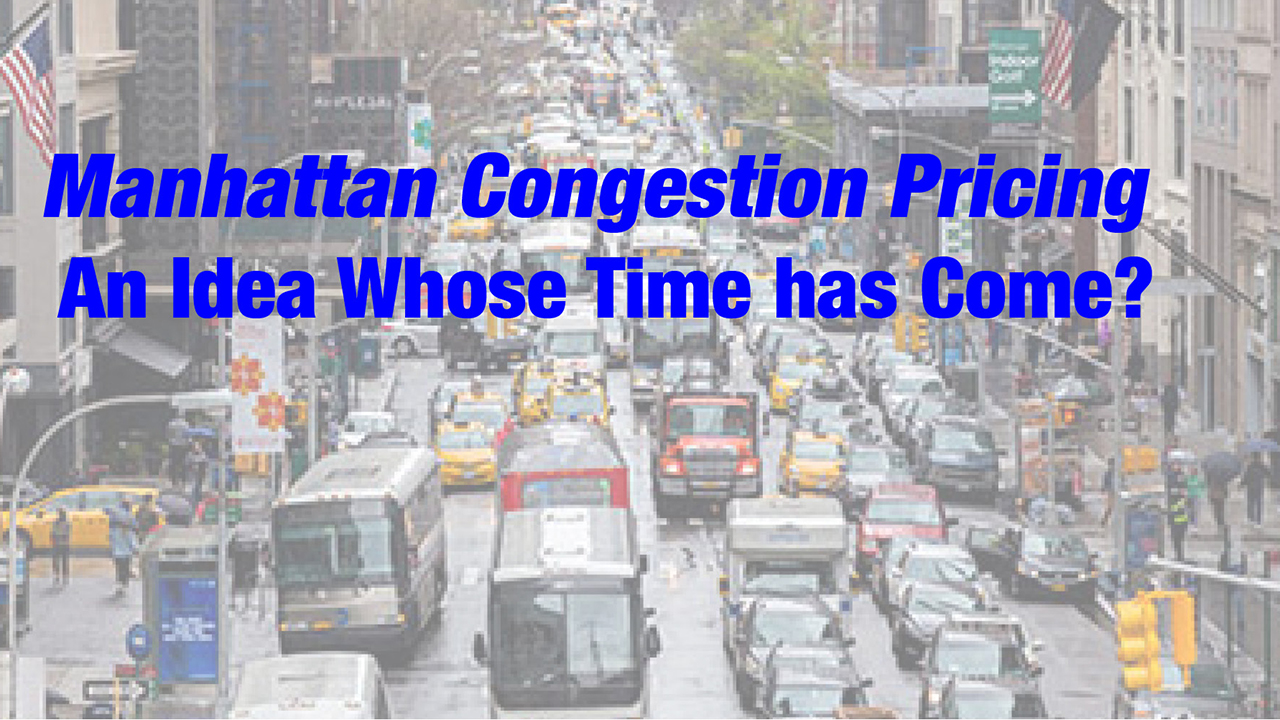
Until the middle of June, we had covered the controversy over the proposed congestion toll for vehicles entering Manhattan south of 60th Street in detail. Officials in both New York and New Jersey filed suit in federal courts on both sides of the Hudson River to stop the toll, even as the equipment needed to collect the money was installed. The plan’s supporters defended it just as vigorously.
Then Gov. Kathy Hochul “paused” implementation of the plan, which was scheduled for June 30. Lewis J. Liman, the judge presiding over the “New York Case” in the U.S. District Court for the Southern District of New York, in New York City, ruled that federal transportation officials acted properly when they considered the tolling plan and allowed it to be implemented. The judge sitting in the federal court for the District of New Jersey did not render an opinion.
At that time, the issue appeared moot when Hochul ordered that the toll not be collected. So we turned to the nationwide issue of the fiscal cliff facing transit agencies as the COVID-19 relief money authorized by Congress in late 2020 and early 2021 runs out, and we recently concluded that series, at least for now. Still, there were developments concerning the congestion tolling program as the summer progressed. Judge Liman issued his opinion in the New York cases on June 20. Supporters of the toll filed cases in New York to have it implemented, despite Hochul’s “pause” order. For her own part, Hochul told Politico that she might reinstate the tolling program with different rules after the election. At least partially in response to that possibility, the case pending in New Jersey seems to be showing new signs of life. Most recently, new reports have claimed that New York’s Metropolitan Transportation Authority (MTA), which would receive the toll revenue for the capital programs at New York City Transit (80%) and the Long Island Rail Road and Metro-North (10% each), would still face severe financial problems because anticipated capital projects would cost much more than the toll would raise.
Lengthy, Thorough Opinion
We begin with a look at Judge Liman’s decision, a “memorandum and opinion” from June 20 (downloadable below). The document is 113 pages long and dealt with many issues thoroughly. These issues were raised in three cases that were filed separately and later consolidated. The first-named plaintiffs in those cases were Michael Mulgrew, head of the United Federation of Teachers (Mulgrew), New Yorkers Against Congestion Pricing Tax (New Yorkers), and Elizabeth Chan (Chan). There were other plaintiffs in the three cases, too, including several elected officials. Chan as originally filed included 200 “DOEs” as plaintiffs and another ten as defendants, meaning they were not named. The tradition behind the practice is that an unnamed party is called “John Doe” in pleadings. The defendants included the U.S. Department of Transportation (USDOT), Federal Highway Administration (FHWA), Metropolitan Transportation Authority (MTA) Triboro Bridge and Tunnel Authority (TBTA), New York State Department of Transportation (NYSDOT), New York City Department of Transportation (NYCDOT), Traffic Mobility Review Board (TMRB, although the claims against that body were later dismissed), and several officials from those agencies who were named as defendants in their official capacities.
After introducing the three cases that had been consolidated, the parties, and the relief they wanted (at 1-4), Liman noted: “Collectively, these three lawsuits challenge the Central Business District Tolling Program (better known as ‘Congestion Pricing’). The merits of congestion pricing have been hotly contested since the Columbia University economist and Nobel Laureate William S. Vickrey first developed the concept in 1952” (at 4, citation omitted). He continued to present the history of several efforts to implement various congestion pricing plans, including the Traffic Mobility Act, which was passed on April 1, 2019 and served as the statutory basis for the plan at issue and now “on pause.”
Liman introduced the primary issue of the present case this way: “The question before the Court is whether federal regulatory power, not political choices, stands in the way of a novel public policy approach to a pressing public issue. The parties dispute whether – notwithstanding the choices the New York Legislature, MTA, TBTA, NYSDOT, and NYCDOT might agree upon – the National Environmental Policy Act (“NEPA”), 42 U.S.C. §§ 4321 et seq., prevents New York from adopting Congestion Pricing” (at 5). He then summarized his answer: “According to Plaintiffs, the NEPA review process here—which spanned four years and yielded an administrative record of more than 45,000 pages—did not amount to a ‘hard look’ at the environmental implications of Congestion Pricing. In light of Defendants’ meticulous analysis, the Court cannot agree” (Id.).
In the “Background” section of his opinion, Liman described the various stages of the effort to implement the congestion pricing plan in detail: Prior Proposals (at 6-8), the Traffic Mobility Act (at 9-10), the Application to the FWHA for the congestion pricing plan (at 10-11), the Draft EA (Environmental Assessment, at 11-15), the Final EA and FONSI (Finding of No Significant Impact, at 16-17). He noted that the Final EA was 958 pages long, but the FONSI document ran only 31 pages.
He then recounted the Procedural History of the three cases, which had been consolidated (at 17-23). As part of that discussion, Liman noted that “The parties … unanimously agreed that the Governor’s announcement did not render these cases moot” (at 22). He said: “The Governor’s announcement of a voluntary pause on Congestion Pricing did not alter the legal status of the EA and FONSI, let alone ‘completely and irrevocably eradicate the effects of the alleged violation[s].’ Moreover, given the Governor’s characterization of her action as a ‘pause’ rather than an outright cancellation, the Court is “unpersuaded that the [State] has committed to this course permanently” (n.13 at 22, citations omitted).
The next topic generally was the Standard of Review (at 23-112), which concerned a number of issues and took up the rest of the opinion. It would be impossible to summarize the entire document in the space allotted here, so we will report a number of highlights, with the understanding that the entire document is publicly available and has been cited with a link, so anyone who so wishes can review it.
Substantive Holdings
In his opinion, Liman made a number of substantive findings and rulings. In general, they favored the defendants’ positions, that the federal officials from the FHWA and other defendants had acted properly within the meaning of the statutes that governed their authority. Due to the complexity of the litigation and the length of the opinion, we can only summarize his rulings in this report but, as mentined previously, we have supplied a link to the entire document.
As is typical in cases where parties ask for summary judgment, which is a claim that there are no factual disputes, and the case is decided on the law (at 27). The state-level officials who are parties were also subject to suit, even though the Eleventh Amendment to the U.S. Constitution does not allow suits against a state in most circumstances (at 34). The case concerned actions under NEPA, which Liman held had proper authority to act, because the case concerned a highway project (at 36).
Both sides had filed cross-motions for summary judgment, and the overarching legal issue was whether FHWA officials had taken the “hard look” at the evidence submitted during the comment phase of the project that NEPA requires for the EA and the FONSI. He also allowed standing (the ability to bring a case to court, as determined by the facts) broadly, for example permitting Battery Park City, a neighborhood on the west side of Lower Manhattan, to argue its own objections to the toll, and he said that any potential environmental degradation can trigger standing for a party who objects to a project (at 46). He noted that controversy of a project and opposition to it are not part of the FEMA analysis, and said: “Indeed, the FHWA’s reliance on well-established modeling tools to analyze Congestion Pricing’s consequences confirms that its effects are typical for transportation projects” (at 53). He also held that a FONSI can stand without the necessity of a formal Environmental Impact Statement (EIS), saying: “The Second Circuit has held that ‘[w]hen the adequacy of proposed mitigation measures is supported by substantial evidence, the agency may use those measures as a mechanism to reduce environmental impacts below the level of significance that would require an EIS’” (at 56, citations omitted).
Liman then listed the twelve challenges that the plaintiffs had made against the tolling plan, described all of them in detail, and explained why they were insufficient to defeat the tolling program (at 57-66). Then he examined the different tolling scenarios considered during the planning stage (at 66-70) and explained why Battery Park City would not be adversely affected by Congestion Pricing (at 70-80).
He went on to describe methods for protecting Environmental Justice (EJ) communities (at 81-91) and described and examined the sufficiency of measures designed to mitigate adverse environmental impacts (at 91-107). Finally, he looked at the level of public participation considered by the defendants and described the magnitude of public participation (at 107-12). He found all these efforts to be sufficient. In effect, he gave the Congestion Pricing plan a green aspect, even though the governor had given it a red aspect two weeks before he rendered his decision.
Very Complex Case
The present case is actually three cases in one. The were brought by different sets of plaintiffs, and there was even some variation of the named defendants, although all of them named most defendants in common. There was a long list of counts in the three Complaints that started the cases, and a list of defendants that numbered in the hundreds, even though only a small number of named defendants had major roles in the planning and attempted implementation of the Congestion Pricing program.
One result of the consolidation of the three matters was that Judge Liman was required to deal with many issues and decide them on the law, primarily in New York State and federal cases in the Second Circuit, although he also cited some Supreme Court authority. It was probably not easy to keep track of every issue raised against the defendants and present them in a logical order. Judge Liman did that well, and he should be commended for doing so. After all, his “Memorandum and Opinion” was the length of a short book.
The case is not over yet, either. Judge Liman did not issue a decision regarding Count II of the Complaints, which alleged that the FHWA did not provide sufficient information to justify the EA or the FONSI. He said: The Court defers ruling on the Federal and Municipal Defendants’ motions to dismiss Count II in New Yorkers and Mulgrew and the cross-motions for summary judgment on Count II in Chan pending supplemental briefing on the FHWA’s June 14, 2024 reevaluation” (at 113).
At this writing, there were 18 more documents filed in the case. Many concerned appearances by attorneys or scheduling orders for the supplemental briefing the Liman had ordered. The parties have stipulated, and the judge approved, a briefing schedule that will be completed on March 7, 2025.
Recent Developments
We don’t know how dispositive Judge Liman’s rulings will be when the battle is over and the dust clears, even though his rulings appear sensible on their face. There has not been a decision in the New Jersey case yet, and it appears reasonable to expect that the judge hearing the case in Newark will rule similarly to his counterpart in Manhattan. Still, it is dangerous for any lawyer (or anyone else, for that matter), to guess what judges will do. There have been surprises in the annals of American legal history, including from the Supreme Court itself.
While the cases play out, there have been some recent developments. Gov. Hochul was quoted in Politico as saying that she might propose a different Congestion Pricing plan after the election. This has spurred the New Jersey plaintiffs, including the State itself and several elected officials, to shift their attention back to the case in Newark, at the court for the District of New Jersey. Meanwhile, reports on the state of the MTA’s capital program indicate that the agency’s financial woes are far more serious than can be cured by the anticipated funds from the proposed tolls, which Hochul is currently refusing to authorize. Neither do we know how much a threat of reinstating the tolls, even if they are lower than the planned base rate of $15.00 per day for passenger automobiles, will interfere with the anticipated result of helping Democrats in New York State get elected to the House of Representatives, which would help the party’s chances of retaking that chamber from the Republicans.
Through it all, supporters of the tolling program have been fighting, too. They have filed their own suits to compel implementation of the tolls. They are arguing that New York State has a statutory requirement that the tolls be collected, and the money given to the MTA for capital projects. We will report on the litigation they filed in our next report in this series.