Commentary
Seventh of a Series: The Empire State Strikes Back
Written by David Peter Alan, Contributing Editor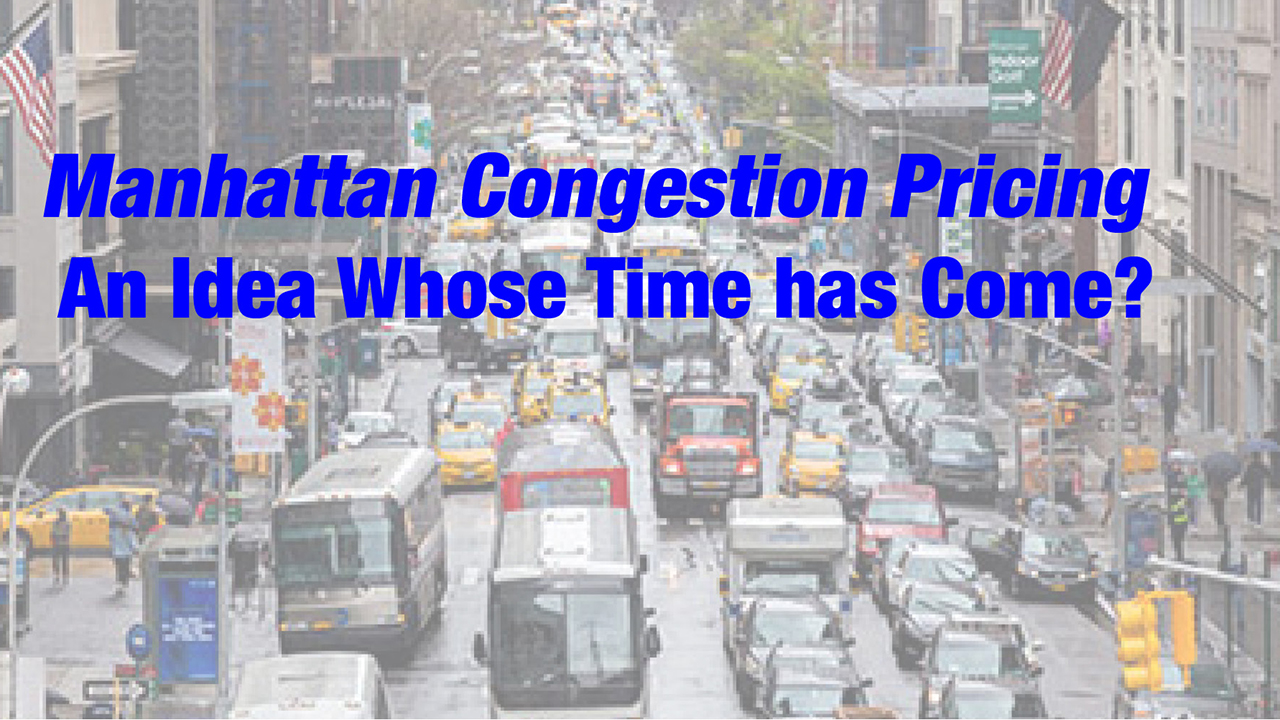
In parts 4, 5 and 6 of this series, we examined a “border dispute” between New Jersey and New York. Gov. Phil Murphy of the Garden State initiated an action in federal court for the District of New Jersey against federal highway officials, seeking to invalidate the Finding of No Significant Impact (FONSI) and the Environmental Assessment (EA) that had been granted to the Central Business District Tolling Program. While Murphy is standing up for the state’s motorists (and some transit advocates allege against New Jersey Transit’s riders), New Jerseyans are divided about the plan. So are New Yorkers, as shown by three other actions that were filed by residents of the Empire State in federal court in New York City. They are similar, and we will highlight one of them in this article.
Michael Mulgrew is the head of the United Federation of Teachers (UFT), the union that represents teachers in the city’s public school system. He is leading the charge within the city against the congestion tolling program, which would charge a base rate of $15.00 per day for a passenger automobile to enter Manhattan south of 60th Street. The union had advocated for an exemption for teachers, as did other organizations representing public employees. The Traffic Mobility Review Board, which has authority to set the rates, denied those requests. Teachers who live in the “outer boroughs” (Brooklyn, Queens, the Bronx and Staten Island) or in New Jersey and who teach in schools located within the tolling zone would be required to pay the “day fee” to get to their schools if use their automobiles to get there.
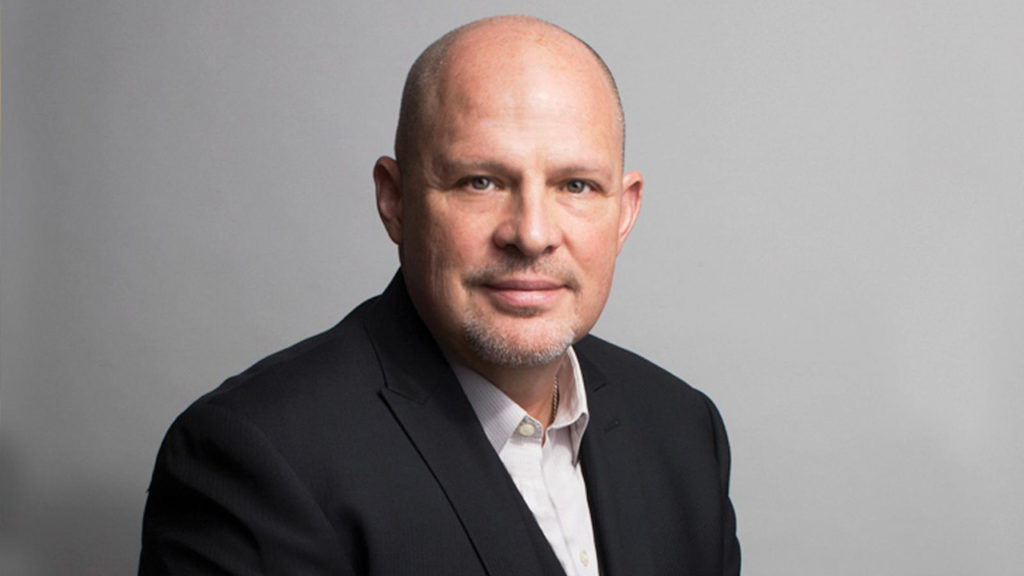
Mulgrew is a leading figure in the labor movement in the city. He filed an action in the federal court for the Eastern District of New York, which is in Brooklyn, on Jan. 4, 2024 (Docket No. 1:24-cv-00081, Mulgrew v. United States Department of Transportation). Mulgrew acted in his capacity as president of the UFT, which is also Local 2 of the American Federation of Teachers (AFT). Staten Island Borough President Vito J. Fossella joined as a plaintiff in his individual and official capacities, and there were originally seven other individual plaintiffs, all of whom are members of the UFT. The Federal Highway Administration and the federal and state transportation officials named in the action that the State of New Jersey had filed on the other side of the Hudson are the defendants. The MTA and the Triborough Bridge and Tunnel Authority (TBTA), which had intervened as Defendants in the New Jersey case, were also named as defendants.
The plaintiffs’ 42-page Complaint began: “This is an action to protect New York and New Jersey residents from the decision to implement congestion pricing in New York City, a decision that would inflict environmental and economic damage on already challenged neighborhoods and one reached only after a rushed and hurried process that violated the comprehensive review requirements that a federal agency must take under federal law and which further results in a regressive and discriminatory pricing scheme that violates Plaintiffs’ constitutional rights.” That long sentence, which comprised the entire first paragraph, summarized the plaintiffs’ arguments, as did the last sentence of Paragraph 2, which said: “Defendants relegated analysis of the details of the tolling program to a later perfunctory process shielded from public scrutiny.” The Complaint also alleged that the tolling scheme was devised to raise money for the MTA (at ¶¶9-12). Many of the arguments advanced by the New York plaintiffs track similar ones made by New Jersey.
One argument that was new to the New York case began: “Teachers, firefighters, police officers, EMS workers, sanitation workers, and other public sector workers who are essential to the fabric of New York City would be forced to shoulder the burden of the MTA’s latest fundraising gambit …” (at ¶13). The Complaint also took a swipe at the transit system, which they acknowledged that the congestion pricing plan is designed to help pay for repairing: “One of the ironies of the Congesting Pricing program is that the toll’s prohibitive cost would force daily commuters to ride the very same inadequate and ill-equipped public transit system that needs the billions of dollars in contemplated repairs and improvements necessitating the funding of the MTA Capital Program in the first place” (at ¶19). The plaintiffs described the approval process as “hurried” and claimed that the Environmental Assessment (EA): “an 838-page document (with 3,044 pages in appendices) was announced and placed on the MTA’s website and the public was then provided with a 30-day review and comment period, all without the benefit of a notice published in the Federal Register or docket to facilitate the review of material,” and then acknowledged that the comment period was extended for another 14 days (at ¶20).
In its declaration regarding Fossella as a party, it alleged that the “limited availability of mass transit on Staten Island as compared to other boroughs … is compounded by the fact that Staten Island is already the only borough that must pay an existing toll to access the remainder of the City by car” (at ¶29). The Complaint did not mention that there is no fare required to ride the Staten Island Ferry, and that a single transit fare is valid for both the Staten Island and Manhattan rides.
After some allegations that tracked the ones made by the State of New Jersey in the other case, the plaintiffs alleged that the MTA received $500 million in COVID relief funding in May 2020 and more than $15 billion in pandemic relief funding, “conveniently the same amount it stands to gain from its congestion pricing scheme” (at¶59). Then the Complaint alleged that “The MTA has been heavily criticized for mismanaging these funds” (at ¶60) and mentioning the looming fiscal cliff “with a $2.5 billion deficit in 2025 and a $4.6 billion operating deficit by 2026” (Id., citations omitted).
In what almost appears to constitute an admission, the Complaint stated: “Despite the tight timeframe, during the public comment period, the FHWA and the Project Sponsors receive more than 69,000 submissions” (at ¶69), earlier alleging “most outlining significant opposition to the proposed program” (at ¶23), but not furnishing a percentage breakdown to support that allegation. This was part of a series of allegations regarding the purported insufficiency of the decision-making process.
Returning to arguments concerning public employees, the Complaint mentioned that there are no exemptions for them, and, “The singular reason given for failing to provide any discount to such drivers was that ‘public-sector employees are not exempt from existing tolls on bridges, tunnels, or highways’” and “No consideration was given to the indisputable fact that these employees, many of whom already struggle to pay to cost to drive to work, will now be forced to pay these expensive tolls twice” (at ¶97; emphasis in original, citation omitted). The implication in the argument seems to be that because such motorists must pay one toll, they should be exempted from another.
As in the New Jersey case, the New York plaintiffs alleged violations of the National Environmental Procedure Act (NEPA), violation of the dormant Commerce Clause of the Constitution, and violation of the Right to Travel, apparently because the toll would increase the cost of travel to the tolling zone in Manhattan. The Complaint alleged that this was intentional, and the Congestion Pricing program is not narrowly tailored to meet a significant governmental interest.
The Complaint asked for similar relief that the State of New Jersey requested in the action filed in that state: that the FONSI and EA be vacated, a formal EIS be required, a declaration that congestion pricing violates the Plaintiffs’ constitutional rights, and other relief.
The Complaint was amended on Jan. 26 to add 22 more plaintiffs: two labor-oriented civic organizations in the Black community and one in the Latin American community, and 19 elected officials, including Rep. Nicole Malliotakis (a Republican from Staten Island), and several New York State legislators and New York City Council members. One of them represents a constituency on Long Island, six have constituencies upstate, largely in areas not served by Metro-North, and the others represent areas in New York City, primarily in Brooklyn or Staten Island.
The only substantive change in the Amended Complaint, aside from the additional plaintiffs, was an allegation that the program violates the Green Amendment at Article I, Section 19 of the New York State Constitution, “which protects every New Yorker’s right to ‘clean air and water, and a healthful environment’” (at ¶177; allegation continues through ¶184). The complaint alleged that congestion pricing would increase air pollution, especially in the New York City’s outer boroughs.
On Feb. 8 and 9, the Defendants alleged that the claims regarding the FONSI and the EA were time-barred (filed too late, so they must be dismissed), and that the other claims were not yet ripe for a decision.
At the same time, there are two other cases about the Congestion Pricing program pending in the Southern District of New York, located in Manhattan: Chan v. U.S. Dep’t of Transp., No. 23 Civ. 10365 (S.D.N.Y) and New Yorkers Against Congestion Pricing Tax v. U.S. Dep’t. of Transp., 24 Civ. 367 (S.D.N.Y). The parties stipulated that the case should be transferred to the Southern District, and Judge Joseph A. Marutollo approved the transfer on Febr. 17.
Having separate cases in different districts, especially in different states, can complicate the matter both procedurally and substantively. It’s all over but the oral argument and the waiting in New Jersey, but New York is just getting started. We’ll look at what the MTA is doing in the next article in this series.