Metro Board of Directors Approves WMATA’s $4.8B FY24 Budget

The Metro Board of Directors on April 14 approved the Washington Metropolitan Area Transit Authority’s (WMATA) $4.8 billion capital and operating budget for fiscal year (FY) 2024, which supports the agency’s “increased rail and bus services, simplifies fares for customers, creates a new low-income fare program, caps MetroAccess fares at $4, and enhances safety measures.”
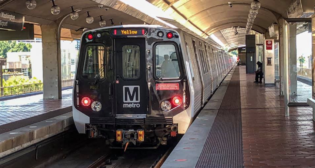
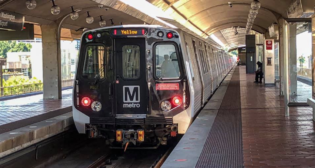
WMATA 7000-Series Rapid Transit Cars. (Courtesy of Wikipedia)

WMATA Advances Final Phase of 7,000-Series Return-to-Service Plan

The Washington Metropolitan Area Transit Authority (WMATA) on April 12 announced concurrence from the Washington Metrorail Safety Commission (WSMC) that allows the agency to move to the final phase of its 7,000-series Return-to-Service Plan.

Image Courtesy of WMATA

Transit Briefs: WMATA, Amtrak

Washington Metropolitan Area Transit Authority’s (WMATA) Transit Police leaders graduate from DC Police Leadership Academy (DCPLA). Also, Oklahoma officials want to expand Amtrak’s Heartland Flyer into Kansas.

A March 31-April 1 inspection of the CATS Operations Control Center by the North Carolina Department of Transportation found that “required staffing levels were not met—and the transit agency was ordered to ‘cease revenue service’ if not addressed the following day,” according to the Charlotte Business Journal. (CATS Photograph)

Transit Briefs: CATS, FRA Corridor ID, GCRTA, MBTA, WMATA

Charlotte Area (N.C.) Transit System (CATS) addresses its lack of required Operations Control Center staff. Also, Big Sky Passenger Rail Authority, Schuylkill River Passenger Rail Authority, and an Atlanta, Nashville, Memphis and Chattanooga partnership submit proposals for intercity passenger rail service through the Federal Railroad Administration’s (FRA) Corridor Identification and Development (ID) Program; Greater Cleveland (Ohio) Regional Transit Authority (GCRTA) selects Siemens Mobility as the likely supplier of its new light rail vehicle fleet; Massachusetts Bay Transportation Authority (MBTA) publishes a three-year safety improvement plan; and Washington Metropolitan Area Transit Authority (WMATA) readies for the spring reopening of its Yellow Line.

Sound Transit’s proposed 7.1-mile extension from downtown Seattle to Ballard includes nine new stations between the Chinatown-International District and Market Street and a new rail-only tunnel through downtown Seattle.

Transit Briefs: Sound Transit, WMATA

Seattle’s Sound Transit identifies the preferred alternative for the Ballard Link light rail extension and will conduct Rainier Valley safety improvements in partnership with the city’s transportation department using a $2 million Strengthening Mobility and Revolutionizing Transportation (SMART) grant from the U.S. Department of Transportation (USDOT). Also, the Washington Metropolitan Area Transit Authority’s (WMATA) police department launches a Body-Worn Camera Program.

Cordel Group PLC and D/Gauge Ltd. (part of the TÜV Rheinland Group) have landed a multi-year contract to provide Amtrak with a Rail Clearance Management system.

Transit Briefs: Amtrak, BART, CapMetro, CTDOT, PATH, TTC, WMATA

Amtrak awards Rail Clearance Management system contract. Also, the Federal Transit Administration (FTA) lowers its ridership estimate for San Francisco Bay Area Rapid Transit District’s (BART) extension through San José; CapMetro’s Project Connect in Austin, Tex., has five new light rail options; Connecticut Department of Transportation (CTDOT) is developing a unified, statewide public transit information system for mobile devices; PATH introduces nine-car train service on the Newark (N.J.)-World Trade Center (N.Y.) line; the city of Toronto, Ontario, and the Toronto Transit Commission (TTC) bolster transit system outreach efforts; and Washington Metropolitan Area Transit Authority (WMATA) tests new fare gates.

New York City subways reached 3.94 million riders on a single day for the first time since March 2020.

Transit Briefs: NYMTA, WMATA, APTA

The New York Metropolitan Transportation Authority’s (MTA) subways reach 3.94 million riders on a single day for the first time since March 2020. Also, the Washington Metropolitan Area Transit Authority (WMATA) gets a service boost systemwide amid ridership surge; and the American Public Transportation Association (APTA) releases results from Phase 2 of its Transit Workforce Shortage Study and welcomes hundreds of industry professionals to Washington, D.C., for 2023 Legislative Conference.

Beginning March 20, Amtrak Downeaster passengers will no longer be able to purchase alcoholic beverages from the train's cafe car while the train passes through New Hampshire.

Transit Briefs: WMATA, GVT, NJ Transit, Amtrak (UPDATED)

The Washington Metropolitan Area Transit Authority (WMATA) is making plans to bring back automatic train operation in 2023. Also, Genesee Valley Transportation Co. (GVT) purchases 74-year-old locomotive in hopes of restoring it and returning it to the rails in Scranton for potential passenger excursions; NJ Transit introduces new cash payment option within its mobile app; and Amtrak Downeaster passengers can continue to purchase alcohol as the train passes through New Hampshire on an interim basis.

WMATA 7000-Series Rapid Transit Cars: Courtesy Wikipedia

WMATA to Fix All 7000-Series Car Wheels. Price tag: $55MM

The Washington Metropolitan Area Transit Authority (WMATA) on Feb. 28 reported that its plan to change the way it presses wheels on the 7000-series rapid transit cars is under development, based on technical data issued the same day by the National Transportation Safety Board (NTSB). The safety move could cost approximately $55 million and take up to three years to complete, the Authority said.

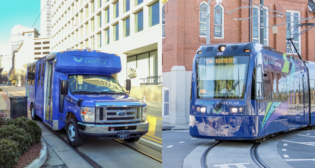
As MARTA’s streetcar vehicle wheels are being replaced due to degradation, shuttle vans wrapped to look like streetcars are servicing the Atlanta, Ga., route. (MARTA Photographs)

Transit Briefs: MARTA, NYMTA, WMATA

Streetcar service is returning to downtown Atlanta, Ga., reports Metropolitan Atlanta Rapid Transit Authority (MARTA). Also, New York Metropolitan Transportation Authority (MTA) will upgrade accessibility at 17 subway stations across all five boroughs; and Washington Metropolitan Area Transit Authority (WMATA) is eyeing design changes for its new 8000-series rapid transit cars.

LOAD MORE