WMATA

Second FTA Safety Probe Targets MBTA

The Federal Transit Administration (FTA) is using authority granted years ago to investigate safety conditions at Boston’s Massachusetts Bay Transportation Authority (MBTA). This authority came from the MAP-21 (Moving Ahead for Progress in the 21st Century Act) legislation and has been used only once before, for an investigation at the Washington Metropolitan Area Transit Authority (WMATA). Prior to that time, the agency had no authority over safety on the nation’s transit.
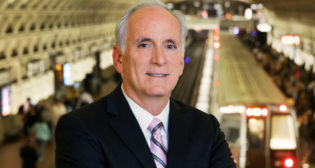
Paul J. Wiedefeld on May 16 retired from his role as General Manager and CEO of WMATA. His original retirement date was June 30, 2022.

WMATA: GM/CEO Wiedefeld, COO Leader Out (UPDATED)

Just one day after Washington Metropolitan Area Transit Authority (WMATA) announced that it was removing from service 72 rail operators due to a lapse in recertification, General Manager and CEO Paul Wiedefeld decided to step down—weeks ahead of his expected retirement date—and Chief Operating Officer Joe Leader resigned, the transit agency reported late May 16.

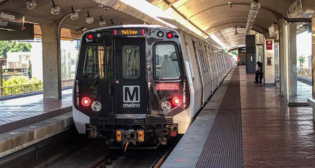
“Lapse in Metrorail [WMATA] operator recertification results in changes to certain trains effective Monday [May 16]. Green and Yellow line rail service moves to every 20 minutes beginning Monday,” WMATA reported via Twitter on May 15. (Photograph Courtesy of WMATA, Via Twitter)

WMATA Removes 72 Rail Operators

Nearly half of Washington Metropolitan Area Transit Authority’s (WMATA) 500 rail operators have lapsed recertification, WMATA reported May 15, prompting the agency to remove from service 72, who became out of compliance more than a year ago.

Randy Clarke, incoming General Manager and CEO, WMATA

Clarke to Lead WMATA

Randy Clarke, current President and CEO of Capital Metro (CapMetro) in Austin, Tex., has been selected as the Washington Metropolitan Area Transit Authority’s (WMATA) new General Manager/CEO, succeeding Paul J. Wiedefeld. He will start in late summer, WMATA reported on May 10.

Metrolinx, the city of Toronto, and the province of Ontario have launched the procurement process for the first of five new SmartTrack GO stations across the city. (Metrolinx photo)

Transit Briefs: Metrolinx, TEXRail, TransLink, VIA Rail, WMATA

Metrolinx is advancing construction of the first of five new SmartTrack GO stations in Toronto. Also, Trinity Metro’s TEXRail promoted its second female engineer; TransLink unveiled the first 10 years of “Transport 2050” priorities for metro Vancouver; VIA Rail Canada released a five-year sustainability plan; and Washington Metropolitan Area Transit Authority (WMATA) installed its first solar canopy as part of a four-station project expected to provide nearly 10 megawatts of renewable energy to the local grid.

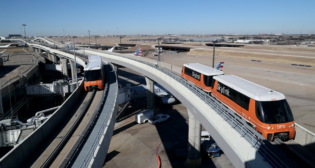
Pictured: Alstom’s Innovia automated people movers carrying riders at Dallas Fort Worth International Airport.

Transit Briefs: DFW, TransLink, Metrolink, Metrolinx, UTA, VIA Rail, WMATA

Alstom has landed a 10-year people-mover contract with Dallas Fort Worth International Airport (DFW). Also, Metrolink locomotives powering regional/commuter rail service in Southern California are now using renewable fuel; Metrolinx is upgrading the Mimico GO Station in Toronto; Vancouver’s TransLink is launching in-tunnel video advertising; Utah Transit Authority on April 18 is taking out of service its FrontRunner Comet cars; VIA Rail Canada is resuming most services by the end of June; and Washington Metropolitan Area Transit Authority (WMATA) has teamed with MITRE to improve its safety management system.

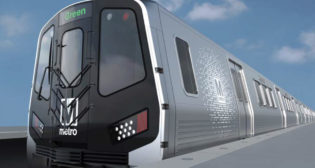
Pictured is an artist’s rendering of the new Hitachi Rail 8000-series railcars for WMATA, which will be built in Maryland.

Hitachi Rail to Launch $70MM Railcar Plant in Maryland

Hitachi Rail on March 21 reported that it will build a $70 million factory and test track in Washington County, Md., with operations commencing in winter 2023/24. Its first order for delivery: a new fleet of 8000-series railcars for the Washington Metropolitan Area Transit Authority (WMATA).

“The pandemic has made clear our operating funding model of relying so heavily on riders is outdated and hampers our efforts to provide equitable service, especially for low-income riders and marginalized communities,” BART General Manager Bob Powers said. “Increased federal funding allows BART to continue to invest in service improvements and safety enhancement as we welcome riders back to transit.”

BART, WMATA Awarded $390MM in ARP Additional Assistance Grants

San Francisco Bay Area Rapid Transit District (BART) and Washington Metropolitan Area Transit Authority (WMATA) will receive $270 million and $120 million, respectively, from the Federal Transit Administration (FTA) under the American Rescue Plan (ARP) Additional Assistance Grant Program; the funding is awarded to transit systems demonstrating additional pandemic-associated needs.

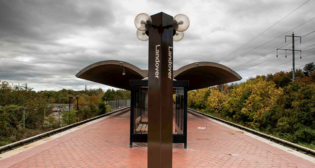
This summer, WMATA will close the New Carrollton, Landover, Cheverly, Deanwood and Minnesota Avenue stations on the Orange Line, as part of the final phase of its four-year Platform Improvement Project.

Transit Briefs: GCRTA, Metra, WMATA

Greater Cleveland Regional Transit Authority (GCRTA) will receive an initial $20.3 million under the Bipartisan Infrastructure Law. Also, Chicago’s Metra has scheduled 51 safety blitzes for 2022; and Washington Metropolitan Area Transit Authority (WMATA) will start the final phase of its Platform Improvement Project on May 28.