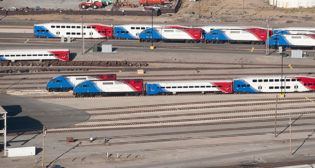
TOD Planning Projects to Receive $17.6MM
Twenty projects—10 rail-related—will share $17.6 million in Federal Transit Administration (FTA) grants through the Pilot Program for Transit-Oriented Development (TOD) Planning.
Twenty projects—10 rail-related—will share $17.6 million in Federal Transit Administration (FTA) grants through the Pilot Program for Transit-Oriented Development (TOD) Planning.
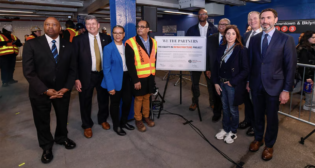
New York Metropolitan Transportation Authority (MTA) signs the “Equity in Infrastructure Project” Pledge. Also, Sacramento Regional Transit District (SacRT) is developing mobility hubs at three light rail stations; Southern California’s Metrolink extends its fare-free pilot program for students; Washington Metropolitan Area Transit Authority (WMATA) marks improvements in ridership, customer satisfaction, public safety and fare collection while reducing expenses; New Jersey Transit (NJT) expands its partnership with Comcast Business; and Houston Metro (Metropolitan Transit Authority of Harris County, Tex.) selects Copperleaf to help improve asset management.
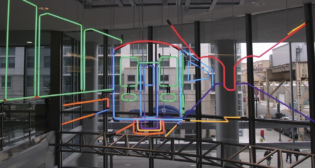
Chicago Transit Authority (CTA) seeks innovators to test new technologies that improve rail safety, asset management and real-time information. Also, New York Metropolitan Transportation Authority (MTA) boosts subway security; Toronto Transit Commission (TTC) releases a Request for Proposals (RFP) for the Bloor-Yonge Capacity Improvements project; and Washington Metropolitan Area Transit Authority (WMATA) and Hitachi Rail are offering a “sneak peek” of the new 8000 series rapid transit cars.
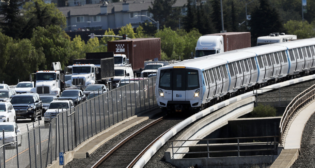
San Francisco Bay Area Rapid Transit District (BART) reports rider satisfaction gains. Also, MTA Metro-North Railroad completes its third station-accessibility project in 2024; VIA Rail Canada calls on Ottawa to replace its long-distance fleet; and Washington Metropolitan Area Transit Authority (WMATA) increases police patrols on trains and buses.
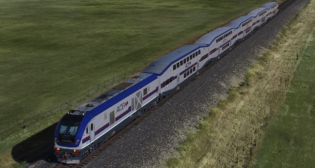
Altamont Corridor Express (ACE) regional/commuter rail service advances extension project to Elk Grove, Calif. Also, Massachusetts Gov. Maura Healey discusses Massachusetts Bay Transportation Authority (MBTA) investments in her budget proposal; Connecticut Gov. Ned Lamont’s proposed budget includes full funding for the MTA Metro-North Railroad’s New Haven Line; ridership climbs at Metro Transit in Minneapolis/St. Paul, Minn.; Metropolitan Atlanta Rapid Transit Authority (MARTA) earns a 2024 AdWheel award from the American Public Transportation Association (APTA); and Amtrak, New Jersey Transit (NJT), and Washington Metropolitan Area Transit Authority (WMATA) are awarded Forbes Best Large Employer status.

RAILWAY AGE, FEBRUARY 2024 ISSUE: Railway Age is proud to recognize 25 ‘Fast Trackers’ Under 40 in 2024.
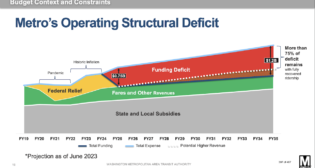
The Washington Metropolitan Area Transit Authority (WMATA) has released its proposed operating and capital budget for fiscal year 2025 (FY2025), which calls for “severe cuts” to address the agency’s $750 structural funding shortfall—a deficit equal to more than 25% of the operating budget—despite “proactive management actions” taken by WMATA to control expenses.

The Washington Metropolitan Area Transit Authority (WMATA) upgrades its ridership data portal with more detailed information. Also, the Port Authority of New York and New Jersey’s (PANYNJ) PATH commuter rail system sees consistent growth in 2023; the proposed Baton Rouge to New Orleans passenger train agreement is pushed back; and the San Diego Metropolitan Transportation System (MTS) unveils a 2024 transit security initiative.

Amtrak will advance several initiatives this year as part of its goal to double annual ridership to 66 million by Fiscal Year 2040. Also, Virginia Passenger Rail Authority (VPRA) details three proposed Christiansburg-area station alternatives, as part of the Amtrak New River Valley Project; and the Washington Metropolitan Area Transit Authority (WMATA) Office of Inspector General introduces a Whistleblower Award Program.
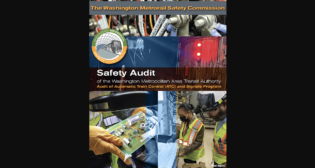
Washington Metropolitan Area Transit Authority (WMATA) Metrorail has implemented improvements to its automatic train control and signals program, but “is not carrying out some key safety commitments,” according to the Washington Metrorail Safety Commission’s (WMSC) most recent safety audit, released Jan. 18. In addition to providing five findings and three recommendations for WMATA to address, WMSC outlined positive practices at the rapid transit system serving 98 stations in Virginia, Maryland, and the District of Columbia.