(Port NOLA Photograph)

Louisiana Commits $230.5MM to Port NOLA Infrastructure Projects

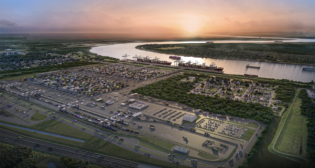
A commitment of $230.5 million was made to the Port of New Orleans (Port NOLA) for its Louisiana International Terminal (LIT), St. Bernard Transportation Corridor, and St. Claude Bridge projects by the Louisiana Legislature prior to its June 3 adjournment, according to Port NOLA.


USDOT Issues RFI for Potential Applications of AI

The U.S. Department of Transportation’s (USDOT) Advanced Research Projects Agency-Infrastructure (ARPA-I) on May 22 announced that it is seeking potential applicants of Artificial Intelligence (AI) across all modes of transportation, as well

USDOT Issues Uniform Act Final Rule

The U.S. Department of Transportation (USDOT) recently announced a final rule to update the government wide Unform Relocation Assistance and Real Property Acquisition Polices Act of 1970 (Uniform Act).

(Shutterstock)

USDOT Issues RFI on Potential Applications of AI

The U.S. Department of Transportation’s (USDOT) Advanced Research Projects Agency—Infrastructure (ARPA-I) is seeking input from interested parties on the potential applications of artificial intelligence (AI) in transportation, as well as “emerging challenges and opportunities in creating and deploying AI technologies in applications across all modes of transportation.”

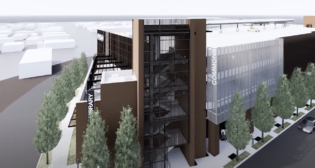
“Having a library, public restrooms, a community center, and a kitchen all under one roof—and only steps away from Skagit station—will be a major benefit for the people of Mount Vernon,” USDOT Secretary Pete Buttigieg said May 1. “This is the first of what we hope will be many TOD loans that will make vital resources more accessible to more people, especially historically overlooked communities.” (Screen Shot of the Mount Vernon Library Commons Project from a city of Mt. Vernon, Wash., video)

USDOT Closes First Loan Supporting TOD

The U.S. Department of Transportation (USDOT) on May 1 reported that its Build America Bureau has approved the first transit-oriented development (TOD) TIFIA loan, which will support a Mt. Vernon, Wash., project located a short walk from the Amtrak-served Skagit Station.

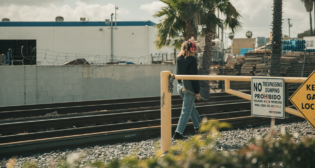
According to Metrolink, between July and December 2023, passenger and freight trains operating on its service lines were involved in 53 vehicle and pedestrian strikes, a 39% increase from same period in 2022, with nearly half of all strikes in 2023 ruled as suicides. (Metrolink Photograph)

Metrolink to Pilot Track Intrusion Detection

Southern California’s Metrolink will use a $1.3 million federal grant for the development and demonstration of a track intrusion detection system that it said not only will improve the safety of its riders and crew, but also directly benefit pedestrians, cyclists, drivers and everyone else who interacts with the regional/ commuter rail system.

STB Appoints Inaugural PRAC Members (UPDATED 4/2)

The Surface Transportation Board (STB) on March 28 named 21 voting members to the newly formed Passenger Rail Advisory Committee (PRAC).

(Wikimedia Commons/King of Hearts)

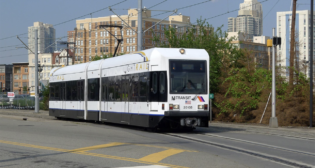
NJT Deploying AI Systems to Boost Grade Crossing Safety

New Jersey Transit (NJT) will use a $1.6 million federal grant to implement Artificial Intelligence (AI)-powered systems that it said would help improve safety by reducing accidents at light rail grade crossings and on rights-of-way.

“Metro-North is always looking for opportunities to innovate and be more efficient in how we maintain our systems and equipment and provide service to our customers,” Metro-North Railroad President Catherine Rinaldi said during the announcement of a federal grant the commuter railroad will use to test an automated railcar inspection system. (Photograph Courtesy of MTA)

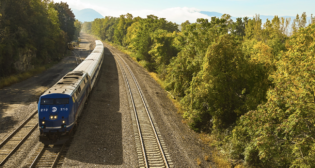
Metro-North to Pilot Automated Railcar Inspection

The New York Metropolitan Transportation Authority (MTA) will use a $2 million federal grant to test an automated railcar inspection system on its commuter railroad in New York and Connecticut, which it said will provide “early detections of existing and future defects, allowing conditions to be addressed immediately, reducing repair and replacement time.”

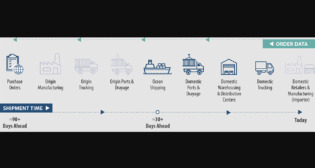
How It Works: FLOW Data Inputs and Outputs—Members of the FLOW program (e.g., beneficial cargo owners, ocean carriers, ports, terminals, railroads) share individual logistics data (highlighted in bold in the graphic above) with the USDOT and in return receive an aggregated, anonymized, and holistic view of the relationship between incoming containers (demand), the available assets to move containers (supply), and throughput within a supply chain region. Incoming demand is shared up to 90 days in advance of arrival. (USDOT Graphic)

USDOT Marks Milestone on Second Anniversary of FLOW

The Freight Logistics Optimizations Works (FLOW) platform is now publishing data on inland freight hubs, including rail terminal and warehouse end destination data, that will provide an “enhanced view” of future container import volumes and traffic, the U.S. Department of Transportation (USDOT) reported March 20, the second anniversary of the platform’s launch to provide an integrated view of supply chain conditions in the United States and to help users forecast how current capacity and throughput will fare against future demand.

LOAD MORE