SBCTA

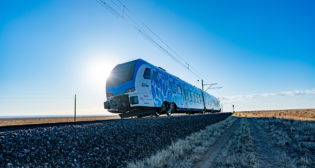
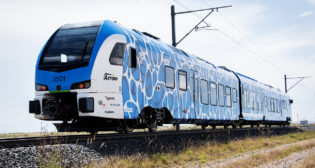
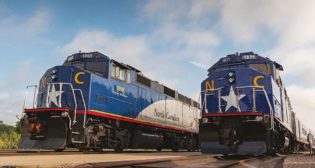
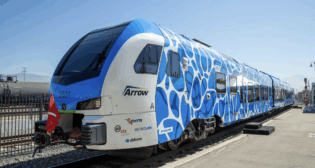
“The new ZEMU is easy to spot with its signature blue and white water-vapor design wrapped around the train’s two passenger cars and center power pack where the hydrogen and battery propulsion system is located,” according to SBCTA. (Photograph Courtesy of SBCTA)

ZEMU Debut Set for Sept. 13

San Bernardino County Transportation Authority’s ZEMU—a hydrogen fuel cell-powered FLIRT H2 train from Stadler—will launch Sept. 13, serving riders on Metrolink’s nine-mile, five-station Arrow Corridor between San Bernardino and Redlands in Southern California. The

Transit Briefs: TriMet, Metro-North, SBCTA, South Shore Line

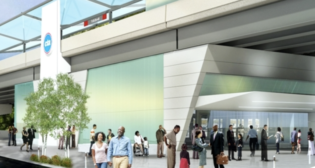
TriMet rolls out new security phones at MAX stations. Also, train service on Metro-North Railroad’s Waterbury Branch will resume on Oct. 28; the San Bernardino County Transportation Authority (SBCTA) seeks public feedback on the proposed ONT Connector project; and South Shore Line opens its Hammond Gateway Station.

Transit Briefs: DART, SBCTA

Dallas Area Rapid Transit’s (DART) Orange Line celebrates a decade of providing service to DFW Airport. Also, state and federal leaders join the San Bernardino County Transportation Authority (SBCTA), Stadler and Metrolink to celebrate the technology behind the Zero Emission Multiple Unit (ZEMU).

Transit Briefs: SBCTA, Denver RTD, MBTA, LA Metro

The San Bernardino County Transportation Authority (SBCTA) welcomes North America’s first self-powered, zero-emission passenger train to Southern California. Also, Denver’s Regional Transportation District (RTD) launches a new program to provide face-to-face assistance to customers; the Massachusetts Bay Transportation Authority (MBTA) Board of Directors commits to funding a pilot program for electric trains; and LA Metro releases its Draft Environmental Impact Statement/Supplemental Environmental Impact Report (EIS/SEIR) for the Link Union Station Project (Link US).

Premium

Hydrogen Finds its Place in California

State government regulations are accelerating the shift from diesel to alternative traction in California. Kyle Gradinger, Division Chief of Rail and Mass Transportation at the California Department of Transportation (CALTRANS), explains the

SBCTA’s first ZEMU train (pictured) arrived in the U.S. in September and is being tested at the DOT Transportation Technology Center in Pueblo, Colo. (ENSCO Photograph). The agency recently awarded a contract for a hydrogen storage and transfer system that will be used to fuel the ZEMU. (ENSCO Photograph)

Transit Briefs: SBCTA, SCVTA, Sound Transit, VIA Rail

San Bernardino County Transportation Authority (SBCTA) advances its hydrogen infrastructure project ahead of ZEMU (Zero-Emission Multiple Unit) train service in California. Also, Santa Clara Valley Transportation Authority (SCVTA) lands a $2.98 million grant for the Tidal Marsh Restoration Project; Seattle’s Sound Transit launches an online open house for an access improvements project at Sounder commuter rail’s South Tacoma Station; and Saskatchewan mayors consider a new route for VIA Rail Canada’s Canadian intercity passenger rail service.

CTA has released a Request for Proposals to the three pre-selected contracting teams that demonstrated the ability to design and build the $3.6 billion Red Line Extension in a Request for Qualifications process that began last year. (CTA Rendering)

Transit Briefs: CTA, Minn. Met Council, San Diego MTS, SBCTA, WMATA

Chicago Transit Authority (CTA) issues a Request for Proposals (RFP) to build Red Line Extension track structure and stations, and hits the ridership “million mark” on multiple days, a post-pandemic first. Also, Minnesota’s Metropolitan Council announces a grant agreement that will fund work on the Metro Transit Blue Line extension project through 2024; San Diego Metropolitan Transit System’s (MTS) Board signs off on measures to improve operations, accessibility and security; San Bernardino County Transportation Authority (SBCTA) takes delivery of the ZEMU (Zero-Emissions Multiple Unit) from Stadler; and Washington Metropolitan Area Transit Authority (WMATA) delays until next year the full switch to automatic train operations (ATO).

NC By Train photo

Transit Briefs: Amtrak/NC By Train, NYMTA, VIA Rail, The City of Calgary, SBCTA/LA Metro

Amtrak and NC By Train announce that the Piedmont and Carolinian will now offer five daily roundtrips between Raleigh, Charlotte, and points in between. Also, the New York Metropolitan Transportation Authority (MTA) announces a new customer real-time email and text alert system; VIA Rail Canada (VIA Rail) breaks ground on construction of Toronto Maintenance Center; The City of Calgary announces that it will undertake a new Calgary Airport Connection Study; and the San Bernardino County Transportation Authority (SBCTA) and LA Metro will study expanding rail frequency from Redlands to LA Union Station.

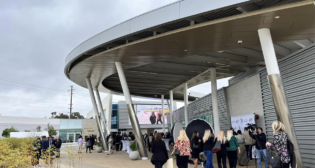
The city of Torrance, Calif., on June 9 held a ribbon-cutting ceremony for the Mary K. Giordano Regional Transit Center, which will serve as the future light rail terminus of LACMTA’s C Line. (Photograph Courtesy of Torrance City Mayor George Chen, via Facebook)

Transit Briefs: LACMTA, Omaha Streetcar, SBCTA, Shore Line East, TTC

The city of Torrance, Calif., opens a new transit center, the future light rail terminus for Los Angeles County Metropolitan Transportation Authority’s (LACMTA) C Line. Also, the Omaha, Neb., streetcar project advances; San Bernardino County (Calif.) Transportation Authority (SBCTA) readies for delivery of its HFC (hydrogen fuel cell) trainset; Connecticut reduces funding for Shore Line East commuter rail service; and Toronto Transit Commission (TTC) reports that its safety and security incidents are declining.

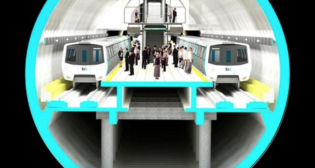
CalSTA awarded Santa Clara Valley Transportation Authority (VTA) $375 million for the six-mile, four-station BART Silicon Valley Phase II Extension Project that will bring BART service to downtown San Jose and Santa Clara. Project completion is scheduled for 2033.

CalSTA Awards $2.5B for Rail Transit Projects

San Francisco Bay Area Rapid Transit District (BART) and Peninsula Corridor Joint Powers Board (Caltrain) are among the 14 California agencies that will share $2.515 billion in TIRCP (Transit and Intercity Rail Capital Program) grants from CalSTA (California State Transportation Agency) for rail-related projects.