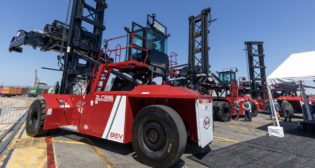
Port of LA Debuts Battery-Powered Electric Cargo Top Handlers
The Port of Los Angeles on June 25 reported deploying “the first commercially available” battery-powered electric cargo top handlers in the U.S., as part of its zero-emissions strategy.
The Port of Los Angeles on June 25 reported deploying “the first commercially available” battery-powered electric cargo top handlers in the U.S., as part of its zero-emissions strategy.
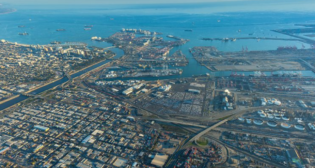
The Long Beach (Calif.) Board of Harbor Commissioners has signed off on a $760 million budget for the Port of Long Beach’s (POLB) 2025 fiscal year, which begins Oct. 1, 2024, according
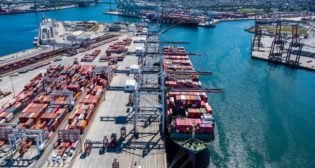
The Port of Los Angeles processed 752,893 Twenty-Foot Equivalent Units (TEUs) in May 2024—a slight 3% decline over May 2023, the Port reported on June 12. Overall cargo volume remains 18% ahead of 2023 after five months.
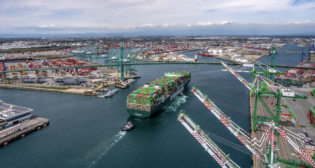
The Los Angeles (Calif.) Harbor Commission on June 6 signed off on a $2.6 billion Fiscal Year (FY) 2024/25 budget for the City of Los Angeles Harbor Department that it said will support the “community investment, decarbonization of port-related operations, workforce development, and cargo infrastructure modernization” priorities of the Port of Los Angeles.
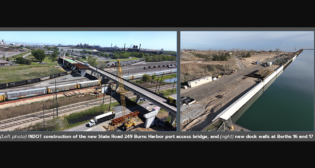
The Ports of Indiana-Burns Harbor kicks off the construction season with more than $77 million in projects under way. Also, the Port of Los Angeles, Calif., logs its ninth consecutive month of year-over-year cargo growth.
For first-quarter 2024, ending March 31, local dockworkers moved 2,380,503 Twenty-Foot Equivalent Units (TEUs) across Los Angeles marine terminals—nearly 30% more than 2023, the Port of Los Angeles reported April 17. It was among the Port’s best first quarter starts, behind only the pandemic import surge in 2021 and 2022.
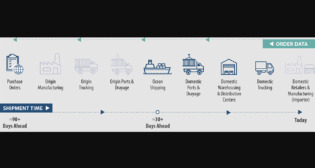
The Freight Logistics Optimizations Works (FLOW) platform is now publishing data on inland freight hubs, including rail terminal and warehouse end destination data, that will provide an “enhanced view” of future container import volumes and traffic, the U.S. Department of Transportation (USDOT) reported March 20, the second anniversary of the platform’s launch to provide an integrated view of supply chain conditions in the United States and to help users forecast how current capacity and throughput will fare against future demand.
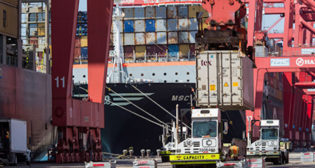
The Port of Long Beach (POLB) and the Port of Los Angeles report an increase of trade in February.
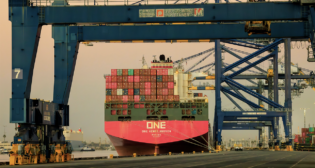
Trade moving through the ports of Los Angeles and Long Beach rose in January as retailers stocked up ahead of the Lunar New Year, when east Asian factories typically close for up to two weeks.
Chicago-based Anacostia Rail Holdings (ARH) on Jan. 31 released two new reports examining the feasibility and benefits of rail service operating to an inland port for intermodal containers destined within 150 miles