
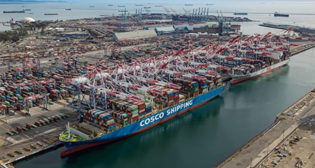
Port of Long Beach Volume Plummets
The Port of Long Beach is attributing a large January 2023 volume drop, compared to the prior-year period, to “softened consumer spending, increased prices driven by inflation and a shift in trade routes.”
The Port of Long Beach is attributing a large January 2023 volume drop, compared to the prior-year period, to “softened consumer spending, increased prices driven by inflation and a shift in trade routes.”
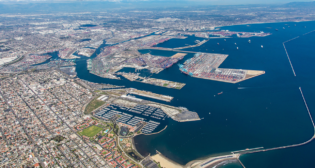
The ports of Los Angeles and Long Beach in California report 2022 as their second-busiest year on record. Also, South Carolina Ports (SC Ports) announces a record 2022 with the most containers ever handled at the Port of Charleston. All provide their outlook for 2023.
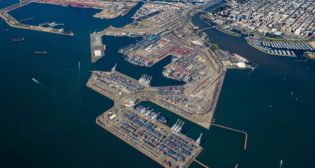
The Port of Long Beach (POLB) announced Dec. 28 that its Channel Deepening Project is one of five navigation projects nationwide to receive federal authorization under the 2022 Water Resources Development Act (WRDA) that President Joe Biden signed into law on Dec. 23.
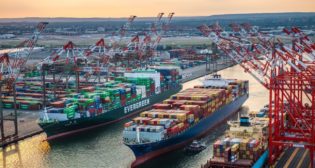
The Port Authority of New York and New Jersey (PANYNJ) reports facility volumes for November 2022. Also, the Port of Long Beach receives upgraded credit ratings by Standard & Poor’s (S&P).
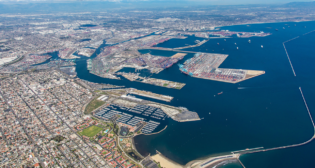
Cargo volumes in November were soft at the ports of Los Angeles and Long Beach in California. Both also reported moving less cargo overall in the first 11 months of 2022 vs. the prior-year period.
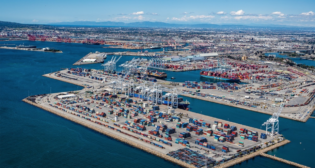
A COVID-induced supply chain spiral led to a logistical conundrum that forced shippers and executive teams to adapt to an ever-changing global environment. As the dust begins to settle, we, at Cowen Research, are taking a closer look at the more long-lasting changes across the supply chain and consumers. A multi-sector angle provides insight into the long-term impact for supply chains and beneficiaries of these shifts.
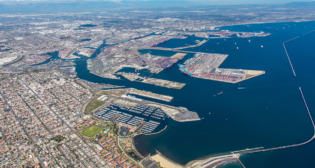
October cargo volume at the Port of Los Angeles was down 25% from the same month last year; September and August saw similar drops.
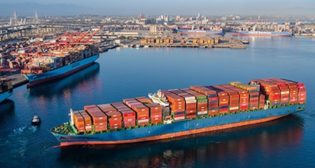
Port of Long Beach dockworkers and terminal operators moved 658,428 twenty-foot equivalent units (TEUs) of cargo in October, down 16.6% from the same month last year, citing “reduced consumer demand and a shift of imported goods toward the Gulf and East coasts,” as reasons for the decline.
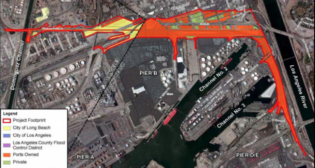
The Port of Long Beach (POLB) on Nov. 10 released its relocation plan for the proposed Pier B On-Dock Rail Support Facility project, which will reconfigure, expand and enhance the existing rail yard and directly connect to on-dock rail facilities and the Alameda Corridor railway.
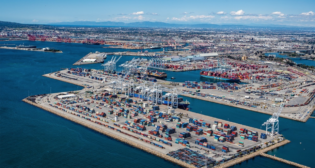
Port of Long Beach dockworkers and terminal operators moved 741,823 twenty-foot equivalent units (TEUs) of cargo containers in September, down 0.9% from the same month last year, citing “diminishing consumer demand, full warehouses and inflation concerns” as reasons for the decline.