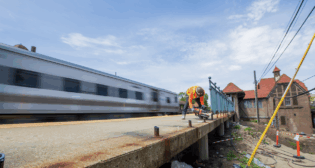
The California Transportation Commission (CTC) on June 27 approved a $100 million award to Santa Clara Valley Transportation Authority for BART (Bay Area Rapid Transit) Silicon Valley Phase II. (VTA Photograph)

Transit Briefs: VTA, APTA, Valley Metro, VPRA

Santa Clara Valley Transportation Authority (VTA) lands $100 million in California state funding for the BART Silicon Valley Phase II project. Also, the American Public Transportation Association (APTA) presents its 2025 Rail Safety, Security and Emergency Management Awards; Arizona’s Valley Metro is introducing streetcar fares; and the Virginia Passenger Rail Authority (VPRA) marks its fifth anniversary.
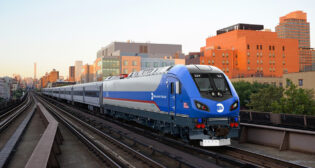
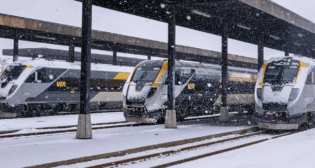
Siemens Charger B+AC = New Metro-North Power

Described as “North America’s first battery-electric powered passenger locomotive,” the Siemens Mobility Charger B+AC is a dual-power that will operate in two electric modes: drawing power from AC catenary or from batteries,

"We are pleased to have reached these tentative agreements with Unifor,” VIA Rail President and CEO Mario Péloquin said on June 20. (VIA Rail Photograph)

Transit Briefs: VIA Rail, EXO, CTDOT, SEPTA, TransLink

VIA Rail, Canada’s national passenger rail service, reaches tentative agreements with Unifor. Also, Siemens is delivering the second of 10 Charger locomotives for EXO commuter rail, which serves the Greater Montreal area; Connecticut Department of Transportation selects HNTB for major upgrades along Metro-North Railroad’s Waterbury Branch Line; Southeastern Pennsylvania Transportation Authority (SEPTA) extends its advertising partnership agreement; and stepped-up fare enforcement efforts are driving positive change at Metro Vancouver’s TransLink.

NYMTA Approves Purchase of 316 M-9A Passenger Railcars

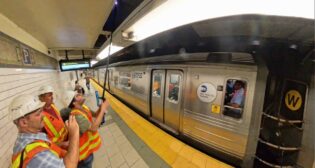
The New York Metropolitan Transportation Authority (MTA) on June 23 announced that its Finance Committee has approved the purchase of 316 M-9A railcars. This includes 160 cars to be allocated to the Long Island Rail Road’s (LIRR) fleet and 156 for Metro-North Railroad (MNR).

(MTA Photograph)

MTA 2025–2029 Capital Plan Gets Greenlight (Updated 6/20)

Following passage of funding for the Metropolitan Transportation Authority’s 2025-2029 Capital Plan in the New York State budget, the MTA on May 28 reported that its Board has approved a proposed plan

Metro-North Expands Heritage Series Fleet

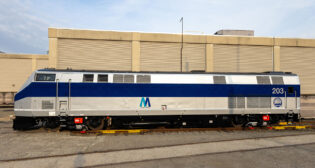
MTA Metro-North Railroad has added a seventh GE P32AC-DM (dual-mode) locomotive to its Heritage Series fleet, all of which are “a celebration of Metro-North’s rich history,” according to President Justin Vonashek. No. 203,

(MTA Photograph)

NY Governor Signs FY26 State Budget Into Law

New York Gov. Kathy Hochul on May 9 signed new legislation as part of the Fiscal Year 2026 Enacted Budget to fully fund the Metropolitan Transportation Authority’s (MTA) $68.4 billion 2025-29 Capital

Transit Briefs: SEPTA, Tri-Rail, NYMTA/Metro-North, WMSC/WMATA, LA Metro

The Southeastern Pennsylvania Transportation Authority (SEPTA) launches contactless payment on Regional Rail. Also, Tri-Rail ridership continues to show signs of growth in 2025; the New York Metropolitan Transportation Authority (MTA) launches an initiative to protect the Metro-North Hudson Line against effects of climate change; the Washington Metrorail Safety Commission (WMSC) threatens not to approve the Washington Metropolitan Area Transit Authority’s (WMATA) plan to expand automation; and new faregates are off to a strong start at LA Metro’s Lake and Firestone stations.

Transit Briefs: CTA, Metro-North, Caltrain, BART, NJ Transit

The Chicago Transit Authority (CTA) unveils final designs for blocks under new Red Line tracks. Also, Metro-North Railroad unveils the sixth wrapped locomotive from its Heritage Series; a new poll shows strong regional approval for Caltrain; Bay Area Rapid Transit’s (BART) customer satisfaction rate hits its highest mark in 10 years; and NJ Transit announces new customer experience enhancements at key transit hubs.

TTL Selects 13 Companies to Continue Partnering With Transit Agencies

The Transit Tech Lab (TTL) on Feb. 10 announced that the 13 companies selected to participate in last year’s program will continue to work with regional transportation agency partners in larger-scale pilots to “demonstrate how their technology can improve transportation and deliver essential services more effectively.”

LOAD MORE