FRA

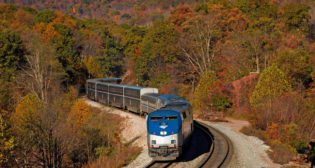
The FRA recently concluded a series of six working group meetings “to inform and collaborate” with stakeholders across the country on the department’s Amtrak Daily Long-Distance Service Study.

Transit Briefs: Amtrak/FRA, MBTA, SEPTA, Rogers

Common themes emerge from the Federal Railroad Administration’s (FRA) stakeholder meetings studying the restoration and expansion of Amtrak long-distance passenger rail services. Also, the Massachusetts Bay Transportation Authority (MBTA) purchases Widett Circle for a new commuter rail layover yard; Southeastern Pennsylvania Transportation Authority (SEPTA) issues a proposed FY 2024 capital budget and 12-year program; and Rogers Communications plans to bring full 5G connectivity services to the Toronto Transit Commission’s (TTC) subway system.


Operation Lifesaver Inc. Executive Director Rachel Maleh.

OLI: $50,000 for N.Y. Crossing Safety Campaign

Operation Lifesaver, Inc. (OLI), in partnership with the Federal Railroad Administration (FRA), announced April 6 that it will award a $50,000 Innovative Rail Safety Competitive Grant to New York Operation Lifesaver (New York OLI) to fund “a targeted multifaceted education and outreach campaign to schools, school bus drivers, community groups, law enforcement agencies and other first responders to facilitate increased free rail safety presentations.”

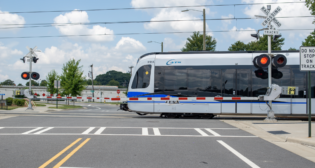
A March 31-April 1 inspection of the CATS Operations Control Center by the North Carolina Department of Transportation found that “required staffing levels were not met—and the transit agency was ordered to ‘cease revenue service’ if not addressed the following day,” according to the Charlotte Business Journal. (CATS Photograph)

Transit Briefs: CATS, FRA Corridor ID, GCRTA, MBTA, WMATA

Charlotte Area (N.C.) Transit System (CATS) addresses its lack of required Operations Control Center staff. Also, Big Sky Passenger Rail Authority, Schuylkill River Passenger Rail Authority, and an Atlanta, Nashville, Memphis and Chattanooga partnership submit proposals for intercity passenger rail service through the Federal Railroad Administration’s (FRA) Corridor Identification and Development (ID) Program; Greater Cleveland (Ohio) Regional Transit Authority (GCRTA) selects Siemens Mobility as the likely supplier of its new light rail vehicle fleet; Massachusetts Bay Transportation Authority (MBTA) publishes a three-year safety improvement plan; and Washington Metropolitan Area Transit Authority (WMATA) readies for the spring reopening of its Yellow Line.

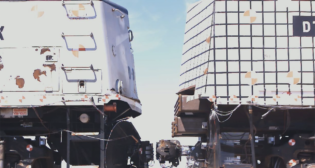
Pre-impact photo of conventional locomotive (left) and CEM locomotive (right). (Caption and Photograph Courtesy of FRA)

FRA Issues Report on Train-to-Train Impact Test

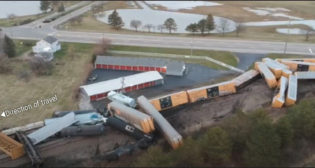
The Federal Railroad Administration (FRA) has published the results of its train-to-train impact test evaluating the effectiveness of crash energy management (CEM) components in improving crashworthiness for equipped locomotives in a wide range of potential collisions.

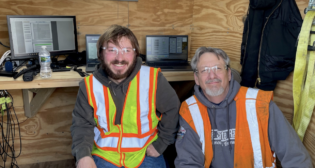
Michigan Technological University's Zach Stanchina (left) and Lake State Railway's Roger Fuehring work to collect data on locomotive emissions for a study conducted through a partnership with ASLRRA, Michigan Tech, Lake State Railway and Chicago South Shore & South Bend Railroad. The study is funded by a Federal Railroad Administration grant.

ASLRRA Advances Work on Grant-Funded Emissions Study

The American Short Line and Railroad Association (ASLRRA) is working with Michigan Technological University and members Lake State Railway and Chicago South Shore and South Bend Railroad to advance the “Evaluation of Non-traditional Methods of Reducing Locomotive Emissions for Short Line Railroads” project, which was funded through a Federal Railroad Administration (FRA) grant received last year, to study short line locomotive emissions and the use of fuel additives and fuel injectors.

FRA Issues SNPRM for Emergency Escape Breathing Apparatus Standards

The Federal Railroad Administration (FRA) on March 22 released a Supplemental Notice of Proposed Rulemaking (SNPRM) to expand occupational noise exposure regulations and require railroads to provide locomotive crews with appropriate “atmosphere-supplying emergency escape breathing apparatuses” when their trains transport hazardous material.