California High-Speed Rail Authority

(Courtesy of CHSRA)

CHSRA Issues Draft 2026 Business Plan

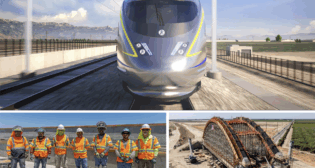
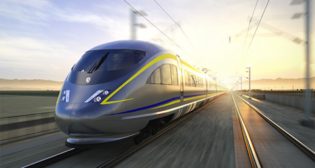
The California High-Speed Rail Authority (CHSRA) has released a Draft 2026 Business Plan for 60-day public review and comment. The overall projected cost for Phase 1 delivery, between San Francisco and Los Angeles/Anaheim, it reported, “dropped by $1.7 billion due to streamlining efforts aimed at making high-speed trains a reality as quickly and economically as possible.”
(Logo Courtesy of USDOT)

USDOT: $5B Available for National Railroad Partnership Program Projects, $42MM Going to Brightline Florida Corridor Safety

The U.S. Department of Transportation on Sept. 22 issued a Notice of Funding Opportunity (NOFO) for the National Railroad Partnership Program that allocates more than $5 billion to projects that “enhance safety on intercity passenger rail networks,” and obligated four grants totaling $42 million-plus for rail safety projects on the Brightline Florida corridor.

(Courtesy of CHSRA)

CHSRA: ‘Right-Sizing the Program’

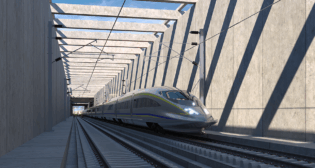
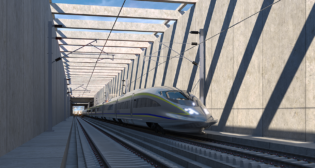
The California High-Speed Rail Authority (CHSRA) on Aug. 22 issued a supplemental project update report, outlining what it called “a clear path forward to connect the high-speed rail system to Northern and Southern California via the Central Valley by 2039.”

(California High-Speed Rail Authority Image)

FRA Revokes California High-Speed Rail Funding, CHSRA Fires Back (UPDATED 8/21)

The Federal Railroad Administration (FRA) will pull back approximately $4 billion in funding for the California High-Speed Rail Authority (CHSRA) high-speed rail project, the U.S. Department of Transportation reported July 16. CHSRA is suing the POTUS 47 Administration, according to California Gov. Gavin Newsom’s Office, and the House Committee on Oversight and Government Reform is now investigating the project.

Senate Committee on Appropriations Advances FY26 THUD Bill

The Senate Committee on Appropriations on July 24 marked up S.2465, the Transportation, Housing and Urban Development Related Agencies Appropriations Act, 2026 (THUD Appropriations Act). The bipartisan legislation was reported in a 27-1 vote from the Senate Committee, according to the American Public Transportation Association (APTA).

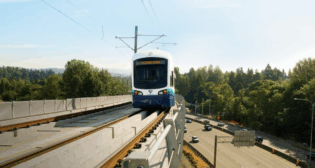
The Sound Transit Board on June 26 identified its preferred light rail route and station locations for the Tacoma Dome Link Extension, which will expand service nearly 10 miles on mostly elevated light rail tracks between Federal Way and Tacoma, Wash., and include four new stations in the South Federal Way, Fife, East Tacoma/Portland Avenue and Tacoma Dome areas. (Courtesy of Sound Transit)

Transit Briefs: Sound Transit, CHSRA, Amtrak, BART

Seattle’s Sound Transit Board identifies the preferred alternative for the Tacoma Dome Link Extension. Also, the California High-Speed Rail Authority (CHSRA) issues a Request for Expressions of Interest (RFEI) for operating segment delivery; Amtrak Pacific Surfliner celebrates the 70th anniversary of Disneyland Resort with a special train wrap; and new San Francisco Bay Area Rapid Transit District (BART) data shows ridership growth and improvements to safety, cleanliness, and rider satisfaction, plus a reduction in fare evasion.

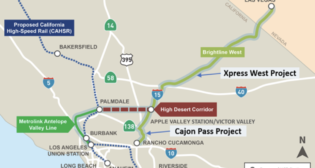
High Desert Corridor High Speed Rail Project Map, Courtesy of HDC JPA.

High Desert Corridor Project Lands Labor Agreements (UPDATED 6/24)

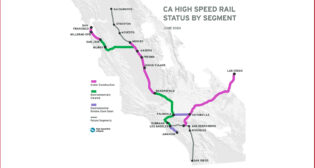
Representatives from the High Desert Corridor Joint Powers Agency (HDC JPA) Board and labor unions signed workforce agreements in summer 2024 for the 54-mile high-speed rail project from Palmdale to Victorville, Calif., that will serve to link the California High-Speed Rail Authority (CHSRA) and Brightline West lines now under development (see map above). Now, the HDC JPA has selected HDR to provide engineering, design, and advisory services for the project.

CHSRA to Release RFEI for Potential Public Private Partnerships

The California High-Speed Rail Authority (CHSRA) is preparing to release a Request for Expression of Interest (RFEI) in the coming weeks to begin the process of formal industry consultation for potential public private partnerships to “drive creative solutions that deliver project segments faster and more efficiently while commercializing assets—such as trainsets, station facilities, track access, fiber, and real estate—at the earliest viable opportunity.” Additional opportunities include transit-oriented development, express cargo and parcels movement, and the leasing assets to the private sector.