U.S. Rail Traffic: ‘A Mix of Red, Yellow and Green,’ AAR

“As conjecture grows about the direction of the U.S. economy, June rail traffic doesn’t offer definitive answers on whether a recession is looming or not,” Association of American Railroads’ Senior Vice President John T. Gray reported on July 6.
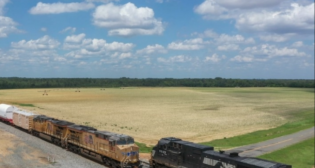
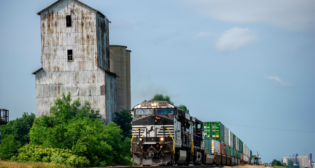
(Photograph Courtesy of NS)

Week 25: U.S. Carloads, Intermodal Down (Again)

For the week ending June 25, 2022 (Week 25), U.S. rail traffic was 493,374 carloads and intermodal units, down 4.4% from the prior-year period, the Association of American Railroads (AAR) reported June 29. Class I railroads hauled 229,857 carloads, down 3.1%, and 263,517 containers and trailers, down 5.5%. Year-to-date, carloads were virtually flat (down 0.1%) and intermodal volume fell 3.5% compared with the same point last year.

AAR: Carloads Rise a Little, Intermodal Falls a Lot

U.S. rail traffic for the week ending June 18, 2022 (Week 24) was 501,207 carloads and intermodal units, down 2.5% compared with the same week last year. Total carloads were 232,921, up 0.4%, while U.S. intermodal volume of 268,286 containers and trailers fell 4.9%. Year-to-date, carloads improved an almost negligible 0.02%, but intermodal dropped 6.3%, compared to the prior-year period.

(Photograph Courtesy of Norfolk Southern)

Week 23: U.S. Rail Traffic Behind 2021 Levels, Flat With 2019

U.S. freight rail traffic dipped again in Week 23, compared with the prior-year period, as carloads were down 2.8% and intermodal fell 4.4%, the Association of American Railroads (AAR) reported for the week ending June 11, 2022.

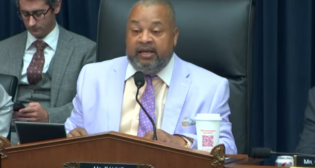
The House Committee on Transportation and Infrastructure, Subcommittee on Railroads, Pipelines, and Hazardous Materials called a June 14 hearing to address rail safety. Pictured: Subcommittee Chair Donald M. Payne, Jr. (D-N.J.).

For House Rail Subcommittee, an Earful on Safety

“Examining Freight Rail Safety” was the theme of a June 14 hearing of the House Committee on Transportation and Infrastructure, Subcommittee on Railroads, Pipelines, and Hazardous Materials. The aim: for members “to hear from government and stakeholder witnesses about the state of freight rail safety and issues pertinent to keeping rail operations, rail workers and communities safe.” Railway Age provides a roundup.

(Photograph Courtesy of BNSF)

Week 22: U.S. Rail Traffic Remains Below 2021 Levels

U.S. Class I railroads hauled 475,513 carloads and intermodal units for the week ending June 4, 2022, falling 2.8% from the prior-year period. This is based on 225,274 carloads—down 1.0% from 2021—and 250,239 containers and trailers—down 4.4%, the Association of American Railroads (AAR) reported on June 8.

U.S. Rail Volumes: ‘Mixed’ Bag Lingers in May

“Rail traffic volumes in May reflected an economy that is a mixture of good and not-so-good,” Association of American Railroads (AAR) Senior Vice President John T. Gray reported on June 1.

AAR: North American Rail Volume Down Through 20 Weeks

The Association of American Railroads (AAR) now has 20 weeks of rail traffic data for 2022 (ending May 21). Total North American carload and intermodal traffic dipped 3.8% from the same point last year—falling 3.6% in the U.S. and 6.4% in Canada, and rising 3.2% in Mexico.

Pictured (left to right) at the High Speed Loop groundbreaking this month are MxV Rail’s senior management Shawn Vecellio, Tammy Bregar, Kari Gonzales, and Ken Laine, and PuebloPlex Director of Operations Chris Bolt.

MxV Rail Breaks Ground on First Test Loop

Construction is under way at MxV Rail’s new railroad testing facility at the PuebloPlex campus in Colorado, which is set to open this fall.

AAR to STB: No ‘Quick Fix’ to Service Problems

“The Class I railroads recognize that their recent service performance has not met many customers’ expectations,” the Association of American Railroads (AAR) wrote in a May 18 filing to the Surface Transportation Board (STB). But while the STB’s May 5 decision to release updated, more-comprehensive rules for reporting performance and employment metrics “reflects an understandable desire for quick action,” it was “not issued in a vacuum,” AAR pointed out.

LOAD MORE