STB Sets 4Q22 Rail Cost Adjustment Factor

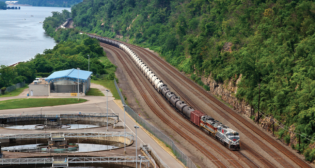
The Surface Transportation Board (STB) has adopted for fourth-quarter 2022 the rail cost adjustment factor (RCAF), defined as “an index formulated to represent changes in railroad costs incurred by the nation’s largest railroads over a specified period of time.”

No Work Stoppage for Now

It took an all-night bargaining session in the Washington, D.C., offices of Labor Secretary Marty Walsh, but as dawn approached Thursday, Sept. 15, three rail unions, representing almost 60% of unionized rail workers and which had been holding out for a better deal than was reached by nine others, came to terms with the National Carriers Conference Committee (NCCC) that represents most of the nation’s Class I railroads and many smaller ones.

(Photograph Courtesy of NS)

North American Rail Volume Down Through 36 Weeks, AAR

The Association of American Railroads (AAR) now has 36 weeks of traffic data for 2022 (ending Sept. 10). Total North American carload and intermodal traffic dipped 2.4% from the same point last year—with decreases in the U.S. and Canada, and an increase in Mexico.

Railroads Prepping for Strike Action: AAR (UPDATED)

The six Class I freight railroads participating in national bargaining will begin taking steps as early as Sept. 12 to manage and secure shipments of hazardous and security-sensitive materials “in light of the possibility of a rail labor strike,” the Association of American Railroads (AAR) said the evening of Sept. 9. The SMART-Transportation Division (TD) and Brotherhood of Locomotive Engineers and Trainmen spoke out on embargoes* on Sept. 11.

AAR Report: Nationwide Rail Shutdown Could Cost $2 Billion Per Day

A report released on Sept. 8 by the Association of American Railroads (AAR) has found that a nationwide rail shutdown would “dramatically impact economic output” and could cost more than $2 billion per day.

FRA Eyes RRP Rule Update

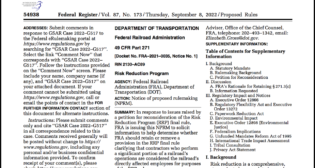
The Federal Railroad Administration (FRA) on Sept. 8 issued a Notice of Proposed Rulemaking to solicit comments on whether it should retain or remove a provision of the Risk Reduction Program (RRP) final rule, which took effect in 2020.

Rail Traffic Registers Small Weekly, Monthly Gains

In reporting U.S. rail traffic for the week ending Sept. 3, 2022, as well as volumes for August 2022, Association of American Railroads Senior Vice President John T. Gray said, “Things can change quickly, but there are reasons to believe the economy is on track to stimulate continued improvements in rail volumes.”

U.S. Rail Traffic Uptick Continues

For the week ending Aug. 27, 2022, total U.S. rail traffic came in at 511,574 carloads and intermodal units, up 1.4% from the prior-year period, the Association of American Railroads (AAR) reported Aug. 31. It is the second consecutive week that carload gains have offset intermodal declines.

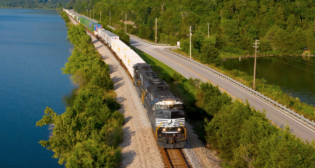
(Photograph Courtesy of Norfolk Southern)

Rail Traffic Uptick for Week 33

For the week ending Aug. 20, 2022, U.S. rail traffic was up 0.1% over the same week last year; total carloads came in 2.9% higher while intermodal volume continued its downward trend, dipping 2.4%, according to the Association of American Railroads’ (AAR) Aug. 24 report.

AAR: North American Rail Volume Down Through 32 Weeks

The Association of American Railroads (AAR) now has 32 weeks of traffic data for 2022 (ending Aug. 13). Total North American carload and intermodal traffic dipped 2.9% from the same point last year—with decreases in the U.S. and Canada, and an increase in Mexico.

LOAD MORE