Commentary
First of a Series: A New Congestion Remedy, with Help for Transit
Written by David Peter Alan, Contributing Editor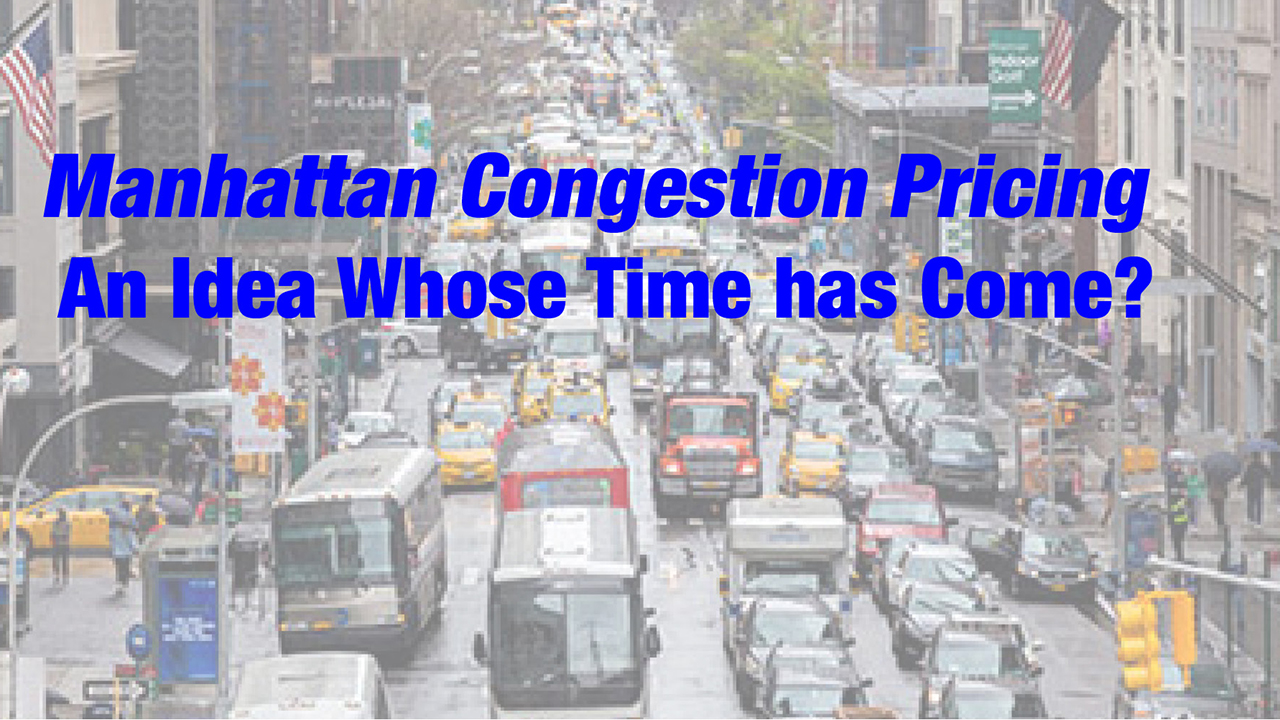
A new border dispute is erupting in the United States, and it’s nowhere near the Southern Border with Mexico. The combatants are New York and New Jersey, and the dispute has reached the courts on both sides of their border. For decades, longtime New Jersey passenger rail advocate Albert L. Papp has referred to the boundary line between the two states as the “Hudson Ocean,” and his words have never been more prophetic or appropriate than today.
The dispute centers around whether New York City has the authority to impose a fee on motor vehicles that enter Manhattan south of 60th Street, which includes Midtown Manhattan (the city’s main business center) and areas further south, as far as the Financial District (the city’s historic business center, where Wall Street is located). The official primary purpose of the plan, officially called the Central Business District (CBD) Tolling Program, is to reduce congestion on city streets, caused by the sheer number of motor vehicles which use them and the space those vehicles occupy. The intended financial beneficiary of the program is the Metropolitan Transportation Authority (MTA). All of the money collected under the plan would be used for capital projects (not operations) on New York City Transit (an 80% share for the city’s subways, buses and the Staten Island Railway) and the regional/commuter railroads on the New York State side of the line: 10% each for Metro-North and the Long Island Rail Road.
Many New Jersey officials oppose the plan bitterly, as do others in parts of New York City, and they are fighting the plan vigorously. New Jersey declared its loyalty to the region’s motorists, even though motorists comprise only a small fraction of the people who go from New Jersey into ”The City,” to use the common vernacular expression. Most take transit, which often means one of New Jersey Transit’s trains or buses, even though some transfer to PATH (Port Authority Trans Hudson) trains to Lower Manhattan or toward the south end of Midtown. All those modes terminate in the tolling district. In effect, New Jersey is not fighting for its transit riders, and some advocates say that state officials are metaphorically “throwing those riders under the bus.” In this case, that means a bus heading toward the Port Authority Bus Terminal on the west side of Midtown Manhattan, ten blocks north of Penn Station.
In this series, we will examine New York’s congestion tolling plan, starting with a look at exactly what it entails. We will look at other cities around the world where similar plans have been implemented and will examine the court cases filed by the plan’s opponents in both states who seek to invalidate it. We will also examine the effect the plan or its failure could have on transit riders, both in New York City and on New Jersey Transit, and suggest some possible changes that could be negotiated in the future.
Historical Background
The current plan, or something similar, was first proposed in 2017. It was incorporated into the state budget in 2019. New York State does not allow the amount of “home rule” that would enable the City to approve such programs, even if they would not be implemented anywhere else. So the congestion pricing plan must go through the State political system, including the Legislature, where members from New York City are outnumbered by those representing other places. The current plan was scheduled to be implemented in the second quarter of 2024, but the court cases will delay that, and it is possible that the ongoing litigation could scuttle the plan completely, an outcome generally considered unlikely.
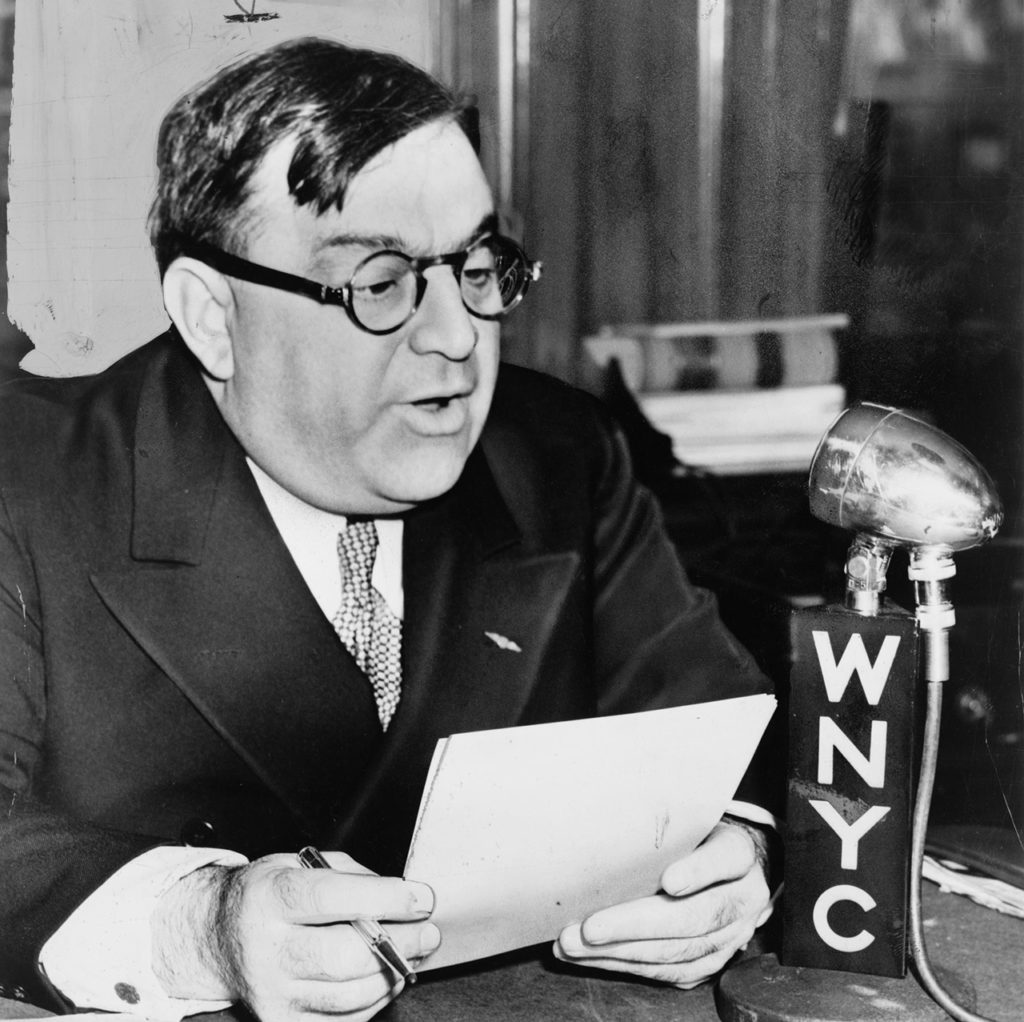
The concept of clearing, or at least mitigating, street congestion caused by vehicles is not new. There is a story that Julius Caesar implemented limitations on vehicles entering the City of Rome during the day (although we could not find the primary source quoted for that information). In New York City itself, the debate has gone on for more than a century, as Sewell Chan wrote in an article in The New York Times on Nov. 11, 2008, headlined How East River Bridges Stayed Toll-Free: “Just as Social Security has been described as the third rail of federal politics, imposing tolls on the East River bridges—an idea that has again been revived as the Bloomberg administration seeks to plug a growing budget deficit—is the third rail of New York City politics. A ride through The Times’s archives shows that the debate over bridge tolls has gone on for decades, going back further than social security itself.” The East River divides Manhattan from Brooklyn and Queens. Chan noted that the Brooklyn (1883), Williamsburg (1903), Manhattan (1909) and Queensboro (1909, also called the “59th Street Bridge, the only one of the four that goes to Queens) Bridges originally charged tolls, but they were eliminated by Mayor Fiorello LaGuardia (after whom the airport is named) in 1934, after a fierce and lengthy fight.
According to Chan, there were more initiatives to restore the tolls in 1953, 1959, 1966, 1970, 1975, 1987, 1991, 2002 and 2005. Other sources mentioned initiatives from 1952, 1968 and 1971, and there were more later. The initiative on Chan’s list that came closest to being implemented came in 1975, when state and some federal authorities supported the idea, but the Reagan Administration reversed a Carter Administration decision that would have implemented it. The 2005 plan from Mayor Michael Bloomberg’s administration focused on congestion more than on air quality, and would have imposed an $8.00 toll (about $12.25 in 2024 dollars) on vehicles entering Manhattan from Brooklyn or Queens during peak hours. The dividing line would have been placed at 60th Street, as in the current plan, but Assembly Speaker Sheldon Silver refused to allow a vote on it in 2008. Chan concluded by saying: “History does not suggest that the tolls have much of a chance, but who knows?”
Even though Chan mentioned nine unsuccessful efforts to reinstate the long-lost bridge tolls, efforts to restore them continued. There were also attempts to limit access by private vehicles to certain streets in Manhattan, but none of those were successful, either. The Bloomberg Administration’s “PlaNYC” from 2007 included several proposed improvements in transportation and environmental policy, but only the congestion pricing plan required State approval. That never happened. The proposal resembled the current one in several ways, and transportation advocates and many Democrats (but not Silver) supported it. Motoring interests opposed it, and the arguments on both sides resembled the ones being presented today. Many elected officials representing Brooklyn and Queens opposed it strongly. Polls showed that a large majority of voters generally opposed the plan, but voters who knew that it would support transit in the City supported it by approximately as large a margin. A proposal called “Move NY” was introduced in 2015 by former New York City Traffic Commissioner Samuel “Gridlock Sam” Schwartz (who coined the term “gridlock”). It would have placed tolls on East River crossings to Manhattan but reduced them on “outer borough” crossings. It would have raised an estimated $1.5 billion, but it also faced opposition and got nowhere.
A Proposal That Might Finally Succeed
Then came a plan from Gov. Andrew Cuomo in 2017, precipitated in large part by complaints about the condition of the subway system. One of the main differences between that proposal and earlier ones was the use of “open road tolling” through E-Z Pass, rather than toll booths, which are currently being eliminated from highways at a rapid rate. The proposal was not otherwise radically different from all of the ones that had previously failed, but conditions might have changed.
Opposition still came from the same areas, and the arguments against congestion pricing had not changed substantially. Mayor Bill deBlasio, who had previously opposed the toll, came to agree with Cuomo, who had endorsed the tolling concept in his State of the State Address in January 2019. While the proposal appeared to be moving forward, disagreements with President Donald Trump, followed by reduced travel caused by the COVID-19 virus delayed the approval process for the proposed tolls. The MTA started holding hearings on the plan on Sept. 23, 2021, but the delays continued. So did opposition from many New York Republicans, as well as New Jersey officials, nearly all of whom are Democrats. We will report on the legal battle between New York and New Jersey later in this series.
The Federal Highway Administration issued a Letter of Sufficiency for the plan to the MTA and the City’s Department of Transportation on May 5, 2023, approving the environmental review. At that time, City DOT spokesperson Nick Benson was quoted as saying: “This approval marks a significant step forward, and we will continue working with our partners at the city, state, and federal level to advance this nation-leading program and deliver a safer, healthier, more equitable city.” The plan received its final federal approval on June 23. The MTA established the Traffic Mobility Review Board to set toll rates and determine who would be eligible for discounts or exemptions, but more opposition ensued, including litigation contending that the feds’ decision was flawed and should be declared invalid.
These cases are still ongoing. The MTA put construction contracts for the subway system on hold on Feb. 14, due to the litigation. Despite the latest round of challenges from both the New York City and New Jersey sides of the “Hudson Ocean,” the toll rates have been established. Whether or not those tolls will be collected remains to be seen.
How Much Will it Cost?
Vehicles entering Manhattan south of 60th Street must pay the toll, which would be charged once a day, similar to the “day pass” that some transit providers (but not the MTA) offer. There would be no charge for vehicles using the FDR Drive on the East Side, the West Side Highway, or the underpass between them to go around the toll zone. These would be E-Z Pass rates, collected through scanners mounted on posts that record license plate numbers. Motorists without E-Z Pass must report their trips and pay the toll on line or by phone (or face penalty charges), and their tolls would be 50% higher than through E-Z Pass. The base rate for conventional passenger vehicles would be $15.00, in effect from 5:00 AM until 9:00 PM on weekdays and from 9:00 to 9:00 on weekends. The overnight rate would be $3.75. The daytime toll at tunnels, which themselves collect a toll for tunnel use, would be $10.00. The rate for motorcycles would be half of the “passenger car” rate. For “small buses” and “small trucks,” there would be a charge of $24.00 at “daytime” hours, $6.00 overnight, and $12.00 charged at tunnels during “daytime” hours. “Large buses” and “large trucks” would pay $36.00, $9.00, and $16.00, respectively. Taxi fares would be subject to a surcharge of $1.25 per trip. For shared-ride quasi-taxis, such as those operated under auspices of companies like Uber and Lyft, the surcharge would be $2.50 per trip.
There would be no charge for “commuter buses,” although it is not clear which other buses would have to pay the toll, even though all buses remove private automobiles from the streets, in theory, at least. There would also be exemptions for emergency vehicles, those transporting persons with disabilities, or specialized government vehicles. Tolls could be increased by up to 25% on “gridlock alert” days, and the MTA reserves the right to raise them by up to 10% for as long as a year. Some low-income motorists could receive a partial tax credit.
While this would be the first use of congestion pricing in the United States, it has been implemented in London, Stockholm and Singapore. Space rationing is being used in Mexico City and South America. We will look at how these measures are succeeding in those places in the next article in this series.