Commentary
Fifth of a Series: Twists and Turns in NJ Federal Court
Written by David Peter Alan, Contributing Editor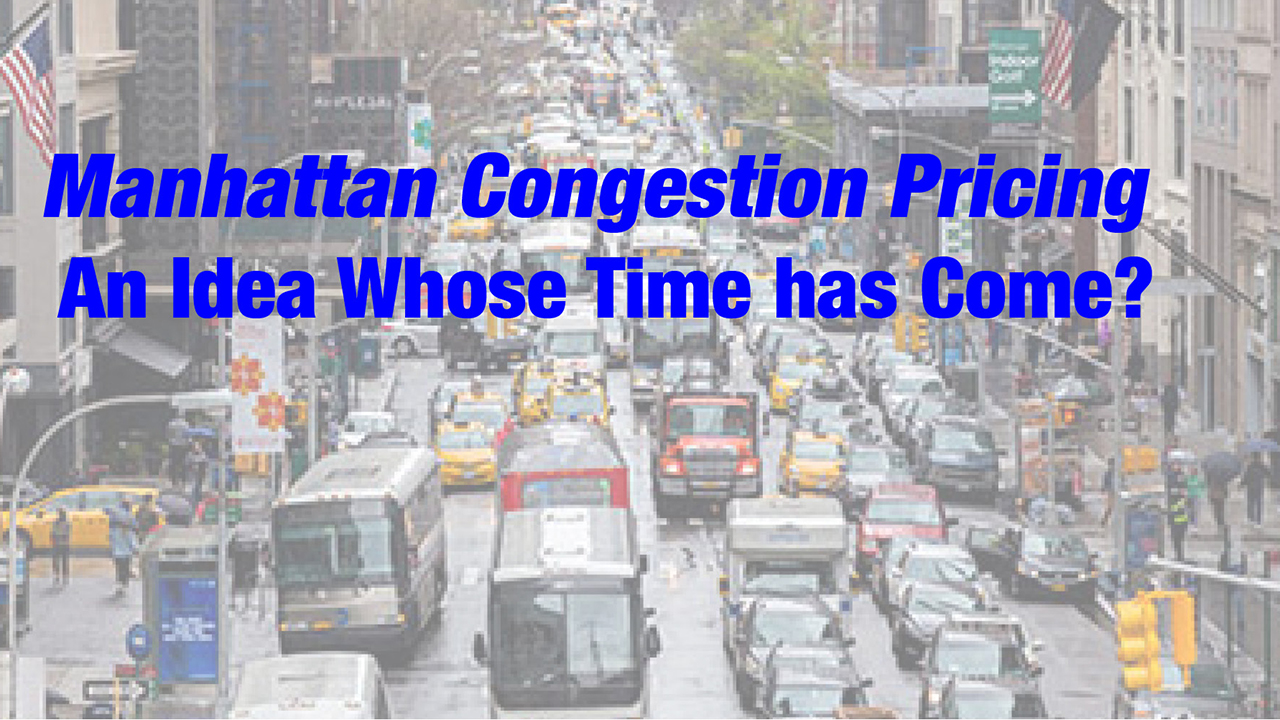
New Jersey is slugging it out with the Federal Highway Administration (FHWA) and New York State and City transportation officials over a proposal to charge tolls for vehicles that enter Manhattan’s Central Business District, the Central Business District Tolling Program (CBDTP), a plan the New York MTA Board approved March 27.
On March 28, MTA Chair and CEO Janno Lieber told WNYC, New York’s NPR station, that most of the people who come to the City from New Jersey take transit rather than driving, and that the tolls would give them a better transit experience on the New York side. He said that the tolling program is a matter of “New York City and New York State sovereignty.” He also noted that New Jersey is having trouble funding New Jersey Transit, while New York is making big decisions. Lieber reiterated that he expects that the toll will be implemented in June, but a legal battle continues, a fight that renders his expectation questionable. New Jersey Governor Phil Murphy and other New Jersey officials have demonstrated their displeasure with the plan by suing to have it invalidated.
The State of New Jersey has sued in Federal Court in the District of New Jersey to stop the proposal, claiming that it was not approved properly. We reported on the initial pleadings: New Jersey’s Complaint and the Answer from the transportation officials, in Part 4 of this series. Since that time, the case has developed in an unusual way.
New Jersey is not represented by the Attorney General, who customarily represents the State in matters that are brought to court. Instead, famous litigator Randy Mastro of the equally famous mega-firm King & Spalding is representing the State, along with a number of lawyers from the firm’s offices outside New Jersey. The State alleges that the FHWA violated the National Environmental Policy Act (NEPA) and the Administrative Procedure Act (APA) by performing something less than the amount of scrutiny needed for a full Environmental Impact Statement (EIS) when it issued a Finding of No Significant Impact (FONSI), which is a major step on the way to final approval of the program. The State made these allegations, despite Gov. Phil Murphy’s acknowledgment that the record at issue is 4,005 pages long. New Jersey also alleges that the FWHA and other officials named as Defendants did not consult with New Jersey sufficiently and did not take environmental issues in the Garden State into proper consideration, a violation of the Clean Air Act.
In Part 4, we examined New Jersey’s Complaint and the Answer that the federal highway officials filed at the end of September. We also reported the few comments from New Jersey Transit that made it into the case record. Although the case is about transportation policy, the pleadings said little about that aspect of the dispute, concentrating instead on the sufficiency of the record supporting the FONSI and environmental concerns in New Jersey, issues of administrative and environmental law.
Thick Case Record
This has been a busy case, to say the least. From the initial filing of the Complaint on July 21, 2023 until the most-recent on Feb. 14, there have been 210 filings on the case, No. 2:23-cv-28853. They can all be found at https://www.courtlistener.com/docket/67625362/state-of-new-jersey-v-united-states-department-of-transportation/.
The plethora of filings include pleadings, exhibits supporting requests made to the judge, motion practice, briefs, and a variety of other legal “papers,” a term still used in the profession, even though “documents” are now filed on line. Exhibits are documents filed with a motion (a request to the judge) that demonstrate facts which would support the request or filed by the other side opposing it. In a motion, the party making the request files a Notice of Motion, with a brief and exhibits supporting it, and a proposed Order. If the other side opposes the motion, they file opposition papers, including a brief and exhibits, and might propose a different form of Order.
Developments After Initial Pleadings
On Oct. 6, The New York MTA and its affiliated agency, the Triborough Bridge and Tunnel Authority (TBTA) moved to intervene in the proceedings, essentially a request to be added as a party. As is customary in such requests, the MTA and TBTA argued that they have a right to intervene, they have a compelling interest that other parties could not protect, and that they would suffer adverse consequences if not allowed to intervene on the side of the Defendants.
Magistrate Judge Leda Dunn Wettre allowed the MTA and TBTA to intervene on October 12. Their Answer, filed the next day, denied the allegations of the Complaint, much as the original Defendants did, admitting only facts known to the public. They asserted the same defenses as the original Defendants, adding defenses that the claims in the Complaint are not ripe for adjudication, and that “The FHWA undertook the equivalent of an EIS.” In support of that defense, the new Intervenors noted that there were about 91,000 submissions from the public about the program (¶71 at 11).
Is a Trial Necessary?
On Nov. 10, the State of New Jersey filed a Motion for Summary Judgment, with supporting documents. The purpose of such a motion is to eliminate the need for a trial concerning the facts of a case or, failing that, to reduce the number of factual issues that must be resolved at trial. The moving party is required to demonstrate that there are no disputed factual issues that must be subjected to proof through the trial process. Summary judgment is generally disfavored, because parties have the right to prove the facts underlying their cases. Nonetheless, if both sides agree on the material facts, they can submit the case to the judge for a decision without spending the time and money that a trial would cost.
In his 50-page Brief supporting his motion, Mastro argued throughout that New Jersey had been shortchanged when it came to the process (“New Jersey was effectively cut out of the process,” at 5), considering environmental justice communities, considering impacts of the tolling plan on New Jersey, and more. He provided “Factual Background” (from New Jersey’s view) and argued that the State’s motion meets the requirements for Summary Judgment, as is customary. He again made many of the arguments that he had made earlier in the case, as is also customary. Among them were that the FONSI is unlawful because FHWA failed to take a hard look at environmental impacts in New Jersey, there were no proposals for mitigating environmental impacts in the state, that the FHWA did not consider environmental justice concerns sufficiently or collect data on communities that have them, and that the inadequacy of the opportunities that New Jersey had to participate rendered the FONSI and the EA arbitrary and capricious. As an example, Mastro mentioned that, on September 10, 2021, transportation agencies in the state attended a virtual meeting with the project sponsors, but environmental agencies were not invited, even though their New York counterparts were consulted (at 41). Mastro also argued that the failure to perform a Conformity Analysis required under the Clean Air Act and to consult with New Jersey’s environmental agencies violate the CAA, rendered the FHWA’s findings arbitrary.
Defendants Ask for Summary Judgment
The Defendants from the FWHA filed their opposition to New Jersey’s motion for Summary Judgment, along with their own cross-motion on December 15. They were represented by lawyers from the Environmental and Natural Resources Division of the Department of Justice and the U.S. Attorney’s Office for the District of New Jersey. Their brief was 48 pages long. They began by saying that New Jersey “relies on superficial arguments or selective interpretation of the record” (at 1). The “Legal and Factual Background” section began with a description of NEPA and how it works and argued that an EA can be the functional equivalent of an EIS (at 4). The Federal Defendants then described in detail the efforts behind the FONSI and the EA, rebutting New Jersey’s arguments that the FWHA officials did not pay enough attention to New Jersey, failed to perform a conformity analysis as required by the Clean Air Act, failed to take environmental justice communities into account, and other claims. After describing in detail the efforts that the defendants had taken, the brief turned to the standard of review for such determinations, saying that a court had to determine whether the agency’s decision “was reasonable when considered in the light of the relevant provisions of NEPA” and that administrative determinations are given deference when they are within the agency’s expertise (at 21).
In its Legal Argument, the Defendants argued that the FHWA had thoroughly analyzed anticipated effects on air quality in New Jersey, including potential effects in Environmental Justice communities, confined its analysis to feasible alternatives, and provided ample opportunity for the public and State agencies in New Jersey to participate. The defendants noted that the persons who commented included Gov. Murphy and Congressman Josh Gottheimer, who is also a vocal opponent of the tolling plan (at 40). The brief then detailed the meetings, including with New Jersey’s transportation agencies, and the public review process, described as “robust” (at 42).
Amici Want Their Say
The term amicus curiae translates to “friend of the court” and refers to a non-party who requests to file a brief expressing a point of view that the parties are not in a position to express, but the potential amicus believes has a bearing on the case.
On Dec. 15, the same day that the Federal Defendants filed their Motion for Summary Judgment, 34 concerned organizations filed a motion to present an amicus brief in opposition to the State of New Jersey’s motion and in favor of the congestion tolling plan. They ranged from the Working Families Party to the New Jersey Association of Railroad Passengers, to the Don’t Gas the Meadowlands Coalition, an environmental organization whose primary concern had been opposing NJ Transit’s plan to build a power plant fired by natural gas, a facility that was recently dropped from the agency’s plans. The loosely based alliance included many environmental advocacy organizations, some “progressive” political organizations, some organizations pushing for transportation alternatives like bike paths and complete streets, and other like-minded groups. Montclair attorney John Reichman represented them.
Reichman argued that they had a sufficient interest in the outcome of the case that they should be allowed to file as amici. In supporting the request, he argued: “the Tolling Program will have enormous environmental benefits for both New Jersey and the entire New York City metropolitan area” (at 1). He said that the program would benefit New Jersey Transit’s riders, NJ Transit commuters would have better service on New York’s MTA, there would be more incentive to ride on NJ Transit and enhance the agency’s revenue, and the air would be cleaner. He also said there is wide support for congestion pricing in New Jersey. The Brief also argued that New Jersey is hypocritical (at 14) by opposing the congestion toll while planning to spend $10.7 billion to widen the New Jersey Turnpike, saying that the New Jersey Turnpike Authority “incredibly contends that an EIS is not required for the Turnpike Extension” (at 19). In its brief, the State had complained that the FHWA had not done a full EIS.
Reichman’s Brief likened Murphy to Robert Moses, who destroyed neighborhoods to build highways when he held power in New York for much of the past century. He wrote: “Governor Murphy is a modern-day Robert Moses who is emulating the worst aspects of Moses’s legacy by seeking to expand the NBHCE and build Moses-style highways all over the State, underfunding public transportation in New Jersey, and in this action trying to kneecap improvements to public transportation in New York. Plaintiff is falsely accusing the defendants of the very practice it is engaging in elsewhere” (at 21).
Potential New York Amici
It was not only New Jersey organizations that wanted to weigh in supporting the congestion tolling plan, some New York organizations wanted to do that, too. They added to the busy day on December 15 by submitting their own motion to file an amicus curiae brief in support of the Defendants’ cross-motion for summary judgment. The potential amici included environmental, civic, transportation, real estate-oriented, and other groups. The New York Public Interest Research Group (NYPIRG), New York Lawyers in the Public Interest, Riders’ Alliance, the Tri-State Transportation Campaign, and Transportation Alternatives were among them. There were eleven organizations in the group. Andrew Otis, who had applied to participate pro hac vice, filed the brief for the potential New York amici.
They argued that the tolling program would improve the quality of life in the region, including in environmental justice communities in New Jersey, that it would achieve this result by reducing congestion and air pollution and funding transit improvements. The brief specifically touted the potential benefits of the congestion tolls for transit (at 15-18), including more-stable funding for capital projects, a system that works better, improvements like new subway cars and upgraded signal and communications equipment, better access for riders with disabilities, and better air quality in the region. They also argued that the project sponsors had performed “extensive” outreach and were committee to mitigating adverse environmental impacts. Finally, they noted the success of congestion pricing programs in Singapore, Stockholm, and London.
As 2023 ended, both sides had requested summary judgment, which meant that both believed that the record “told the story” for them, and that there was no need to hold a trial. There were also 45 groups that asked to file amicus briefs in support of the congestion tolling program. There would be much more to come in 2024, as we bring you up to date on events in the case, in the next article in this series.
First of a Series: A New Congestion Remedy, with Help for Transit
Second of a Series: Congestion Pricing Around the World
Third of a Series: New York’s Plan and Why Officials Want It
Fourth of a Series: A New Kind of Border Dispute