Cold Climate Combat
Written by Carolina Worrell, Senior Editor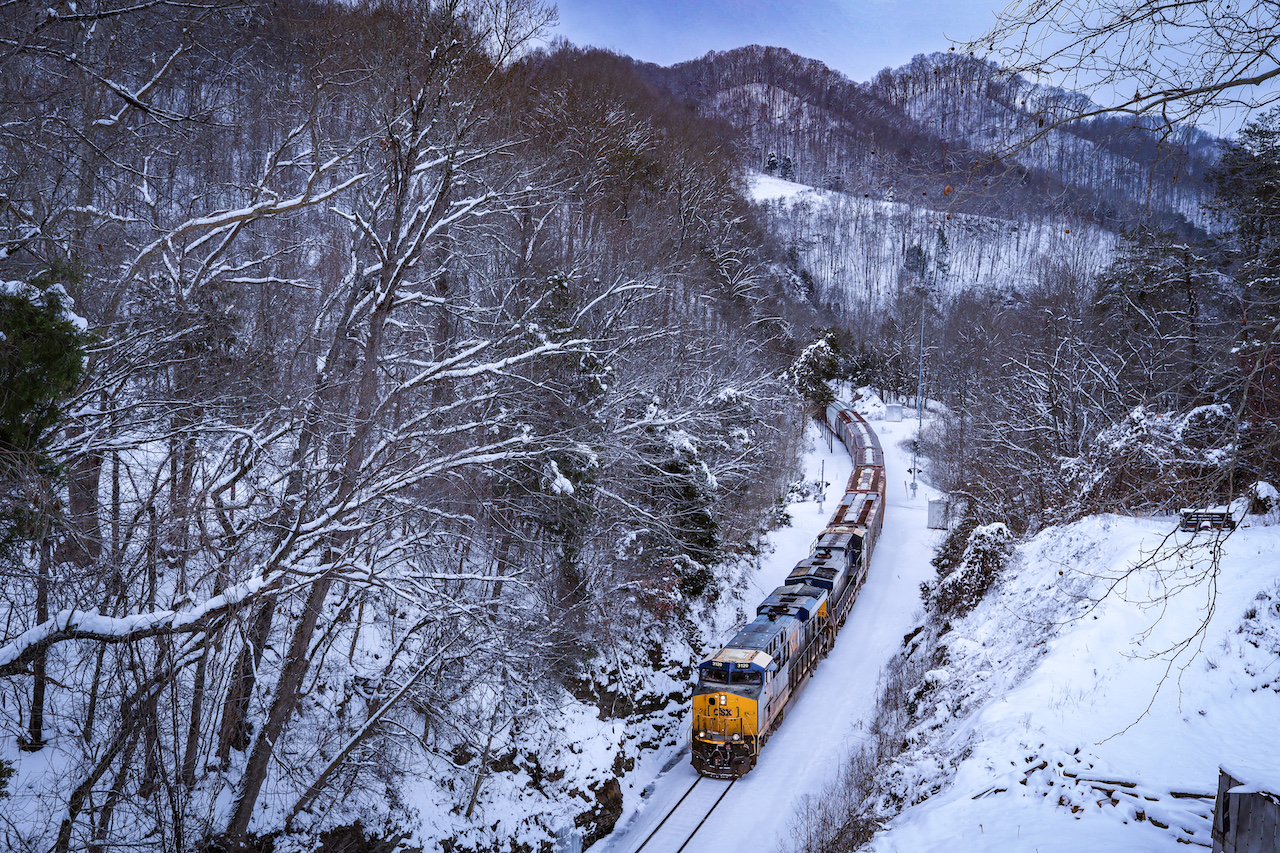
(CSX)
RAILWAY AGE, AUGUST 2024 ISSUE: Railroads and suppliers work year-round to prepare for winter’s onslaught well before it becomes a problem.
Railroads are vulnerable to weather conditions that can slow or cripple operations and the flow of goods and people across large portions of their networks. Recent winters have proved that innovation is needed in critical areas of train operation and track functionality to counter the effects of sub-zero temperatures that worsen when joined by high levels of liquid or frozen precipitation.
The following railroads and suppliers share how they combat the cold weather season, including use of innovative technologies.
CPKC
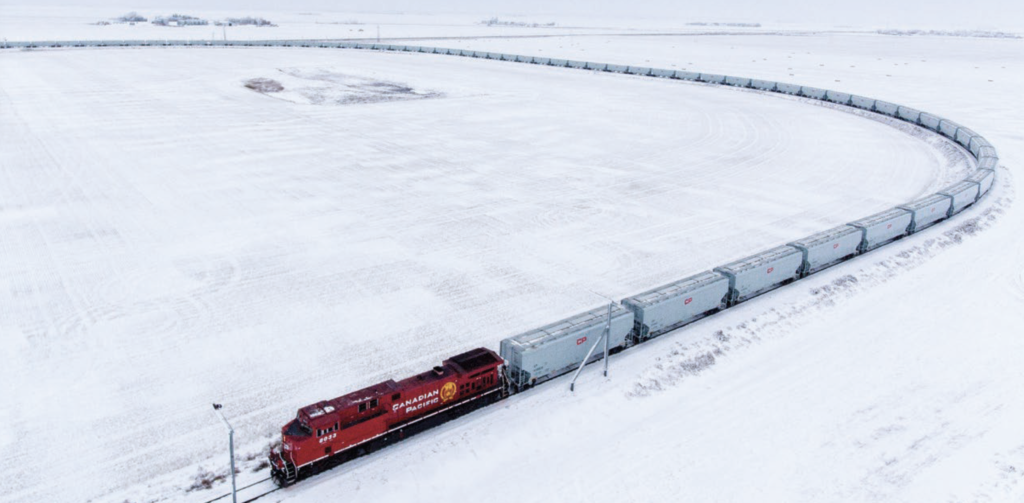
At CPKC, significant resources are mobilized each year to forecast and plan for winter, and then mitigate the impact to the greatest extent possible while maintaining safety, wherever winter conditions materialize on the network. CPKC has achieved significant winter operating improvements over the past decade since the company successfully adopted and executed the Precision Scheduled Railroading (PSR) operating model, the Class I notes in its latest Winter Contingency Report. Planning begins each summer as the railroad starts analyzing weather data and forecasts for the upcoming winter. CPKC analyzes predictive meteorological modeling to help forecast conditions expected during the upcoming winter, including the type, severity and geographical reach. “Although forecasts are predictions that can never be relied on, they are a critical planning tool that helps CPKC prepare for winter conditions,” the railroad notes.
Once weather models are analyzed, CPKC then develops specific winter plans for each region, subdivision, rail yard and facility across the network. CPKC strategically places assets and resources (i.e. snow removal equipment and sand) in locations across the network to improve CPKC’s ability to respond quickly to winter weather. CPKC also develops winter contingency plans for Operations employees, Engineering and Mechanical personnel and Operations Centers in Calgary and across the network.
“The winter contingency measures that CPKC has in place support the resiliency of the rail network so that Canadians can rely upon CPKC to provide a safe, efficient and essential freight transportation service,” the railroad says. “CPKC’s railroaders are the best in the world, and they are proud to serve the needs of rail customers, even as the railway confronts the harshest of winter operating conditions.”
CSX
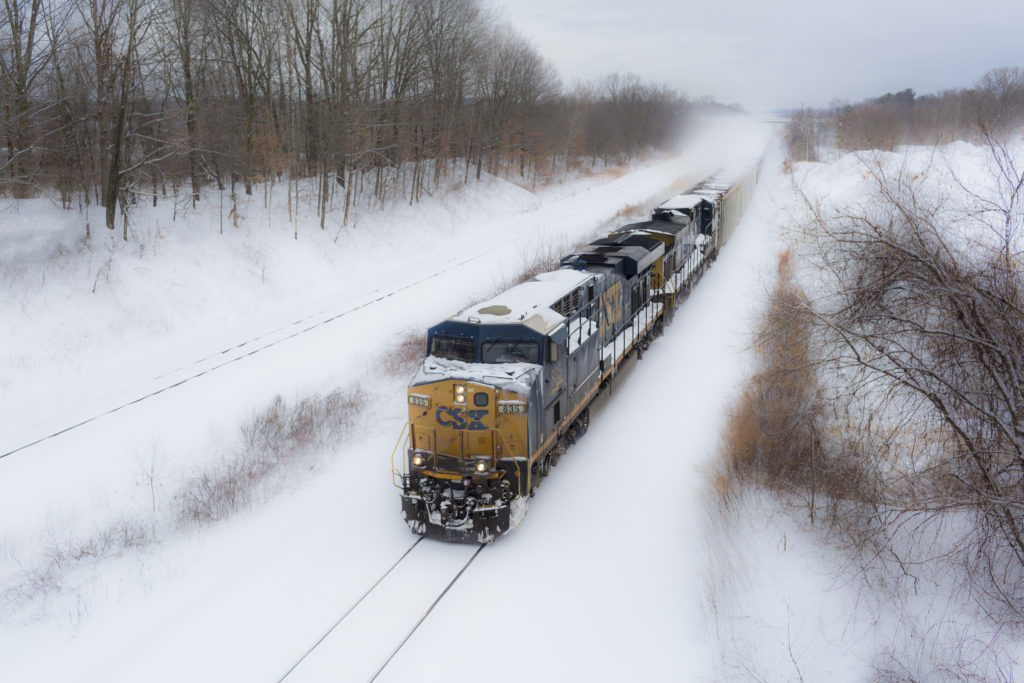
In preparation for winter operations, CSX’s mechanical team has utilized historical data points to understand the key opportunities to enhance the reliability of its locomotive fleet and eliminate out of service events for certain failure modes during winter conditions. This analysis, CSX says, has led to mechanical making specific engineering modifications to internal air sources and the associated air routing. This modification is being implemented on the high-horsepower locomotive fleet.
CSX adds that it continues to focus on employee safety ahead of, during, and after any adverse winter weather events to ensure the Class I is prepared to respond to any operational issues. Additionally, CSX says it is ensuring that all necessary equipment is staged and ready to be deployed in the event of a significant winter weather event.
“We have tested two new switch heaters in the Buffalo Terminal area that seem very promising,” CSX tells Railway Age. Additionally, the Class I has also purchased more than 200 additional generators to ensure it mitigates the impact to operations in case of widespread power outages. “From an R&D perspective specifically, we’re also looking at reducing the size of switch heaters while keeping the same level of effectiveness,” CSX says.
Frauscher Sensor Technology USA Inc.
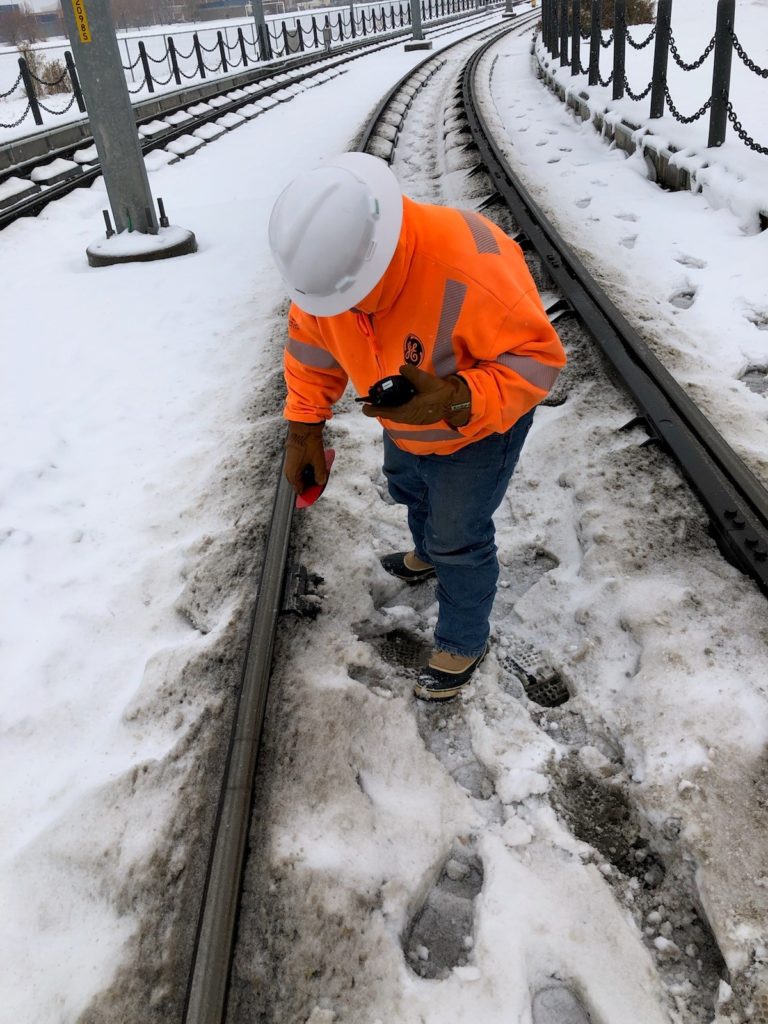
“Winter and signaling systems often don’t mix,” Frauscher tells Railway Age. “Technology dependent on shunting can face many challenges in winter, particularly issues caused by snow, ice, road salt and deteriorated ballast. Frauscher wheel sensors are water and dust proof (IP68 rated) and are not affected by any of these common winter conditions. This high level of reliability can be depended upon in all situations—from vital applications, such as primary train detection to non-vital applications, such as triggering AEI readers, hotbox detectors and vision systems. Whether the applications are vital or non-vital, the reliable operation of all these systems is crucial to maintaining smooth operations throughout the winter months.”
Having the means to ensure the highest level of reliability and safety is always the predominant need/concern for rail operators and integrators, according to Frauscher. Beyond this, increasing digitalization of rail operations in general has generated “a broader interest in solutions that harness the potential of this trend.” Specifically in terms of overall monitoring and maintenance, the possibility of collecting data in a cloud, enriching information from all over the network and coordinating with the supplier for dedicated support and maintenance services has shown to be of strong interest. A comprehensive monitoring platform is needed to make information available directly to field personnel, streamlining field operations. “We see a growing trend in which railroads are seeking means to have more centralized control of their systems covering a wide range of areas, with access to a snapshot of their networks’ overall health. The ability to easily receive predictive information and recognize potential faults before they occur, including their location, are requested capabilities. This type of platform is even more important when winter conditions make track work more difficult or hazardous,” Frauscher says.
Railroads operating in areas that experience winter weather may conduct a “health check” of equipment, rail and ballast to head off potential issues, the company tells Railway Age. “For railroads that utilize technology dependent on shunting for proper operation, careful examination of areas that have experienced issues in the past should be reevaluated. For these problem areas, a ‘spot fix’ solution is available with Frauscher wheel sensors and axle counters, since Frauscher’s equipment can be overlaid with the legacy system to alleviate shunt issues in areas where snow, ice, road salt and deteriorated track and ballast cause reliability concerns. Frauscher systems are compatible with all track circuits and solid state interlockings, allowing seamless integration, and an installation process that is quick and does not require large sections of a line to be shut down for commissioning.”
“As Frauscher’s reputation for supplying a robust product that is unaffected by winter conditions has grown, we have seen an increase in projects in areas that typically experience winter conditions and temperatures,” the company says. In Canada, Frauscher says its systems have been successfully deployed in Toronto, Edmonton, Calgary, and Montreal, and in U.S. locations such as Minneapolis, Chicago, Alaska, Boston, New York and Philadelphia. “Although reliable operation of these systems is depended upon for all 12 months of the year, these operators have experienced increased uptime and availability that is particularly apparent in cold months,” the company says, adding that it now offers Frauscher Insights, a central data platform for rail operations that can be of particular benefit in the winter.
According to Frauscher, Insights “collects, processes, and enriches train detection data from various sources. It includes a higher-ranking diagnostic system that allows train detection data to be viewed on a dashboard, displaying an integrated track plan where this data can be visualized. Logging of errors and warnings are displayed, allowing the operator to react before a failure occurs. It also monitors wheel sensor status and identifies problem areas.” Frauscher Insights Motion “provides a fully digital process for the coordination of field service operations, making information needed for maintenance and troubleshooting easily accessible onsite via mobile devices. It can help improve operational efficiency and streamline tasks for dispatchers, team leads and field technicians. Providing operators with the ability to react to potential problems and quickly identify the location of an issue can prove invaluable when winter temperatures and conditions complicate maintenance efforts.”
Hotstart
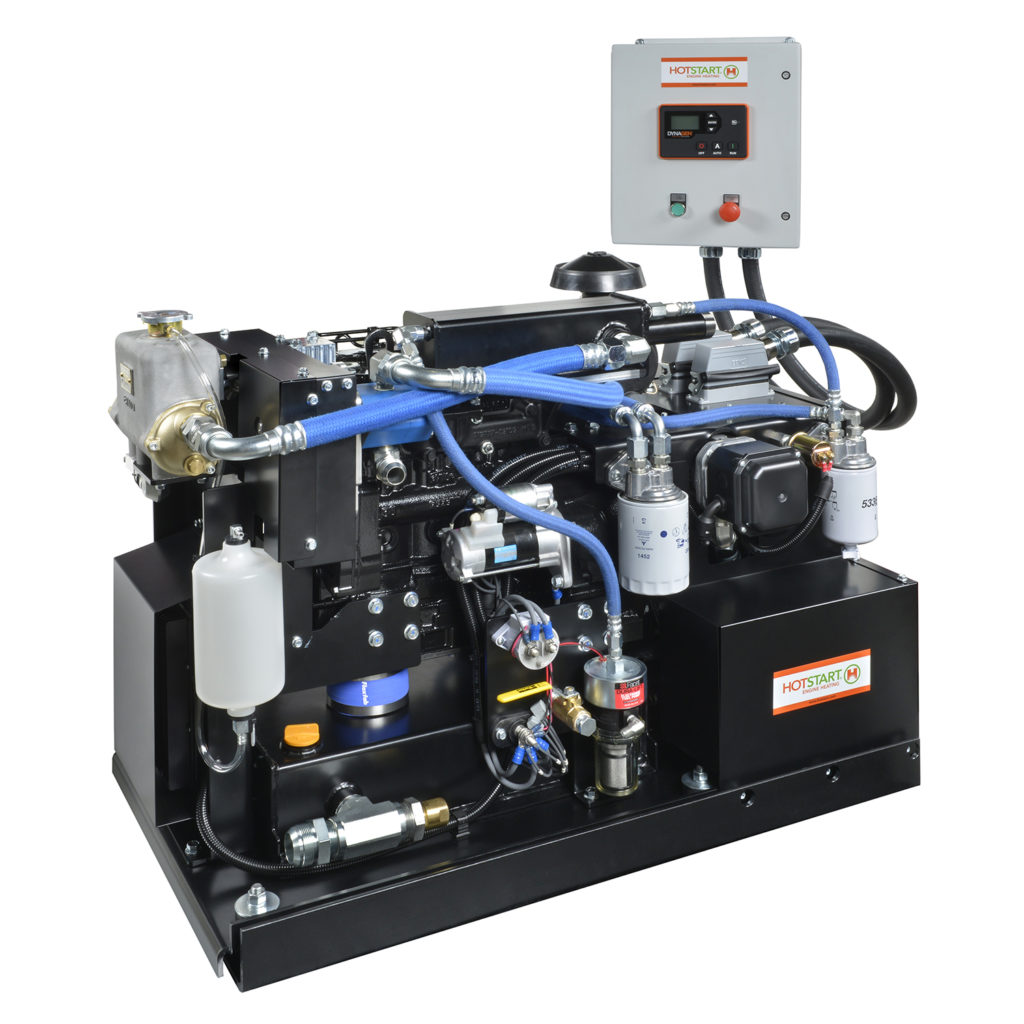
Hotstart has a variety of products that are designed specifically for locomotive idle reduction, the company tells Railway Age,whose APU5 product line runs off the onboard locomotive fuel supply to provide the locomotive with coolant and oil heat, battery charging, and cab heat without the need for shore power.
Additionally, Hotstart supplies shore power systems and battery chargers in numerous configurations for a variety of applications. “Saving on fuel is not the only benefit of equipping a Hotstart. Our products reduce the number of restarts on locomotives equipped with AESS, therefore limiting engine wear and tear,” the company says.
“Product reliability is of the utmost importance to our customers. In addition to reliability, ease of product installation, operation and maintenance is significant in keeping labor costs down, while freeing up mechanical crews to address other locomotive needs,” Hotstart notes. “On-time delivery is key to our customers staying on schedule. Hotstart acknowledges that a quick and knowledgeable customer service team is critical to providing a positive customer experience.”
Hotstart says it encourages customers to plan accordingly well before cold weather arrives. Prior to the winter months, the company recommends customers “ensure new equipment installations are done properly, perform any needed maintenance on existing equipment, replenish common replacement parts, and train appropriate personnel.” For financial preparedness, Hotstart says it is important to research available federal and/or state funding opportunities. Most of the available funds today are allocated for infrastructure needs; however, there are funds set aside for reducing emissions.
According to the company, several customers have secured local/state/federal funding to equip their locomotive fleets with Hotstart’s EPA “SmartWay”-verified equipment. Government funding, such as Diesel Emissions Reduction Act (DERA), financially assist railroads to procure idle reduction technologies that decrease fuel costs, emissions and engine wear. Such programs, the company says, allow railroads to install necessary equipment in advance of the winter months and avoid unfavorable fuel costs and emissions.
Hotstart says its product line is “constantly evolving.” From minor product enhancements to new product development, Hotstart says it “takes pride in continuously improving based on customer feedback and new available technologies. Our products have changed damatically during our 80+ years of existence and will continue to do so as customers’ needs evolve. From PTC to PSR to hybrid locomotives, the rail industry has changed tremendously in the past few years. While the industry evolves, Hotstart will continue to be a leader in designing new technologies that help customers move the needle and reach their strategic goals. The future is bright.”
New York Air Brake
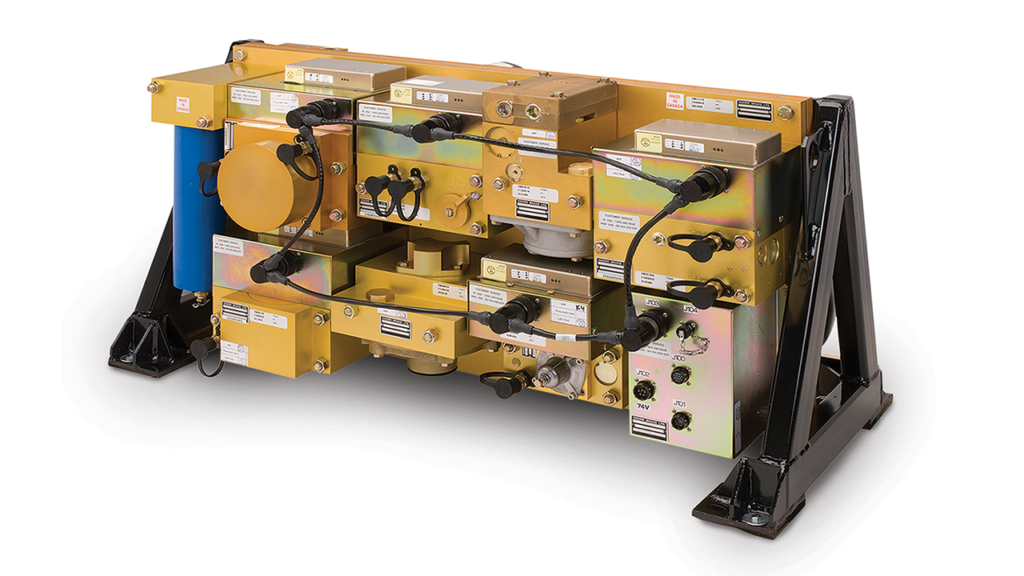
Knorr Bremse subsidiary New York Air Brake (NYAB) offers the VV1000-T Oil Free Compressor and the LD-1000 Air Dryer with three-stage filtration system to ensure freight train air brakes perform reliably in all weather conditions. “In the wintertime, there may be less water to compress out of the air, but there’s still enough to do damage if you don’t remove it properly,” says Michael Stroder, Product Line Manager. “And the stakes are higher because of freeze-ups. So, it’s important that all the systems along the line that remove water are operating properly.”
NYAB recently updated the diagnostics for its CCB (Computer Controlled Brake) product line “to identify a failed component faster, get it replaced and get the unit back into service,” reports Vince Guarrera, Senior Product Line Manager. Similar diagnostics for the VV1000-T and LD-1000 are in development and expected to launch “in the near future.” Among the goals: to have the diagnostics guide maintainers through troubleshooting, so that only the correct and necessary repairs are performed.
NYAB also offers the DB-60 II Control Valve with Brake Cylinder Maintaining (BCM), which in December 2022 earned unconditional approval from the Association of American Railroads. If there is a brake cylinder leakage, the BCM feature will allow for continued air supply. Moore says NYAB is continually improving the valve’s internal components, including the reliability of the rubber seals at lower temperatures, when rubber can contract and become less pliable.
On the R&D side, NYAB has teamed with Nexxiot on the “digitalization” of brakes. With Nexxiot’s battery-powered sensors installed on railcars, remote access to NYAB products will be possible for real-time status and health monitoring.
Additionally, NYAB’s CCBIIe, an enhanced upgrade to the CCBII locomotive electronic air brake system, is now being developed at two Class I railroads and is capable of Remote Air Brake Maintenance. This new system eliminates the need for railroad operators or NYAB service technicians to physically connect a laptop to a locomotive for diagnostics. By accessing data remotely and in real time, railroad personnel and NYAB field service can immediately understand the operational status of the brake equipment to make clear maintenance decisions while saving troubleshooting time and reducing unnecessary repairs.
Power Drives Inc.
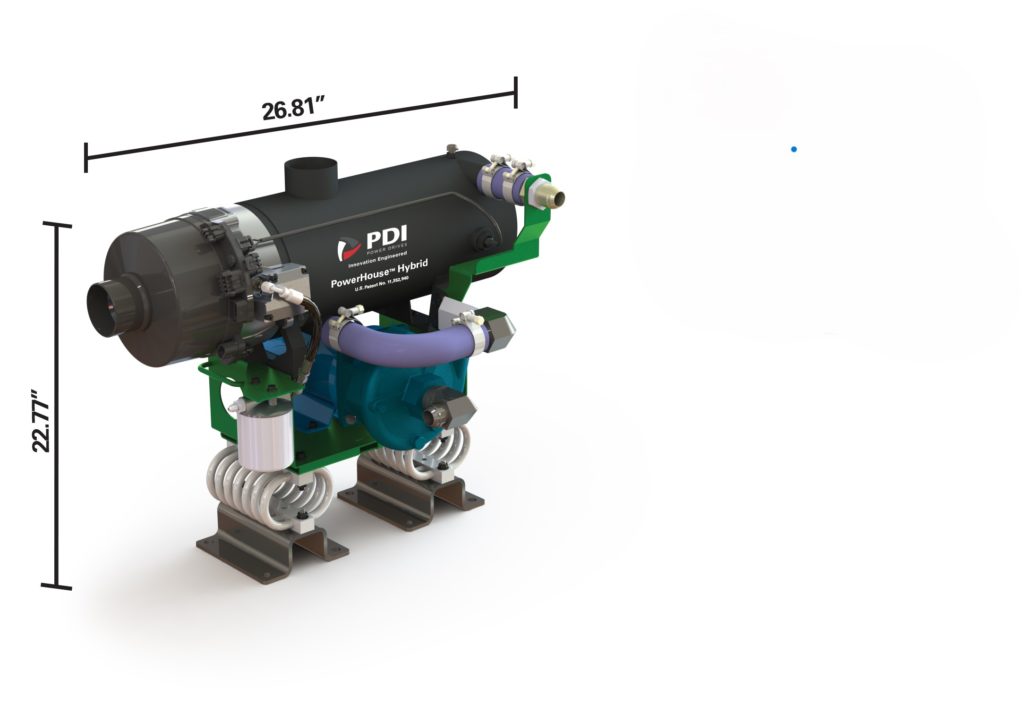
PDI’s PowerHouse™ Hybrid is a locomotive idle reduction technology that heats and circulates engine coolant and oil maintaining a fluid temperature above 100 degrees F, thereby allowing the operator to shut down the prime mover.
According to the company, the PowerHouse™ Hybrid (U.S. EPA Smartway-verified), developed in response to customer needs, saves five to nine gallons of fuel per hour as compared to an idling locomotive. It also eliminates wear and tear on the locomotive engine and reduces noise and harmful emissions. The PowerHouse™ Hybrid can be powered in one of two ways—it can run off the locomotive batteries for up to seven days without starting the engine or it can be plugged into an external 120 VAC power source. When the PowerHouse™ Hybrid is powered by 120 VAC power, the integrated charging system charges the batteries.
“Customers want an idle reduction technology that does not require access to three-phase power or an additional engine to maintain,” PDI tells Railway Age. “They have also asked for a unit that is easy to install and can be installed on virtually any locomotive. The thinking among our customers has evolved based on experience that they have had with various versions of idle reduction technology,” which the company says “can be installed at any time; however, it is best to get ahead and install these units in the off season.”
According to PDI, one Class I customer entered into a three-year contract to acquire these units on an ongoing basis to equip a significant portion of its fleet. Another customer installed 50 units, recording fuel savings of more than $1.5 million in one winter season.
Rails Company
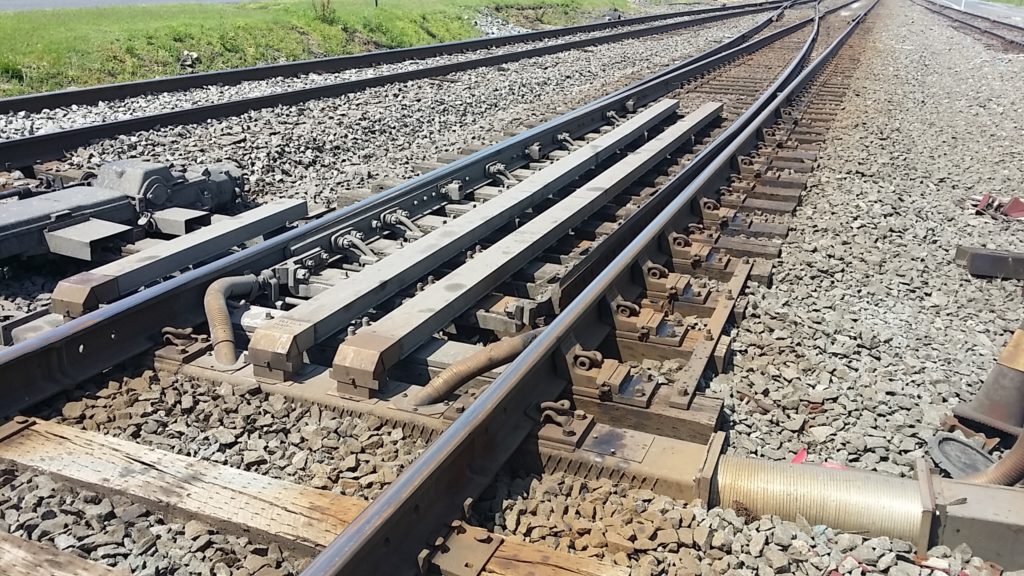
Rails Co. produces a variety of railway switch snow removal devices, from low pressure (LP) and high pressure (RT) gas bar and manifold heaters, which can operate manually or automatically via add-on ignition, to hot air blowers in electric, gas and oil configurations. The hot air blowers and control panels use common industrial components “to better assure customers the availability of replacement parts.” The company also designs and produces custom tubular electric heater control panels (THR) in AC and DC configurations, for use with Rails Co tubular electric heaters (TH) and other brands. “Our crib heaters are available with slip hinges for easier installation and removal,” the company tells Railway Age. Rails Co. can also build blowers and control panels to incorporate a customer’s own PLC, Radio or SCADA hardware.
In terms of winter preparation, Rails Co. recommends opening all electrical circuits having track connection, especially the running rail, third rail and catenary, in the spring. This, the company says, “helps mitigate summer lightning damage and discourages contact corrosion in circuit breakers, fuses/fuse holders and disconnect switches.” Control relays/relay sockets can be treated with no-ox, if the relays are to be left in place. “We recommend inspecting all installations and exercising the heaters monthly, beginning at the end of summer, to check the viability of heater systems and track elements,” the company notes. Replacement parts and consumables (relays, flame rods, spark plugs and heater elements) should be inventoried items, given supply chain unpredictability, Rails Co. adds.
Railway Equipment Company
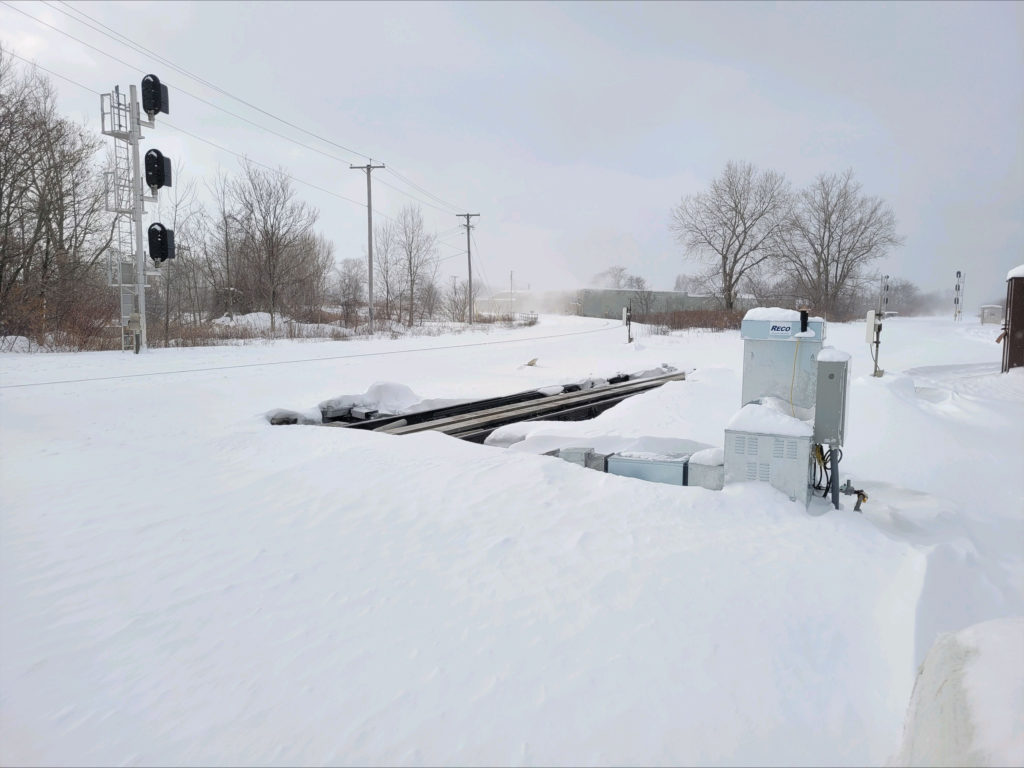
RECo’s products, such as track switch heaters and remote monitoring systems, are designed to “ensure smooth railway operations during harsh weather conditions,” the company tells Railway Age. “With our remote monitoring capabilities, you are able to troubleshoot remotely and know if your units are running as intended to ensure the switches stay clear during winter conditions.”
According to ReCO, customers are increasingly seeking advanced monitoring solutions and energy-efficient products, reflecting a shift towards technology integration and sustainability. “There is also significant interest in our new redundant switch heater, which RECo has developed to use both natural gas/propane and electric—the first redundant system in the industry,” the company adds.
When it comes to railroad customers preparing for winter months, RECo advises thorough inspections and maintenance of heating and monitoring systems before winter to ensure all equipment is in optimal condition. “We also strongly recommend having the necessary spare parts on hand to handle any unexpected issues,” the company notes.
There have been numerous track switch heater and remote monitoring system installations in the past two years, enhancing winter preparedness, according to ReCO. “We have seen a shift toward our GHAB Concentrator, which can aid in monitoring up to 12 switch heaters in one location and feed this information to the central office, providing real-time heater status updates.”
RECo, which says that it “continually updates its products to incorporate the latest technology and improve efficiency with new developments in remote monitoring and energy-efficient systems,” tested its first combo unit in two locations this past winter to “optimize efficiency, as well as to improve fuel efficiency in remote areas.”
“RECo is focusing on developing more sophisticated monitoring systems and eco-friendly heating solutions to meet evolving customer needs. We are particularly excited about testing our new induction heating system this upcoming winter,” the company adds.
Thermon
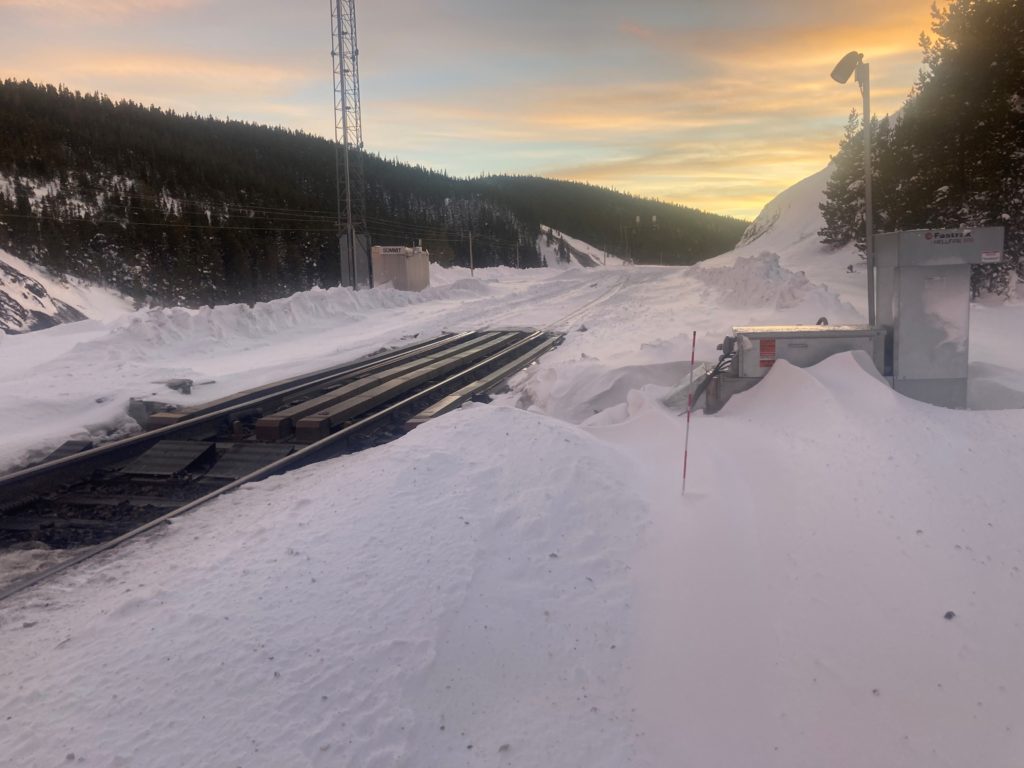
Thermon’s array of snow-clearing devices are designed to reliably withstand even the harshest winter storms, the company tells Railway Age. By offering a variety of options, such as electric elements, hot air blowers and high velocity ambient air blowers, “we ensure that our customers have their selection of high performing products that are appropriate for their applications,” Thermon says. “Our SCDs are designed with safety, efficiency and quality in mind to carry our customers through the winter and result in less maintenance, decreased down time for railroads and increased dependability that our equipment will keep their lines running.”
According to Thermon, buyers are looking for cost savings, decreased lead times and a reliable product. “In the past, some may have been looking for the cheapest option. However, they now realize that purchasing a superior-quality product will result in bigger cost savings in the long run. We continue to work closely with the railroads to exceed their expectations and keep costs down while delivering steadfast products consistently,” the company notes.
Thermon says it urge customers to plan early and order material ahead of winter to prepare for any unforeseen events. “The last thing that maintainers want is to be caught in a storm without a way to clear switches. We recommend taking advantage of our many offerings and working with our knowledgeable team of experts to find what would work best for your specific application,” the company says.
Thermon says it recently had a customer install two new Hellfire 900 units in Nebraska to prepare for the upcoming winter season. Since then, and throughout the summer, many of the company’s customers have been purchasing its Hellfire 400, 900 and 905 packages to get ready for the upcoming fall and winter weather. Additionally, Thermon says it has sold a “plethora” of its electric SwitchBlade heaters, new standardized HCP control panels designed for increased flexibility and uptime, and Horizontal Air Curtains, as well as HACs for Hot Box Detectors so customers can “be as prepared as they can be to face the elements.”
Thermon has recently announced the centralization of production at its San Marcos, Tex. facility, the company tells Railway Age. “By locating all heater manufacturing and assembly to where our existing metal fabrication processes are located, we will increase efficiencies in order processing and effectively reduce costs and lead times to provide the best service to our customers.”
Thermon adds it is currently working on its next generation of Hellfire, with trials expected to take place later this year/early next year. “We are innovating our current design to include updated components, expanded communication capabilities, OLED character display and organized status LEDs, as well as a new forward-thinking design.”
Wabtec
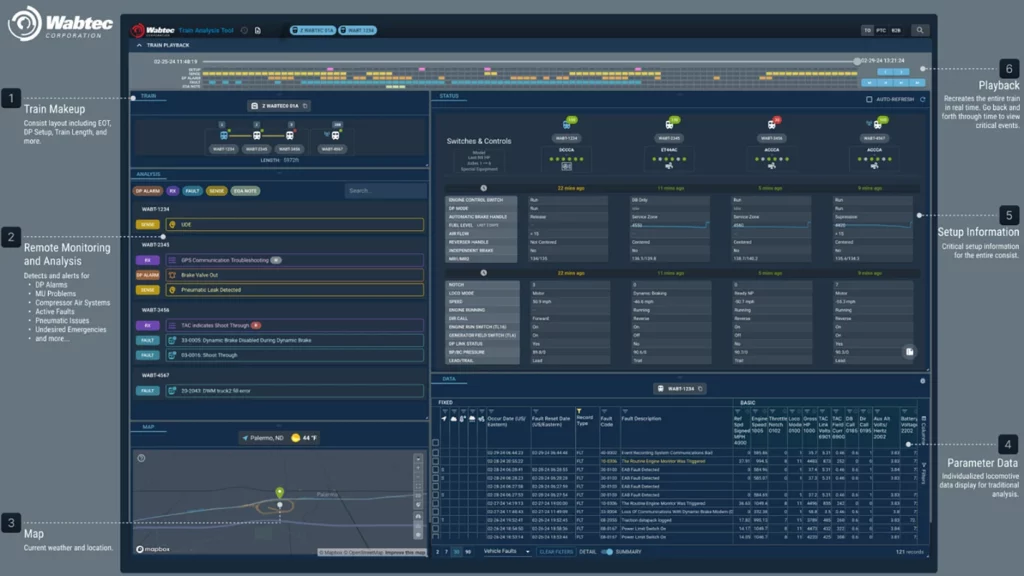
Common problems encountered during winter season occasionally occur within the power consist, says Wabtec, whose Train Analysis Tool is helping railroads identify and resolve problems. The Train Analysis Tool remotely collects key parameters from all the locomotives in a consist. Analytics are used to identify the root cause of issues impacting propulsion and braking performance. The results are presented to “Diesel Doctors” at the Wabtec’s Mechanical Help Desk as a “Sense.” Senses help a Diesel Doctor quickly identify the root cause of problems reported by the train crew and provide feedback on how to resolve them.
For example, to accelerate identifying frozen blowdown valves, Wabtec incorporated analytics in the Train Analysis Tool to provide a Sense when it detects a possible frozen unit. This new Sense, the company says, is expected to have a significant impact during the upcoming winter season.
“The future is bright for the Train Analysis Tool as it evolves Train Level Diagnostics,” Wabtec notes. “The ability to monitor the entire train and pinpoint problems for crew or responder resolution results in service interruption reduction opportunities such as UDE (undesired emergency brake application) detection and prevention.”
Frozen engine blocks and locomotive components are a recurring winter problem for railroads, Wabtec tells Railway Age. Locomotives will occasionally not dump coolant water in below-freezing temperatures due to various failure modes. When this happens, the water expands into ice and can cause catastrophic engine damage. In many cases, railroads can spend more than $1 million per year on freeze-related damages.
After an extensive investigation and follow-up lab and field testing, Wabtec is launching a patent-pending “new and improved” Max Drain Guru Valve that is significantly better performing than legacy designs. According to Wabtec, it also provides much better tamper resistance and has a proprietary T-handle attached to a magnetic flag to provide a clear indication when a valve is disabled. The new valves are available in Standard (DL2.1) and SAE (Magnum) thread sizes and flat handle and dome handle styles.
Wabtec says it has completed its first winter of biofuel testing with positive results around the use of biodiesel and renewable diesel blends in cold weather. Fuel temperature testing in Erie, Pa., and field testing in Canada have shown that B20 manufactured to the appropriate cloud point can be used down to –40ºC with appropriate petroleum diesel blends. Wabtec’s engine and locomotive biofuel upgrade kits will be available in 2025 to support railroad decarbonization plans through use of up to B20 and R100. These kits, combined with Wabtec expertise, “can be used to support carbon reduction plans at railroads while maintaining operations even in cold weather,” the company notes.
Other technologies that Wabtec offers to help customers in winter operations include Advanced Rail Cleaner (ARC) Traction Antilock Braking System (TABS), and Sub-freezing AESS for increased fuel efficiency. Wabtec has been expanding its AESS solutions by developing new summer/winter algorithms to optimize fuel savings, shutdown time, and increase cold weather shutdown availability across customer platforms.
In addition, Wabtec works with customers to evaluate commonly used winter components and performs analysis on a yearly basis. In preparation for winter, Wabtec adjusts inventory levels for the winter season to protect operations and reduce equipment unavailability.
ZTR
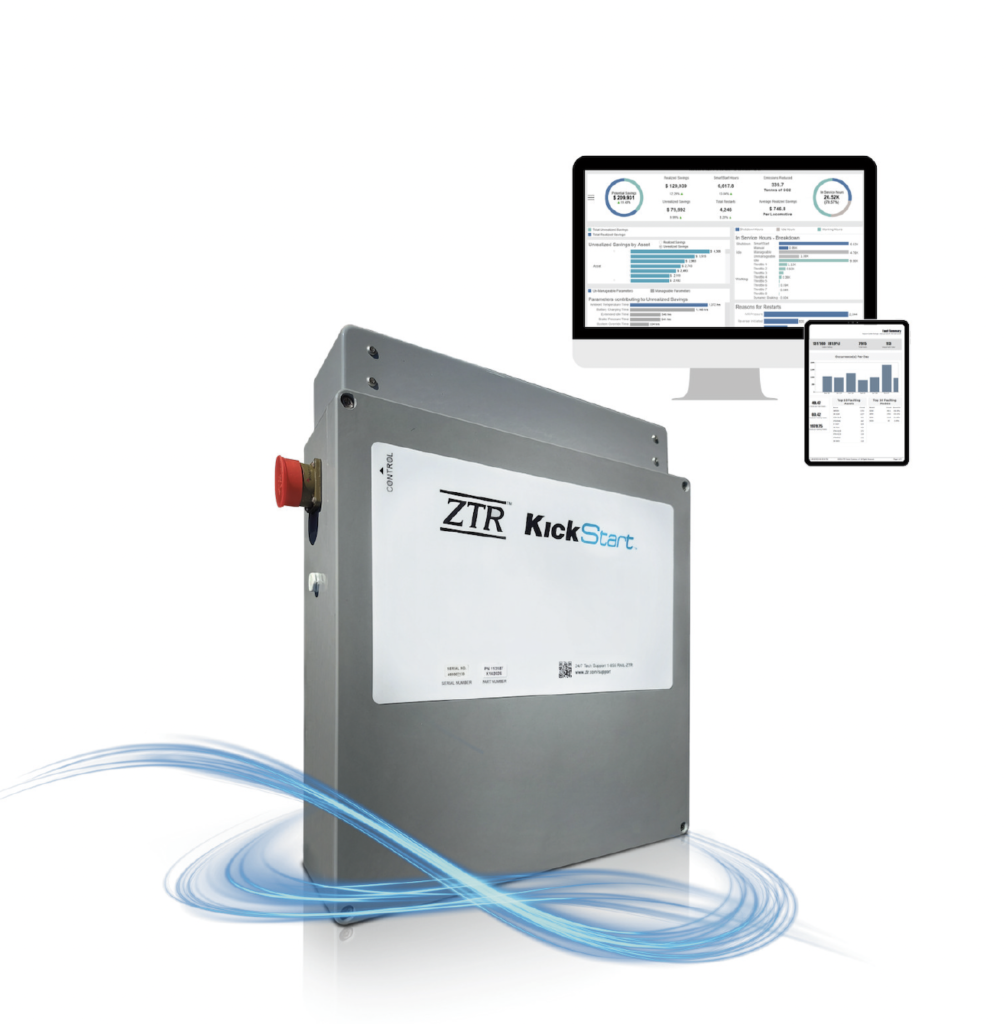
“At ZTR, we understand the unique challenges that winter and harsh environmental conditions pose to rail operations,” the company tells Railway Age. “One of our key innovations, KickStart, is designed to specifically address these challenges and ensure reliable locomotive performance even in the most demanding conditions. By integrating KickStart into their fleets, operators can ensure smoother, more reliable operations throughout the winter, minimizing the impact of extreme temperatures on their services. This technology not only enhances performance but also delivers substantial cost savings and environmental benefits.”
KickStart’s supercapacitor Starting Assist technology provides:
- “Reliable engine starts: Winter weather can be particularly tough on locomotive batteries, leading to frequent dead-won’t-start (DWS) situations due to reduced performance from the batteries. KickStart provides additional cranking power, ensuring that locomotives can start reliably even in cold temperatures.
- “Battery life extension: Cold weather exacerbates battery wear and tear. By offloading the strain from batteries during start-up, KickStart significantly extends battery life, reducing the frequency and cost of replacements.
- “Reduced downtime and maintenance costs: With fewer start failures and extended battery life, locomotives experience less downtime and lower maintenance costs. This leads to more efficient operations and higher availability, which are critical during the winter months when operational demands are high.
- “Fuel efficiency and emission reduction: KickStart reduces the need for prolonged idling to keep batteries charged, which is common in cold weather. This results in significant fuel savings and lower emissions, supporting both operational efficiency and environmental sustainability.
- “Proven performance: KickStart has been successfully implemented on thousands of locomotives worldwide, demonstrating its effectiveness in improving start reliability, reducing fuel consumption, and lowering maintenance costs.”
“Customers today prioritize reliability, efficiency and cost savings more than ever,” the company tells Railway Age. “They seek solutions that ensure consistent locomotive performance, especially in harsh conditions like winter weather. Environmental sustainability has also become crucial, with a focus on reducing emissions and improving fuel efficiency. Additionally, there is a growing demand for technologies that integrate seamlessly with existing systems and provide automation. While these needs have always existed, recent economic pressures, stricter environmental regulations, and advances in technology have amplified their importance. ZTR’s KickStart addresses these demands by offering reliable engine starts, extending battery life, reducing downtime, and lowering emissions, making it an ideal solution for today’s railway operations.”
To ensure smooth operations during the winter months, ZTR recommends:
- “Implement reliable starting solutions: Equip locomotives with KickStart technology to prevent dead-won’t-start situations and ensure reliable engine starts in cold weather.
- “Regular maintenance checks: Conduct thorough inspections of batteries, electrical systems, and starting components to identify and address potential issues before they lead to failures.
- “Optimize battery performance: Use solutions like KickStart to reduce the strain on batteries during starts, thereby extending battery life and ensuring consistent performance. Complement this with ensuring batteries are maintained per manufacturer’s guidelines.
- “Educate personnel: Ensure that staff are well-trained in winter preparedness procedures.”
“By following these recommendations, railroads can enhance their winter readiness, ensuring reliable and efficient operations even in harsh weather conditions,” ZTR says.
Notable examples of projects ZTR has undertaken in the past few years to help customers prepare for winter and harsh weather conditions include installation of air dryers to remove moisture from air brake systems. This, the company says, prevents freezing and ensures reliable brake performance in cold weather, which is critical for maintaining safety and operational efficiency.
In another project, ZTR says it ensured that locomotive headlamps were equipped with adequate heating to prevent snow and ice build-up. This measure, the company says, “is vital for maintaining visibility and safety during winter operations, reducing the risk of accidents caused by impaired vision.”
Additionally, ZTR has installed devices to keep magnet valves warm, preventing them from freezing. “This ensures consistent performance of the magnet valves in harsh weather conditions, contributing to overall locomotive reliability and efficiency,” the company says.
“These installations reflect the proactive steps our customers are taking to ensure their operations remain smooth and reliable during the winter months. By addressing potential weather-related issues with targeted solutions, they can maintain high levels of efficiency and safety regardless of the season,” ZTR says.
In addition to the KickStart Starting Assist, ZTR recently announced the upcoming launch of KickStart Battery and Starting Manager (KickStart BSM) later this year.It features “an advanced battery management system that ensures optimal battery health and performance, reducing the risk of battery-related failures. Intelligent Hotel Load Shedding disconnects loads and batteries to preserve energy for reliable starts. With improved battery management and starting capabilities, KickStart BSM helps prevent battery-related restart failures, minimizing downtime and operational disruptions. We are currently testing this new technology, which will help rail operators with 100% elimination of battery-related failed restarts. We aim to provide our customers with unparalleled reliability and performance, ensuring their locomotives start every time, and operate smoothly even in the harshest conditions. This innovation underscores our commitment to helping our customers overcome extreme weather challenges and maintain optimal operational efficiency.”