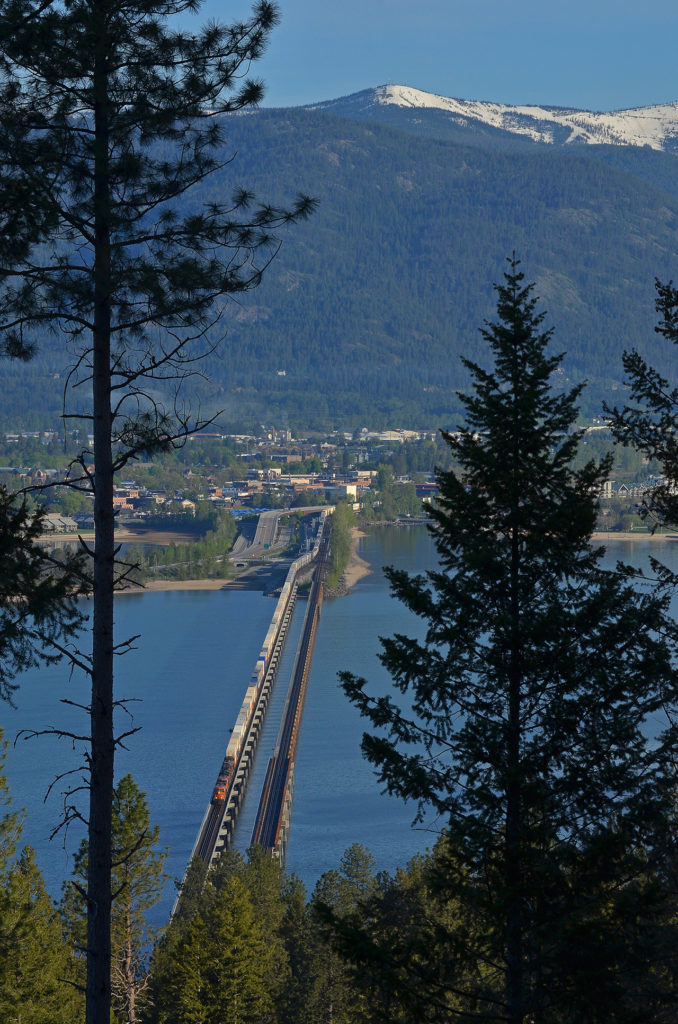
How BNSF Minimized Sandpoint Bridge Project Environmental Impacts
Written by Bruce E. Kelly, Contributing Editor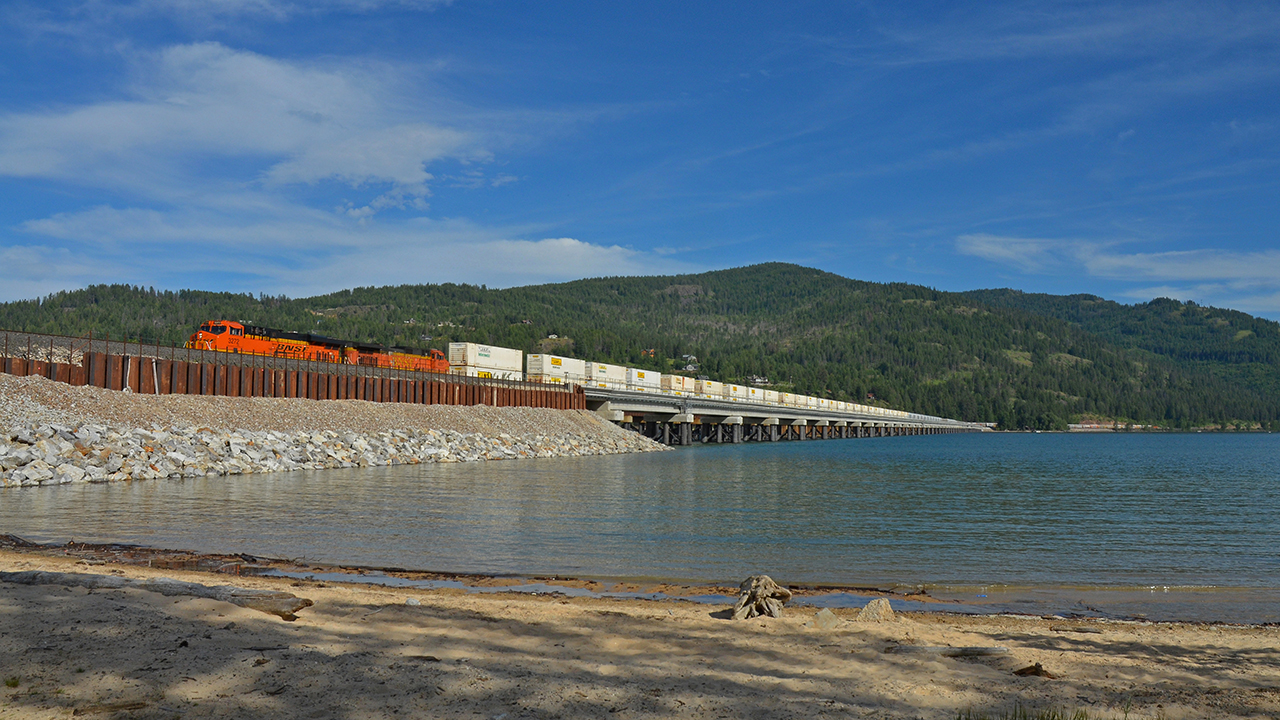
Dog Beach remained open throughout BNSF’s four-year Sandpoint bridge project. It’s seen here in June 2024, months after all equipment had been removed from the adjacent work site. All photos: Bruce E. Kelly.
Less than one year after completion of BNSF Railway’s Sandpoint Junction Connector project in northern Idaho, one can hardly tell that there was an army of workers and machinery stationed there for roughly four years building new bridges, rebuilding an existing bridge and laying new track to eliminate a bottleneck in BNSF’s Northern Corridor. Sandpoint is back to the tranquil, pristine lakefront city it was before, and trains now pass through with less delay, posing fewer interruptions to residents and tourists as well.
From the breaking of ground in 2019 to the opening of a second bridge nearly a mile in length over Lake Pend Oreille in 2022, and right up to the completion of all work and tracklaying in August 2023, the entire project maintained public access to beaches, recreational trails and waterways at nearly all times. As early as 2018, one year before work began, BNSF said that its plans for the project would “avoid what is possible, minimize what can’t be avoided and mitigate the impacts.” In 2019, those plans received environmental approval from the U.S. Coast Guard and final permitting from the U.S. Army Corps of Engineers.
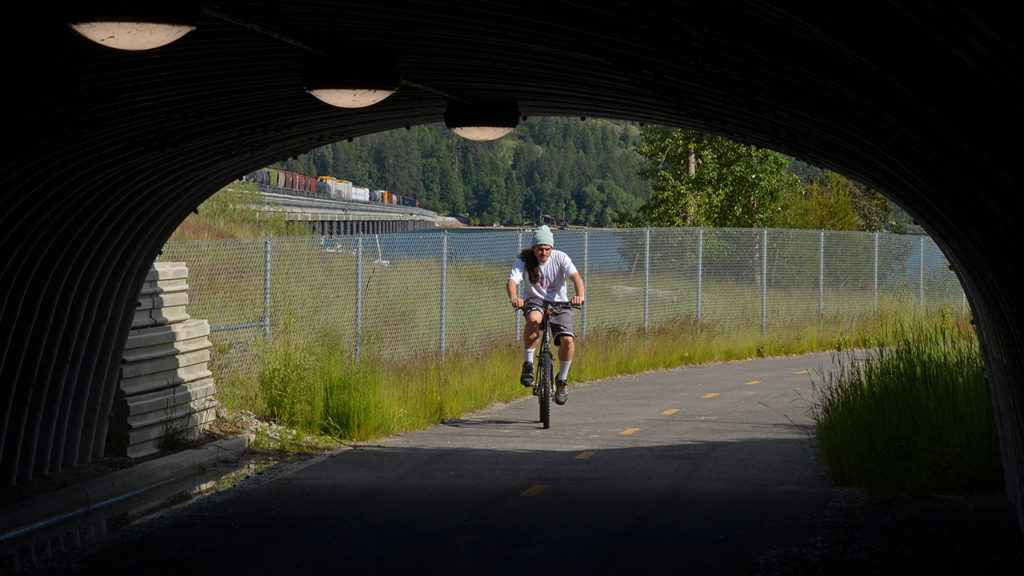
In the early months of the project, BNSF built a corrugated steel tunnel, complete with internal lighting, to allow public access on a popular beach trail beneath the new entry point that was developed for the main construction-staging site. Craig Rasmussen, AVP of Engineering Services and Structures at BNSF, tells Railway Age, “We knew keeping access along Dog Beach was important to the community. One of the very first construction items completed was to install a pedestrian underpass to maintain trail connectivity while the construction access was established. This provided improved safety for both vehicles and trail users.”
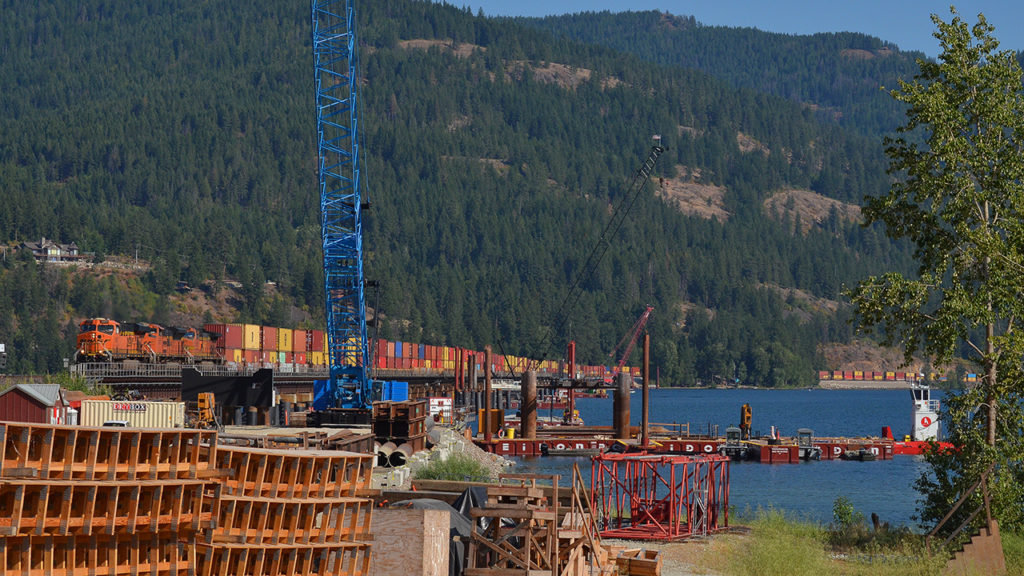
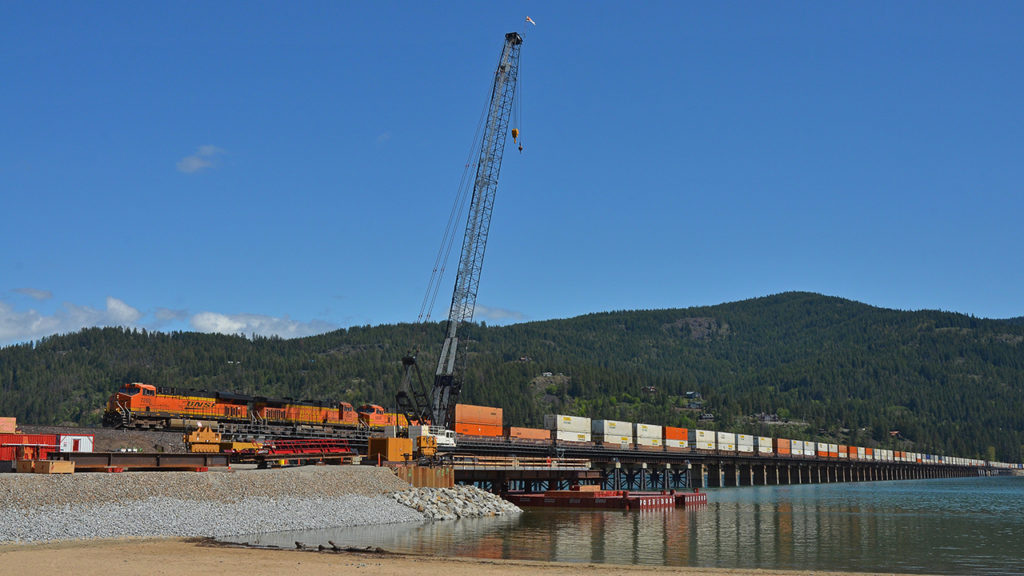
The site adjacent to Dog Beach is where lead contractor Ames Construction staged much of the steel, pre-cast concrete and other materials for BNSF’s new 4,873-foot bridge across Lake Pend Oreille, as well as for two smaller bridges built within the city of Sandpoint. It’s also where Ames erected a work dock for the project. “The temporary trestle near Dog Beach was needed to support the cranes building the new bridge near the north end,” Rasmussen says. “The initial design contemplated extending the temporary work trestle all the way across the lake, but an improved method was developed to utilize barges that could support the cranes needed to install the pipe pile foundation as well as set the girders. This resulted in less piling being needed, which ultimately resulted in less vibration impact in the water.”
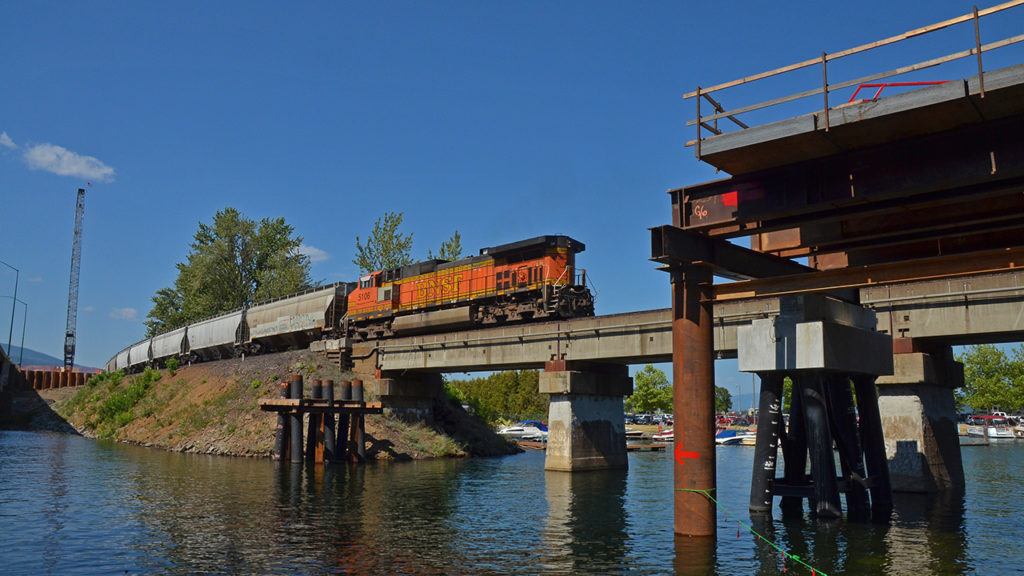
Construction of all three bridges was accomplished with the least amount of fill and roadbed encroachment necessary. Across the entire four-mile length of the project there were only 1.5 total acres of permanent impact to “jurisdictional areas” outside of the existing BNSF right-of-way.
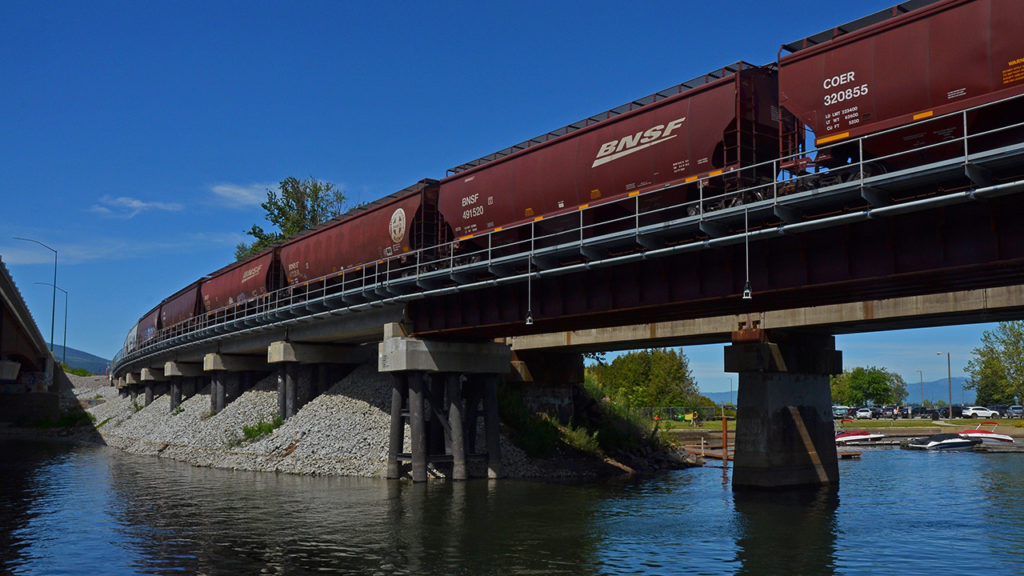
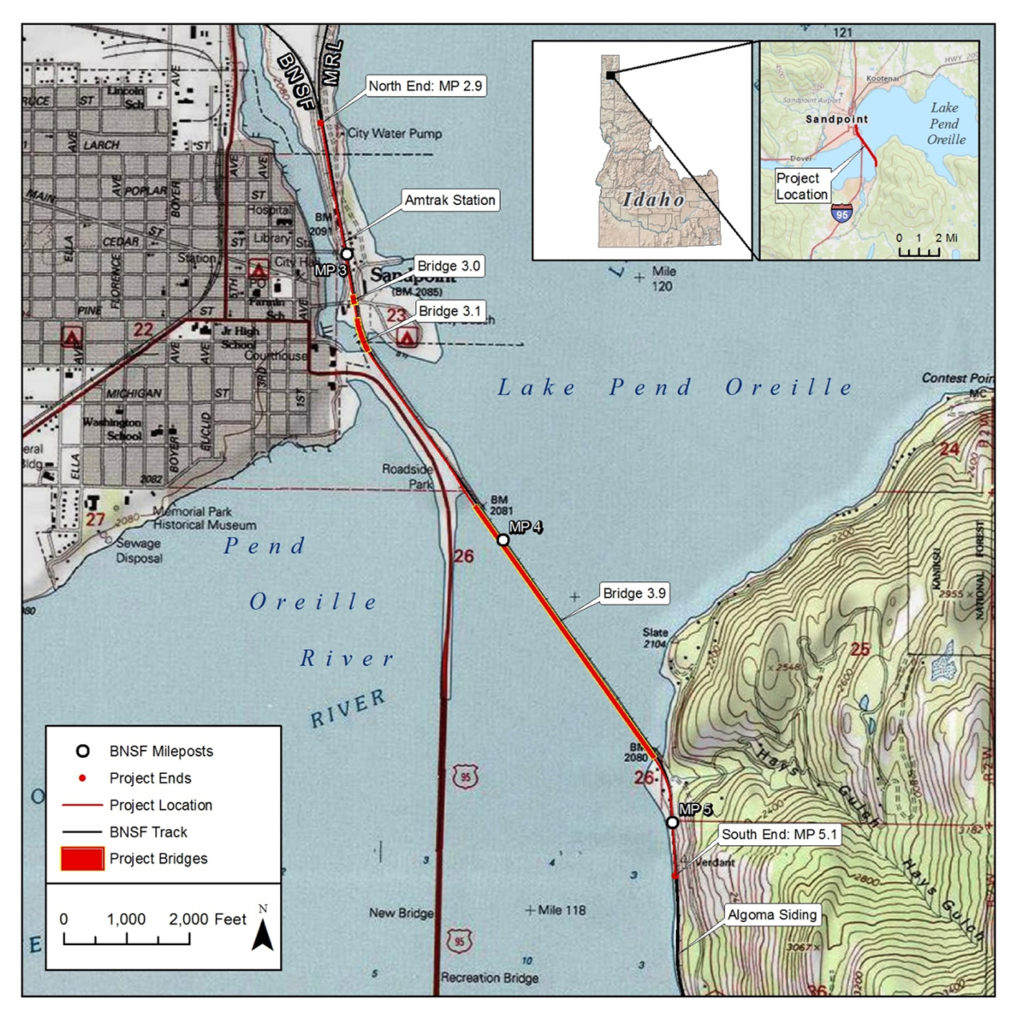
Rasmussen explains in detail the unique methodology that was required for one of the smaller bridges: “The largest element of the project is clearly the bridge over the lake itself, which we call Bridge 3.9. However, the project also included two other bridges; Bridge 3.0 over the aptly named Bridge Street, and Bridge 3.1 over Sand Creek. The bridge over Sand Creek is quite ingeniously designed both in terms of the final project and how it was constructed. The design aimed to minimize any earthwork impact to Sand Creek in the narrow area between the former single-track main line and Highway 95. This proved challenging as there was no space to fit a parallel temporary work trestle like was used for Bridge 3.9. The plan was developed in collaboration with our designer (Hanson) and our builder (Ames) to build the temporary trestle over the top of the new permanent bridge. This allowed crane access to drive the substructure without impacting the track, highway or creek. Then, the temporary trestle was swapped out, piece by piece, for the permanent spans.”
The “ingeniously designed” aspect at Sand Creek that Rasmussen mentions included the use of a 400-foot-long approach bridge on the north (railroad east) side of the creek, with partial fill between its support piers. This was done in lieu of a conventional approach fill that would have otherwise spread further into the creek. After completion, the permanent impact to wetlands at Sand Creek was confined to just over a quarter-acre.
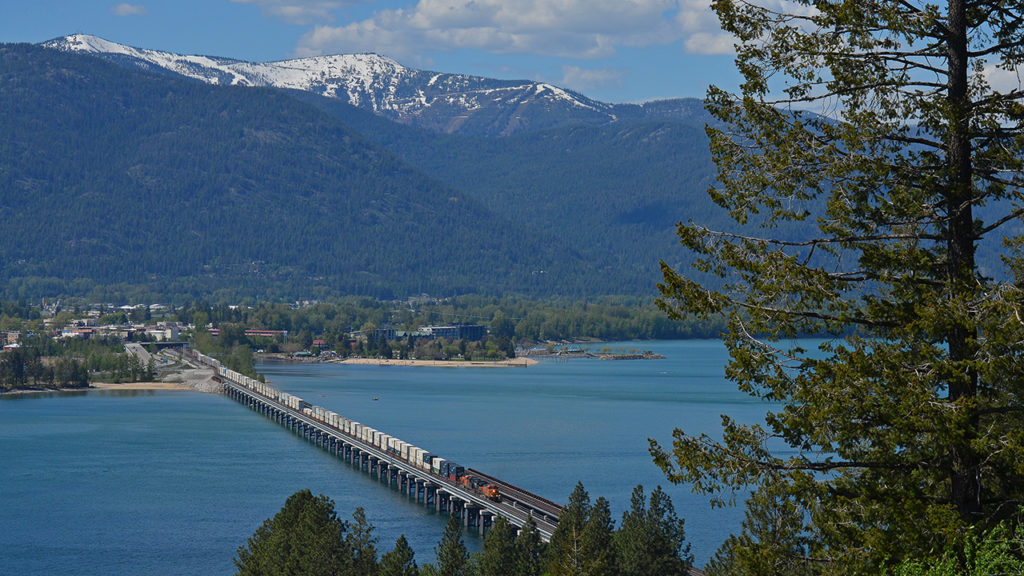
Some of the Sandpoint Junction Connector’s more interesting efforts to protect the environment occurred beneath the water, away from public view. A total of 288 36-inch diameter steel pilings had to be driven into the lakebed to support the new bridge over Lake Pend Oreille, parallel to BNSF’s existing bridge dating back to 1904. To reduce the severity and travel distance of sounds generated underwater, the majority of pile insertion was done with a vibratory pile driver. Once each pile reached its point of resistance, a conventional impact driver settled them into final position. Also, as reported in a Nov. 27, 2023, report by Engineering News-Record, “Bubble curtain technology helped to suppress noise from the pile-driving operation to protect endangered fish species, achieving an 8 to 10 decibel reduction and exceeding the 5-decibel minimum requirement.”
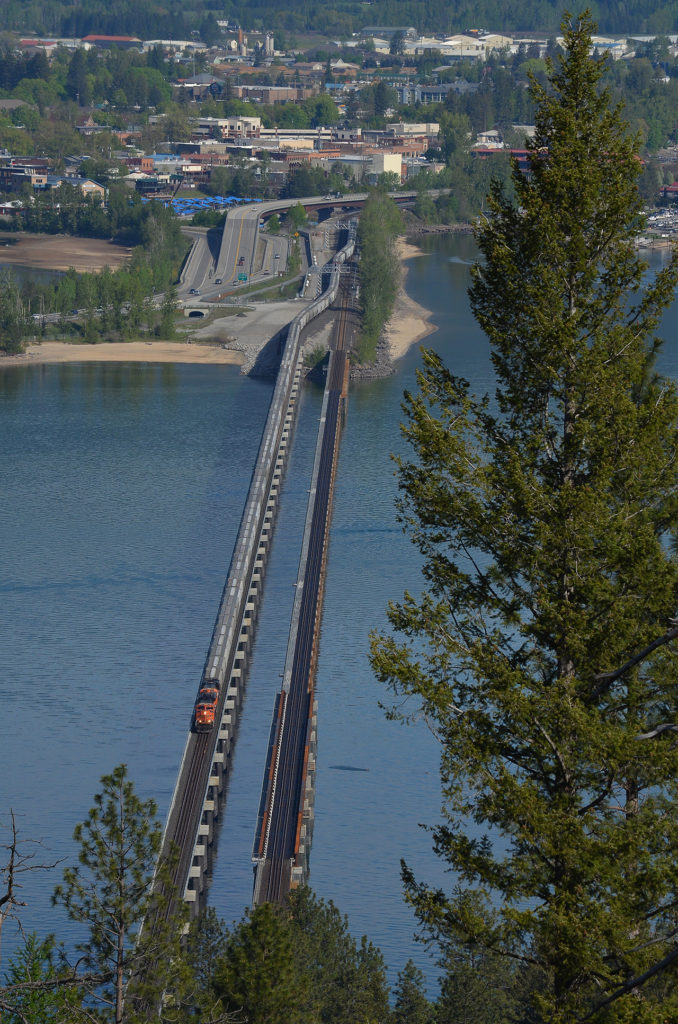
Shortly after the August 2023 completion of the Sandpoint Junction Connector, all of the barges, cranes, portable offices, temporary work trestles and remaining materials had been cleared from the area. Visitors to Sandpoint’s main City Beach, as well as those who walk or bike the trail to Dog Beach or navigate their boats on Lake Pend Oreille, enjoy the same recreational opportunities as before. And BNSF’s four miles of new track and roughly a mile’s worth of new bridges have not tarnished Sandpoint’s status as a rapidly growing residential community and tourist destination.