FURSST for Safety and Security
Written by Przemyslaw Rakoczy, Senior Research Engineer, ENSCO, Inc., and Matthew Dick, P.E., Chief of Strategy & Development, ENSCO, Inc.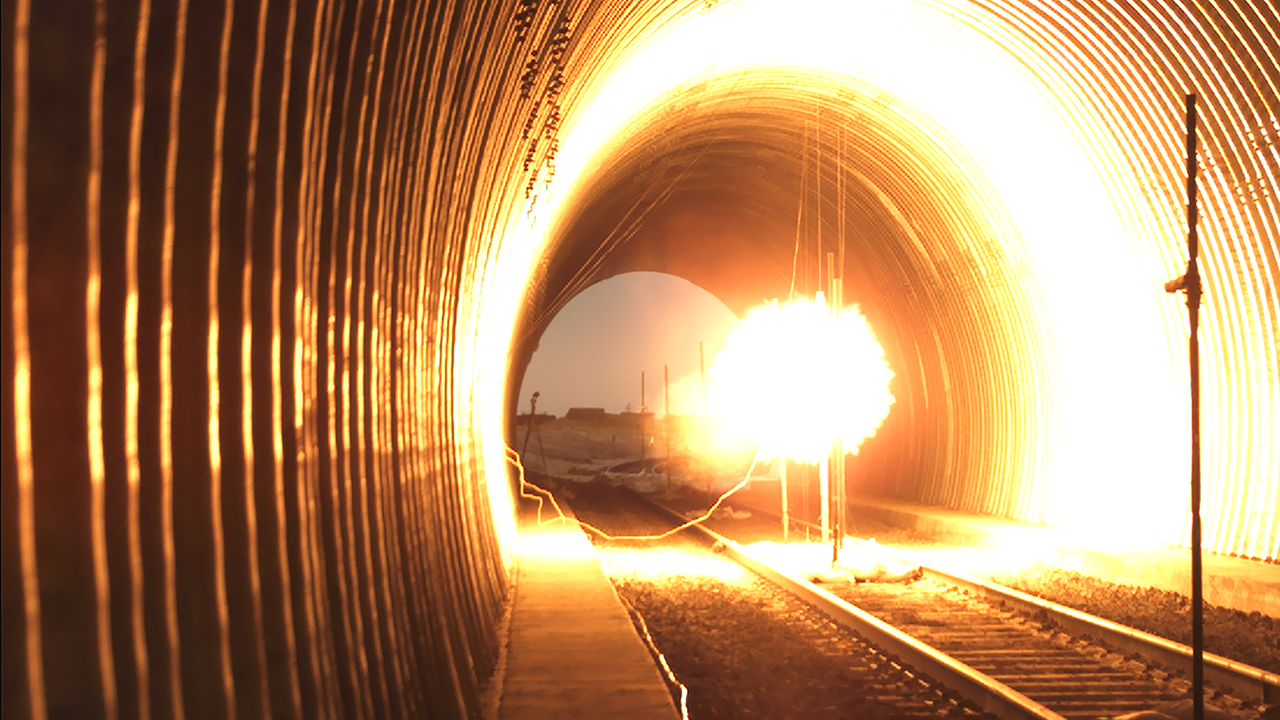
Fireball at the initial stage of the explosion (image captured by hi-speed camera). ENSCO photo.
TTC OPERATED BY ENSCO, RAILWAY AGE APRIL 2024 ISSUE: The Facility for Underground Rail Security and Safety Testing (FURSST) at the Transportation Technology Center (TTC), also known as the “Underground Tunnel,” is a groundbreaking facility designed to address critical security and safety concerns within the rail and transportation industry.
Funded by the Transportation Security Administration (TSA) for the Vehicle Blast Vulnerability research project, the tunnel was primarily built for confined space blast tests. However, its design allows for a range of security and safety-related testing, including fire. The FURSST is one of many proactive testing initiatives led by the TSA to help ensure safety and security of surface transportation. This article will discuss its construction and use.
Tunnel Parameters
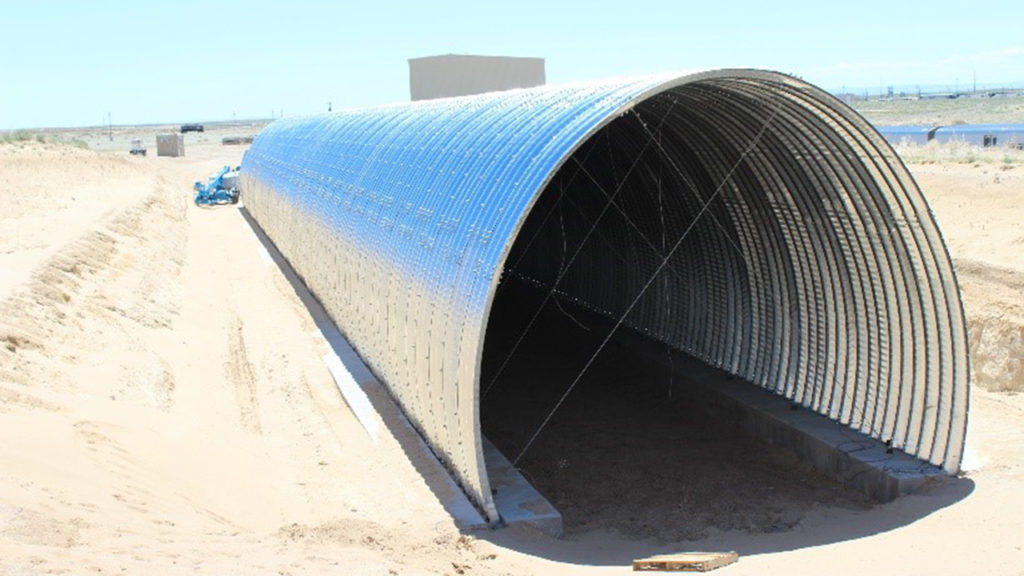
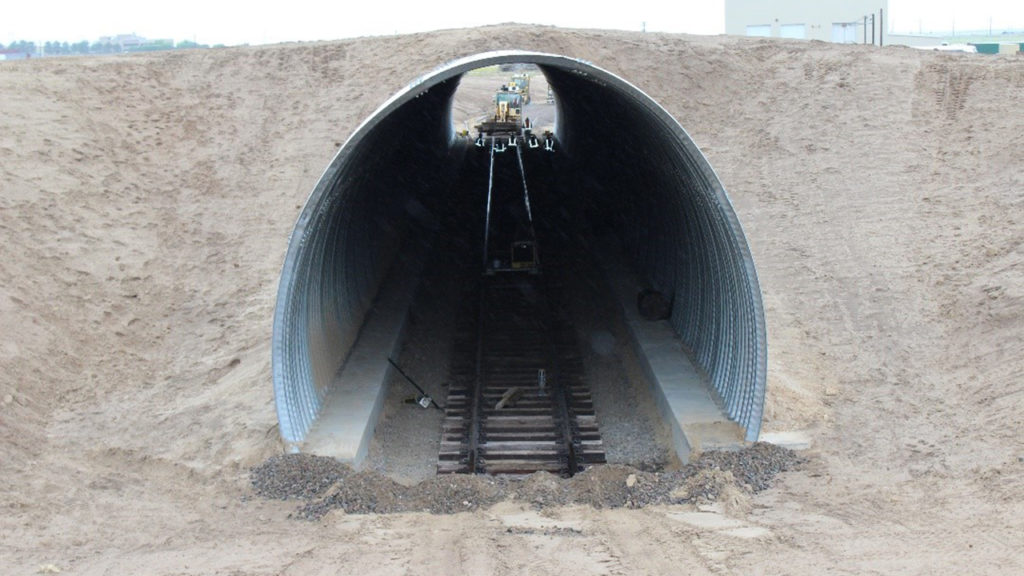
Constructed in 2017 using the “cut and cover” method, the first 300-foot-long section of the FURSST tunnel utilizes a multi-arch design with an open bottom, with cross-sectional dimensions of approximately 18 feet 7 inches high and 22 feet 8 inches wide. This oversized design facilitates full-scale fire tests, allowing for the application of necessary insulation. The tunnel comprises corrugated steel plate modules on reinforced concrete footings, with 8 gage thick steel plates and galvanized. Modules are connected by bolts with seams alternating every ring. Its modular design allows for easy replacement of damaged sections post-testing.
Blast Tests
The tunnel was constructed to replicate realistic confined space conditions for the full-scale blast tests. The initial tests aimed to experimentally demonstrate the tunnel’s structural strength for future full-scale testing. Moreover, the data collected from these tests were used to validate and calibrate computer models of the tunnel and blast loading under confined space conditions.
When a high explosive substance detonates, it triggers a chemical reaction that generates a large quantity of hot gases. These gases undergo a violent supersonic expansion, forcing the surrounding air outwards. As a result, a compressed layer of air, known as the shock wave, contains most of the energy released by the explosion. This shock wave travels outwards from the explosion’s center.
A blast wave, upon impacting a solid surface, reflects off the surface. The magnitude of the resulting pressure on the surface depends on the angle of incidence between the surface and the blast wave. Blast loading on structures is characterized by two parameters: peak pressure and specific impulse. Peak pressure represents the maximum pressure on face of the pressure wave, typically lasting for a very short duration, around one millisecond. From a structural damage perspective, specific impulse, the area under the pressure time plot is a more significant parameter, as it correlates with the energy carried by a pressure wave.
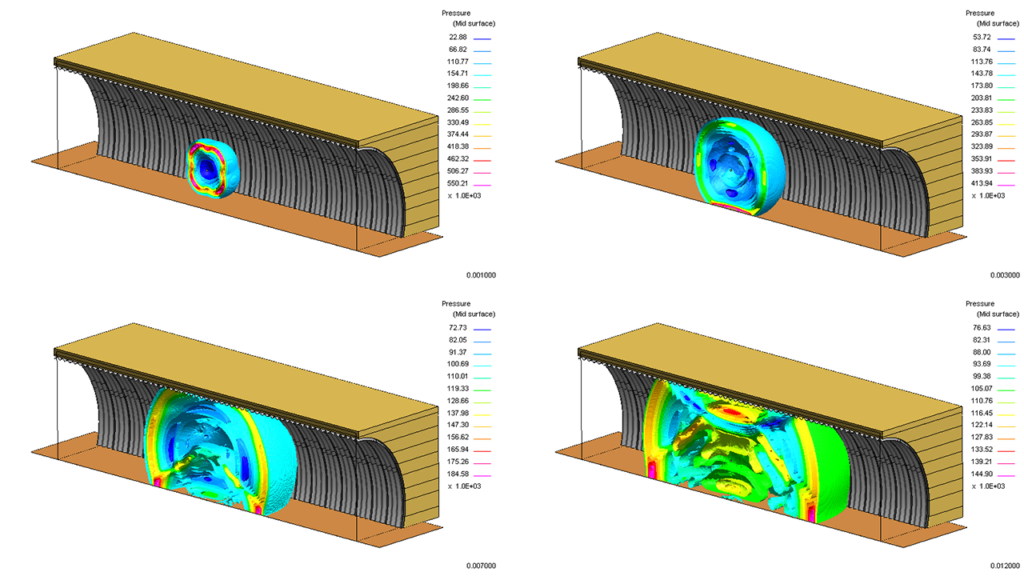
A section of the tunnel was modeled using the Finite Element Method (FEM) in LS-DYNA software to analyze the structural response of the tunnel and backfill soil. This model was validated through initial tests and later utilized simulating full-scale tests with a vehicle inside the tunnel. The value of creating a model that corresponds with the physical testing is that once the model is validated through the physical testing, it can be repeated with varying parameters, decreasing the total number of physical tests required.
Other FURSST Applications
Fire testing is another intended application for FURSST. Tunnel fires post serious safety and security concerns due to limited access, higher temperatures compared to open air fires, and toxic smoke and fumes filling the space. Historical accident data highlights the tragic consequences of tunnel fires.
To facilitate full-scale fire tests, the tunnel clearance was intentionally increased to allow the application of multilayer fire insulation, with temperatures exceeding 1,800 degrees F for up to 30 minutes. FURSST has the capability to conduct full-scale fire tests on any railcar or locomotive. Both ends of the tunnel can be enclosed to enable testing in controlled ventilation conditions, assessing the effectiveness of ventilation or fire extinguishing systems, and analyzing smoke composition and quantification. The tunnel is perfectly suited to test thermal runaways in electric batteries by themselves or within their own vehicle. ENSCO has designed a removable concrete deck that lays on top of the rail and allows the tunnel to be used with rubber-tired vehicles (bus, trucks, etc.), thus supporting the new mission of the TTC in supporting all modes of surface transportation, research, test, and training.
Summary
FURSST stands as a pioneering facility for testing security and safety aspects of underground rail systems, as well as rubber tires vehicles. While initially focused on blast testing, its capabilities extend to full-scale fire tests and beyond, underscoring the TSA’s mission to enhance safety and security within the surface transportation sector.