40 Years Ago …
Written by William C. Vantuono, Editor-in-Chief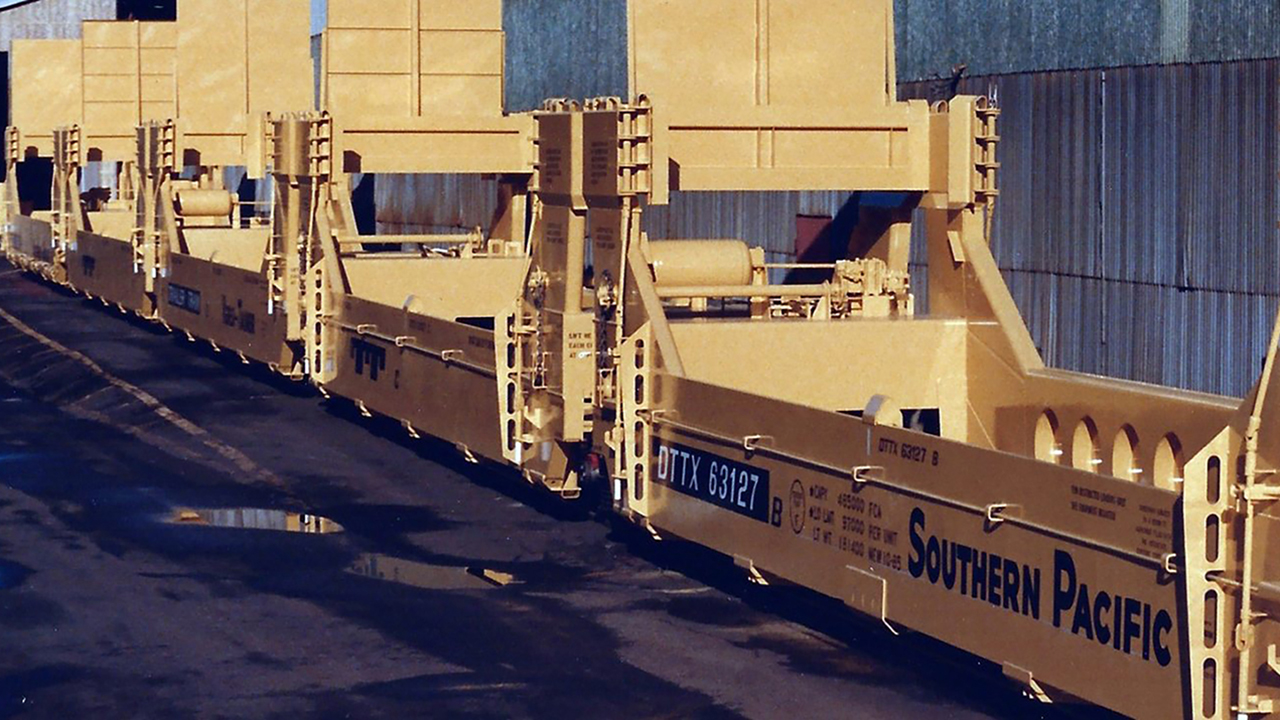
The Greenbrier Companies
RAILWAY AGE, SEPTEMBER 2024 ISSUE: The story behind Greenbrier’s Twin Stack.
Think “intermodal,” and the term “double-stack” instantly comes to mind, right? That was not the case in 1984, when the then-radical transportation concept and the railcar designed to support it met quite a bit of resistance among some powerful railroad executives. Man, were they mistaken!
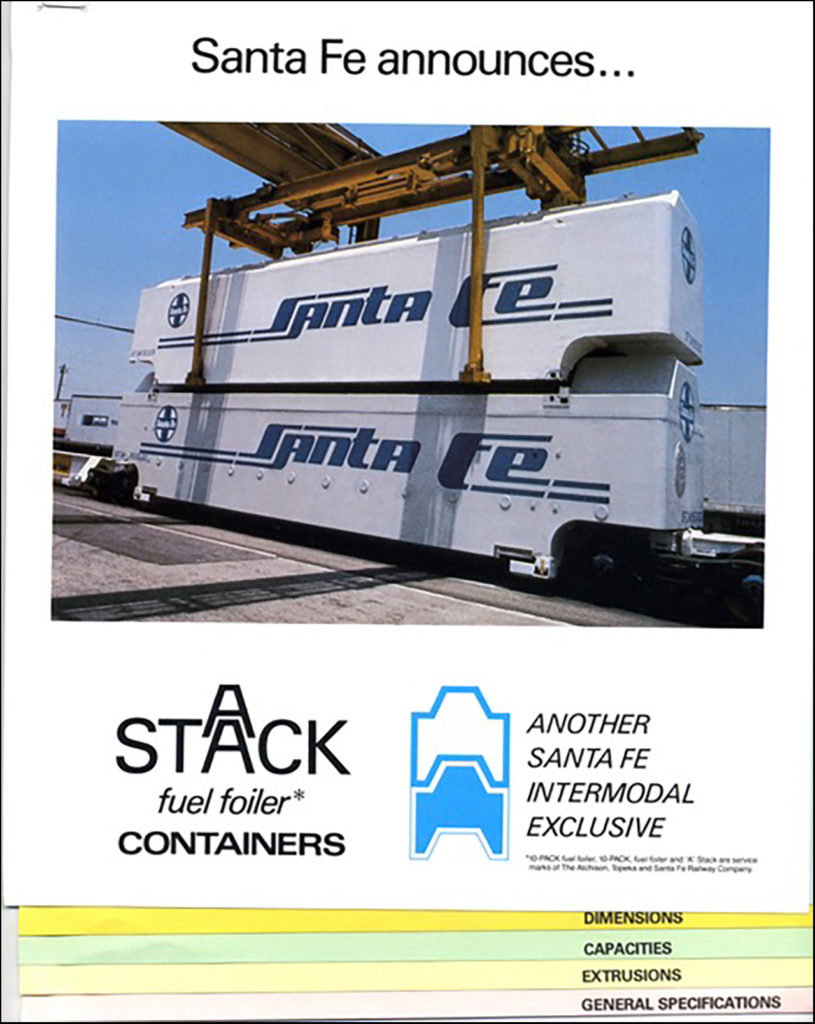
This year marks the 40th anniversary of The Greenbrier Companies’ Twin Stack intermodal railcars, which arguably revolutionized the rail industry. The design of railcars that, in simple terms, enable one container to be placed on top of another (apologies to Monty Python’s Flying Circus and “The Royal Society for Putting Things on Top of Other Things”) has evolved into several iterations over the past 40 years. All serve the same purpose: transporting containers across multiple modes.
Greenbrier estimates the 2024 double-stack container car fleet at 179,000 wells consisting of 77,000 international units and 102,000 domestic units. The fleet’s replacement cost is estimated at $12 billion, compared to a conventional-car equivalent of $18 billion. The company estimates the annual operating cost savings to railroads based on long-term variable costs at $4.1 billion—$1.9 billion international and $2.2 billion domestic.
Railway Age spoke with Bob Yates, who retired from Greenbrier as Vice President of Intermodal and Automotive in 2009. He recalls that the early days of intermodal “were no walk in the park.” Southern Pacific, Burlington Northern and CSX supported the Twin Stack, but imagine running up against resistance like this:
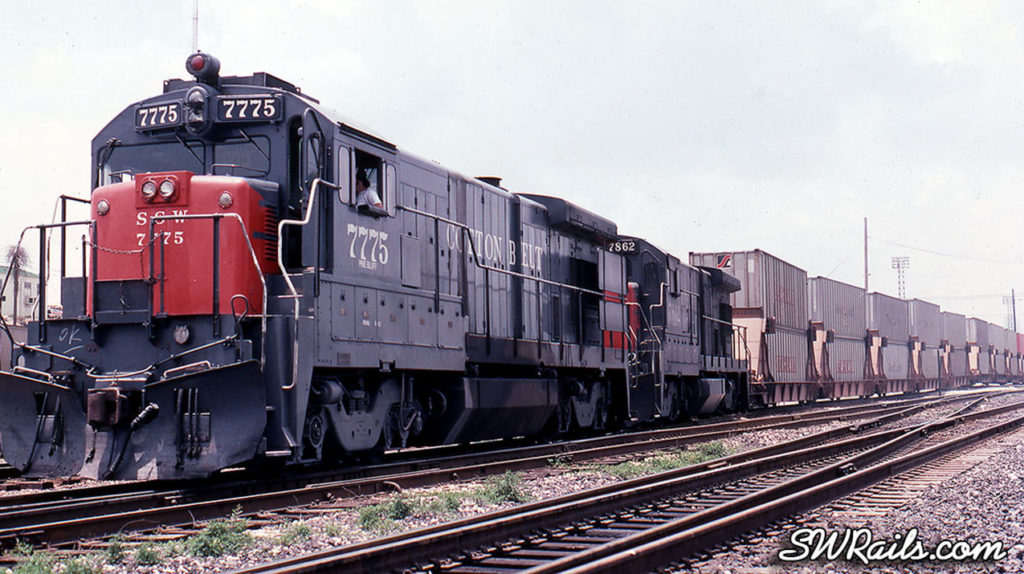
“In 1984, Trailer Train (now TTX) told BN and SP it had no interest in acquiring double-stack container cars,” Yates recalls. “Santa Fe President Larry Cena told Greenbrier Intermodal he would not allow double-stack container cars on his railroad, as did Conrail’s chief engineer. Union Pacific pushed back on the Twin Stack. In 1985, after pressure from BN and SP, Trailer Train agreed to buy double-stack container cars on a sponsorship basis for specific railroads, but in its 1985 Annual Report said that ‘not all container business should move in well cars … they have a role in 8 to 10 key rail corridors … well cars are not suited for heavy 20-foot containers … heavier domestic traffic would exceed the design capabilities of articulated well cars.’
“Domestic movements in trailers were protected. We had many discussions with the railroads about the economics of domestic containerization, which they resisted. Bill Furman (Greenbrier’s long-time chief executive) told BN, ‘In the end, the economics will win.’”
Furman was spot-on, needless to say. But there were doubts about the life expectancy of a double-stack container car. Greenbrier Intermodal commissioned two freight car experts to provide estimates.
“Bill Thomford, retired SP and former chairman of the Association of American Railroads Car Construction Committee, gave double-stack cars a 15-year life,” says Yates. “Ed Wright, retired New York Central Chief Mechanical Officer and Sea-Land consultant, gave them an 18-year life. When Trailer Train bought its first stack cars, it wrote them off over seven years. Now, in 2024, we have the answer: The original, 1984-1986 Twin Stack cars are still in service at 40 years old. In addition, the AAR specification for high-mileage cars is that they be designed to last three million miles. These original Twin Stack cars will all have accumulated more than four million miles this year.”
“One Trailer Train executive told me, ‘Look, we’re the experts in intermodal and you folks really shouldn’t be dabbling in this exotic technology,’” says Yates. “The belief back then was that, yes, you can run double-stacks on SP because they’re a Western railroad, but these cars will never make it to Chicago and never, ever make it to the East Coast. It was all considered a novelty. Things were really sensitive, and it was very common for folks from the railroads to call us to express their animosity. They’d say things like, ‘If you don’t cease and desist, we’ll never order railcars from you.’ One railroad even threatened to embargo them. I wanted to keep a low key and not get on the railroads’ nerves. But I couldn’t.”
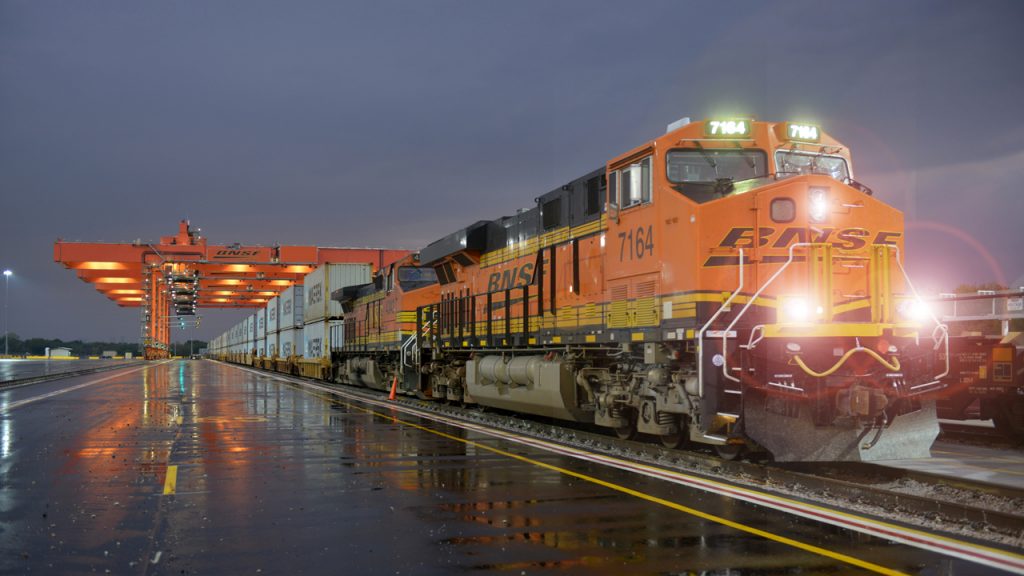
Double-stack is now probably the most ubiquitous type of rail traffic. It’s everywhere. The strongest initial objections were over the economics—or rather, how the economics would affect the railroads’ well-established TOFC (trailer on flat car) business, according to Yates.
“The rates the railroads were getting for their domestic traffic really drove the initial pushback,” he recalls. “The Santa Fe had premium TOFC service and didn’t want double-stacks coming in and competing, taking that traffic out of trailers. Another railroad was fine with double-stack for international containers, but not for trailers. We sat down with them and explained that, in the end, the economics will win. They said no, but what drove them eventually to domestic containerization was the fact that a competing railroad gave APL the ability to fill their empty containers coming back to the West Coast with domestic product, and that started stripping the trailer traffic away. Finally, they gave in. This tug and pull of ‘no ocean carriers’ went on for more than 15 years.
“We ran into some railroads who would try to stonewall us on operations. One said, ‘We don’t want containers in our yards because you’ve got a container and a chassis, so there’s all this extra equipment and we don’t want to get involved in that.’ But we countered with, ‘Do you know that if you double-stack the containers you’re going to get twice as many loads and unloads per switch?’ But then they questioned us about switching costs. I said, ‘OK, if you want to talk about 2% of the cost, then fine, let’s talk about 2% of the cost. But if you want to talk about the real economics, the cost savings on line haul, crews, fuel, locomotives and so on, then fine, we’ll talk to you.’ Then there were the clearance issues on certain routes that had to be dealt with.”
When the ports, ocean and inland, started getting involved, the logjam began to dissipate. Eventually, through sheer determination backed by solid economics, containerized freight and double-stack became dominant in intermodal. Over the years, there have been numerous projects—new intermodal yards, double-stack clearance programs—to enable stack train operation. Many of these projects have been P3s (public-private partnerships), with costs shared between railroads and public entities. The very same carriers that once opposed double-stack and feared it would erode premium domestic TOFC service embraced it and continue to invest billions in its development.
There’s a lot more to this story: changes in container sizes, operational challenges, the rise of China as a major global exporter, and now, near-shoring as some manufacturing returns to North America. But it all started with Twin Stack, 40 years ago.