


Watch: NS Reports Ops, Safety Improvements
Written by William C. Vantuono, Editor-in-Chief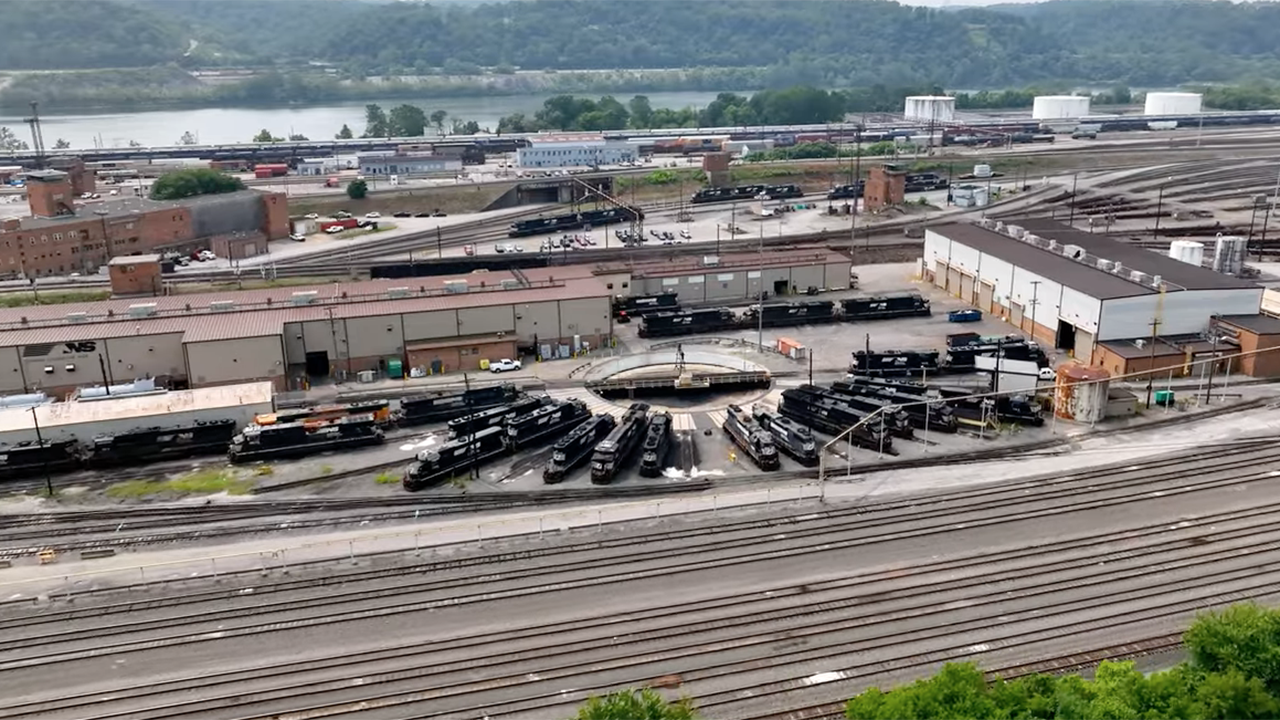
Norfolk Southern Conway Yard locomotive shop. Screenshot of an NS video.
Norfolk Southern’s Operations Task Force, led by Executive Vice President and Chief Operating Officer John Orr, reports that has made several improvements at the Conway Yard locomotive shop in Pennsylvania, northwest of Pittsburgh and among the largest classification yards in North America. At the same time, President and CEO Alan Shaw updated the Surface Transportation Board and U.S. Department of Transportation/Federal Railroad Administration on “recent progress Norfolk Southern has made with safety and service initiatives.”
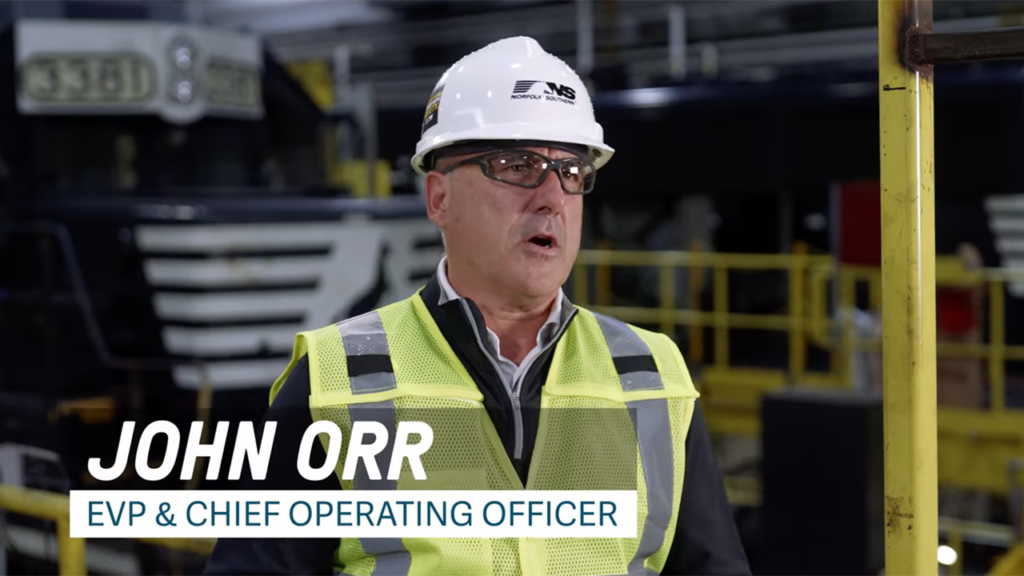
The Atlanta-based Operations Task Force, whose function is described as “identifying and fast-tracking opportunities for efficiency,” has made improvements at the Conway Yard locomotive shop designed to reduce dwell time and increase train velocity. “Notable progress” has been affecting the network “in just a few short weeks,” including increasing Merchandise velocity by 10%, and decreasing train starts and terminal dwell by 11% and 10%, respectively.
“On-time performance at Conway has gone from 30% to more than 90% in the past two weeks,” noted Orr. “That means our trains are being built and ready on time. Our crews are coming in with enough rest to cycle back on time. And our locomotive shops are repairing locomotives and having them ready to go. The minute that crew is available, depart that train on time. I am very encouraged to see firsthand how people, process and accountability are driving productivity and performance. Our operating plan, which encompasses all our operating functions—mechanical, engineering, and transportation—serves as the anchor for processes and our drive for improvement. Ontime performance is an important metric that creates alignment and accountability to our plan. I’m encouraged to see firsthand how people, process and accountability are driving productivity and performance. I’m proud of the work of our Optimization Team and the Task Force, who are tracking performance and identifying areas for improvement. They are getting it done.”
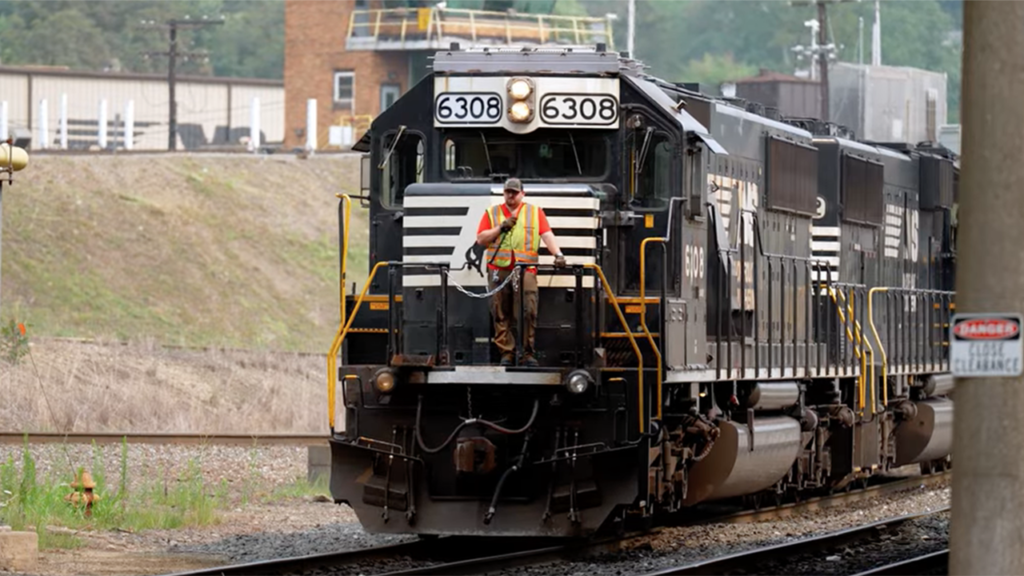
There’s not a single supervisor that can do it by themselves,” added AVP Mechanical Jamie Williams. “There’s not a single employee that can do it by themself. It’s truly a collaborative effort with everybody pulling together to make it happen. And that’s through the entire Conway team. That’s for Transportation, Engineering, the whole nine yards.”
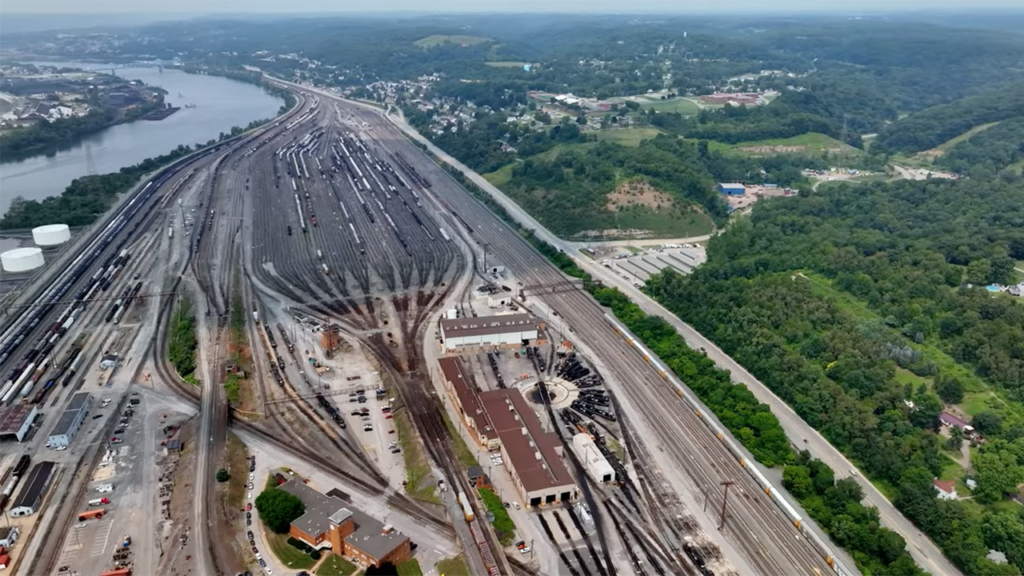
“We have had an incredible team effort here at Conway, both inside and outside of the Mechanical department, like Maintenance of Way, who has put tracks back in service that have been out of service for years inside the car shop to help facilitate additional heavy repairs,” noted Director Mechanical Operations Dominic Fandale. “We’ve also had help from our friends in the car admin team in getting cars that needed to be cut upnin a timely manner, as well as our friends in Transportation that have been placing the right car on the right track for us.”
Watch the Video:
STB, FRA Update
In an April 17 letter, Alan Shaw updated STB and USDOT/FRA on “recent progress Norfolk Southern has made with safety and service initiatives.” The letter (download below) follows one sent in January.
“With regard to our Six Point Action Plan, we have installed an additional 50 new hot bearing detector (HBD) systems at 29 separate sites on our network so far this year,” Shaw wrote. “We are on track to achieve our goal of bringing our total number of HBD sites to [more than] 800 and reducing our average HBD spacing on key routes to approximately 11 miles by the end of 2024. Building on the successful deployment of a next-generation HBD site last December, we expect to have installed a second system from a different vendor by the end of the summer. We also are making further progress on our effort to share HBD data across interchange locations with other railroads, and we expect to implement that program by the end of the year. We continue to collect data from the 17 new acoustic bearing detector systems we installed in 2023 … We will evaluate this data throughout the year and assess whether to install additional acoustic bearing detectors. We installed another next-generation digital train inspection portal at Jackson, Georgia, on March 15, supplementing the first two systems placed in service at Leetonia, Ohio in 2023. We are on track to install four additional systems by the end of 2024.”
With regard to safety, among several initiatives, NS ”completed work earlier this year on a comprehensive training matrix for all crafts that is designed to match necessary skills and training content to each operating craft,” Shaw said. “We recently created a Field Training group in the Safety Department with the transition of some of our training coordinators from the Human Resources Department. The Field Training group’s primary objectives are to create and deliver safety-focused recurrent training and direct engagement with local safety and service committees. Our Human Resources Technical Training team will continue to focus on the initial training of employees. We are confident that the Field Training team will enhance our employees’ safety focus beyond initial onboarding and qualification throughout an employee’s career.”
Shaw also reported on NS’s response to the Baltimore bridge collapse the shut down the Port of Baltimore. ”We launched a new international intermodal service between Elizabeth Marine Terminal (EMT) at the Port of New York and New Jersey and the Seagirt Marine Terminal (SMT) in Baltimore, with units moving by rail between EMT and our intermodal facility at Bayview Yard in Baltimore, and then drayed to SMT between the NS facility and SMT pursuant to a subservice provided by our wholly-owned subsidiary, Triple Crown Services, Inc. This service allows customers in and near Baltimore to pick up and drop off their shipments as if a vessel had called at the Port of Baltimore. We also are collaborating with the Port of Virginia to leverage key service points such as the Virginia Inland Port in Front Royal to customers in western Maryland, southern Pennsylvania, and northern Maryland.”


