


NS Cites Community, Service, Safety Achievements (UPDATED)
Written by Marybeth Luczak, Executive Editor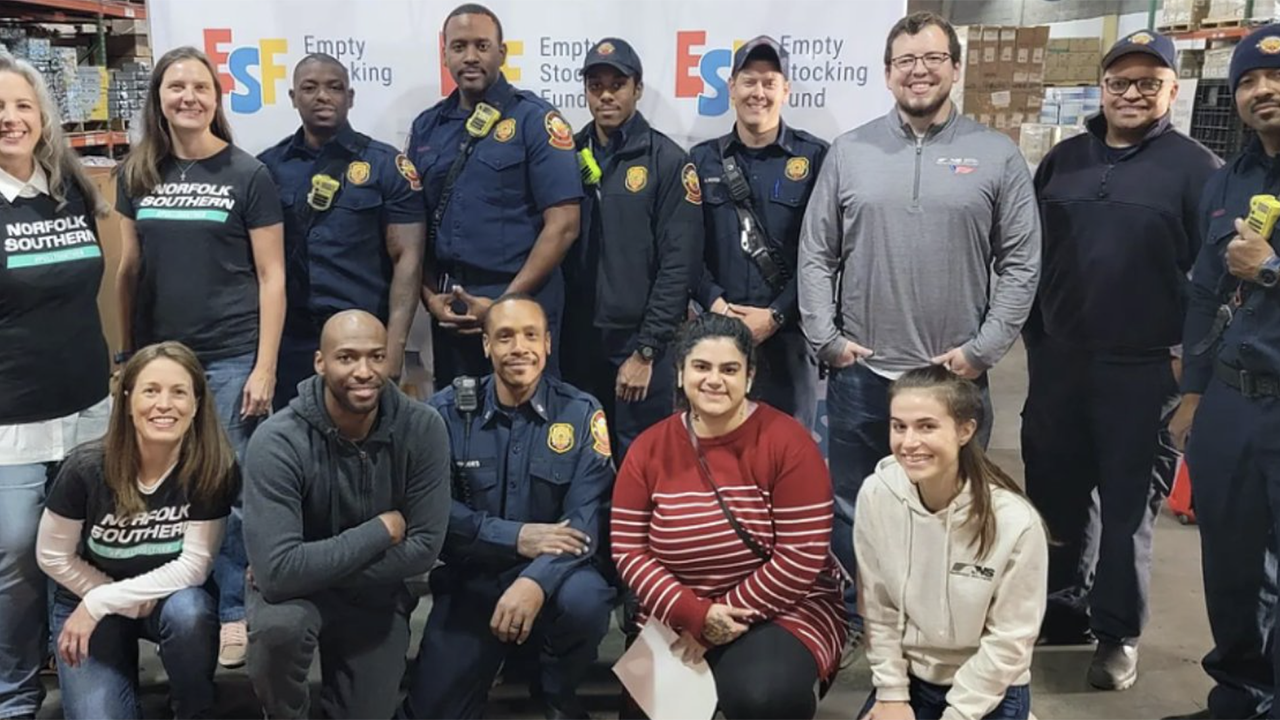
In 2023, NS donated more than $18 million to benefit communities, first responders, and safety initiatives across its 22-state network. (NS Photograph)
Norfolk Southern (NS) reports doubling its community impact in 2023; boosting productivity at its Toledo (Ohio) Terminal; partnering with the Brotherhood of Railroad Signalmen (BRS); and reaching the restoration phase in East Palestine, Ohio, nearly one year after the train derailment. Also, Southern Railway records, donated by NS to the Atlanta (Ga.) History Center, are now available for public view.
NS in 2023 donated $18.2 million across its 22-state network, benefitting communities, first responders, and safety initiatives. This is double the contributions made in 2022.
Highlights of the railroad’s corporate giving include:
- NS introduced two new grant programs, awarding nearly $5 million in 2023 to support 330 community and first-responder organizations. The Thriving Communities Grant Program contributed approximately $2.5 million “to help foster thriving and resilient communities,” and the Safety First Grant Program awarded approximately $2.4 million to organizations and initiatives “prioritizing safety and first responders.”
- NS directed $600,000 in grants to 29 organizations for outreach and support of the homeless.
- NS awarded more than $500,000 through the Thoroughbred Scholars Program to promote educational opportunities.
- Continuing a commitment made in 2021, NS awarded $1 million to 74 Hampton Roads, Va., nonprofits, furthering the goal of providing $5 million to the community over five years.
“Our Corporate Giving program reflects our enduring commitment to building stronger, safer, and more vibrant communities across our network,” said Nabanita Nag, Executive Vice President Corporate Affairs and Chief Legal Officer at NS. “The increased contributions in 2023 underscore our focus on making a positive and lasting impact where it matters most, affirming our dedication as a catalyst for meaningful change in our communities.”
Also in 2023, NS launched a new internal giving program, the Thoroughbred Giving Portal, through which employees logged nearly 6,800 hours of community service.
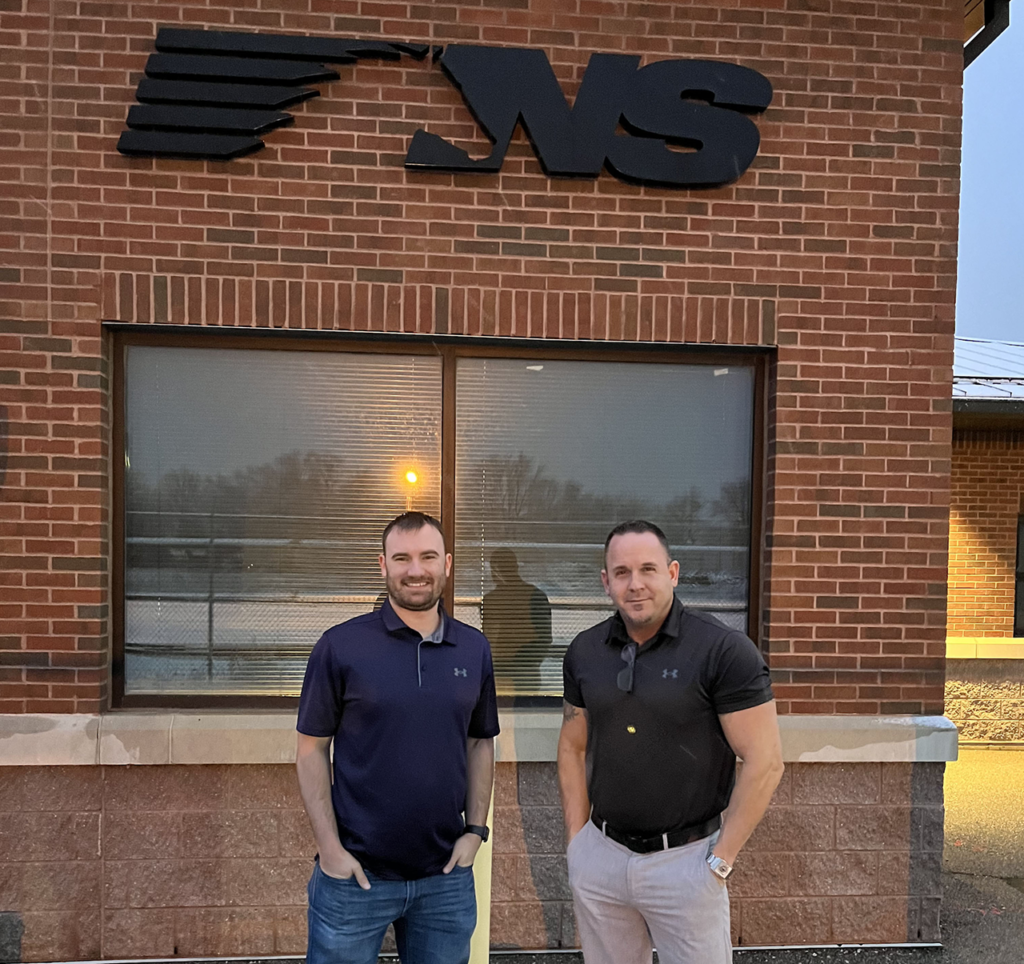
As part of efforts by the NS Great Lakes Division to improve productivity and speed of delivery for customers, two Toledo Terminal managers took a new approach to solve an ongoing challenge, according to a Jan. 23 NS report.
Managers Wayne Lewis and Andrew Lumpp (pictured, left) worked with Watco subsidiary Ann Arbor Railroad. The Class III restructured its train classification codes, and the amount of switching required has been reduced.
“With the time saved, our Toledo crew members can now switch out more trains bound for our Elkhart Terminal,” the Class I said. Previously, this traffic moved to the Moorman Yard in Bellevue, Ohio, before being routed to Elkhart.
Since October, NS said productivity has improved across multiple key metrics, including:
- Ann Arbor Railroad cars are “going to Elkhart 23 hours faster and requiring 45 less cars handled per day.”
- More than 8,000 miles of daily car travel are saved, along with 89 fewer switchings.
- An average of 40 fewer cars go to Bellevue each day, increasing the yard’s capacity.
“Wayne and Andrew’s efforts are a true testament of coming up with solutions that allow us to provide an even higher level of safe, reliable, and resilient service to our customers,” NS Great Lakes Division Superintendent Rob Sarver said. “Both took the time to focus on what mattered and made a significant difference.”
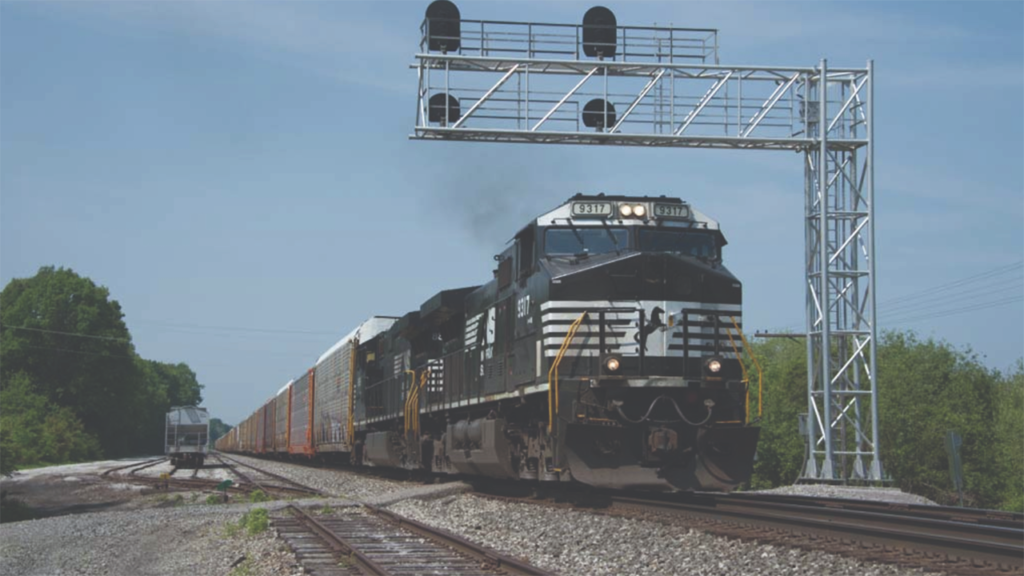
NS and the BRS last October announced a partnership to create the Signal Safety Collaboration initiative, a one-year pilot program developed with input from the Federal Railroad Administration (FRA), which will “establish a collaborative process—including joint inspections, information sharing and training—to identify further improvements and best practices that enhance signal safety.”
NS on Jan. 24 provided an update, reporting that the partners recently held an initial round of field visits —in Asheville, N.C., in November and in Elkhart, Ind., in December. NS management, BRS officers and FRA representatives engaged the NS signal workforce directly and listened to their ideas on safety, service, and productivity, the railroad said.
“Our collaboration with the BRS is another way Norfolk Southern is working to become the gold standard for safety in the rail industry,” said Jared Hopewell, AVP Communications and Signals at NS. “Listening to the input of our railroaders is foundational to our success. We all share a common interest in rail safety and our efforts will go a long way toward this important goal.”
Over the next year, NS said that it will work with FRA and BRS to enhance this joint safety initiative. Monthly site visits will occur throughout 2024. An action plan will also be developed “using the findings to drive long-term signal systems safety,” according to the Class I railroad.
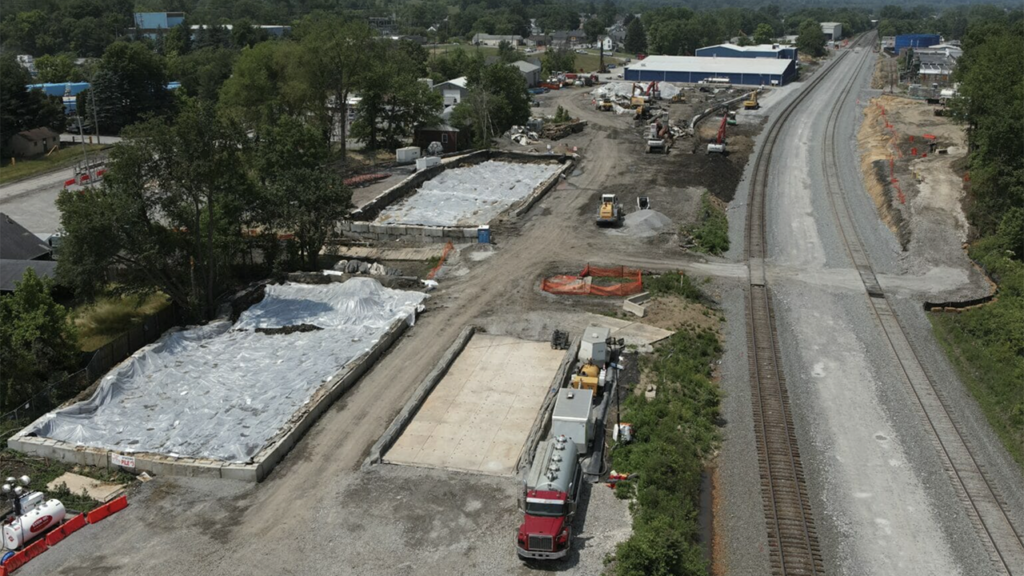
NS cleanup continues in East Palestine, with site backfilling now under way on East Taggart Street.
“[W]e want to get the community where it was before the whole incident,” NS Regional Manager Chris Hunsicker told WKBN earlier this month. “This a big milestone for Norfolk Southern.” Hunsicker emphasized that the Class I has “done a lot of work to remove the hazards it identified to get them off-site and handled appropriately.”
As of Jan. 19, 42.8 million gallons of water has been recovered and transported from the site, and more than 176,000 tons of waste soil has been removed along approximately 1,900 linear feet of track, according to NS. Backfilling new stone and gravel work is expected to continue throughout the winter. Confirmation sampling work continues.
Hunsicker told WKBN that he and his crew are thrilled they’re able to move into this restoration phase.
East Taggart Street is began opening to traffic last fall.
Also under way in East Palestine are upgrades to the municipal drinking water system. NS on Jan. 24 reported that a new carbon filtration system is being installed. The new filters were funded by the railroad’s $4.3 million commitment “for the long-term protection of East Palestine’s drinking water.”
The decision to opt for carbon filters was part of the village’s proactive strategy, according to East Palestine Water Superintendent Scott Wolfe, as reported in the Morning Journal. He emphasized that this move was in progress even before any derailment incident. No derailment-related contamination has been detected in the water supply.
“This puts us way ahead of the curve and is a preventative measure,” Wolfe said.
The remaining funds will be used to implement upgrades to the municipal system, including new engineering, infrastructure, and state-of-the-art technology, NS reported.
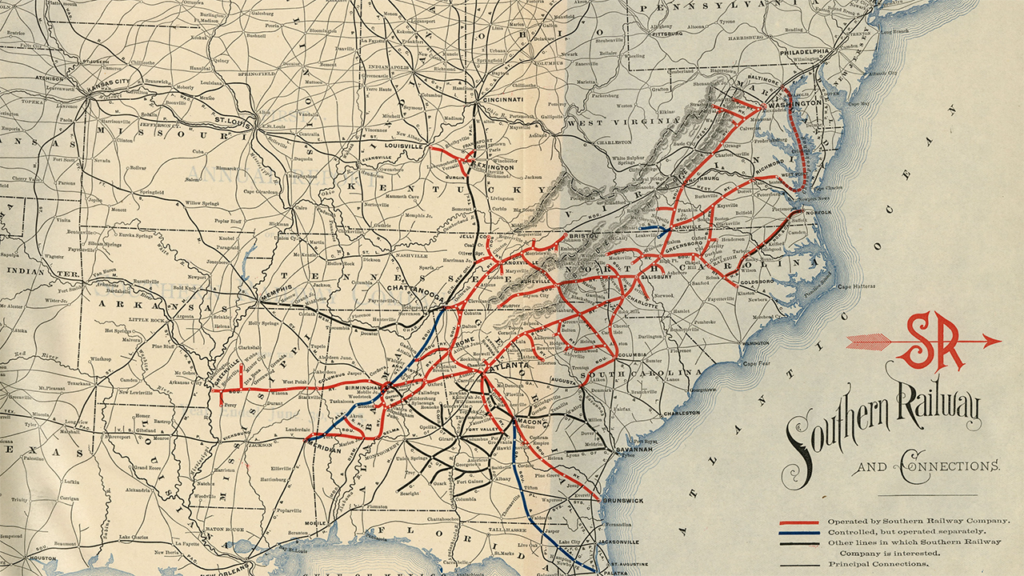
The Atlanta History Center on Jan. 23 announced that the NS-donated Southern Railway records are now open for public viewing.
The records document the history of Southern Railway, which in 1982 merged with Norfolk & Western to create NS. Many of Southern Railway’s 200-plus predecessors, dating from 1827, have direct ties to Atlanta, which is now home to NS headquarters.
The records, which span nearly 250 linear feet, include annual reports, inspection trips, speeches by executives, construction contracts, correspondence, company publications and rule books, passenger train brochures, tickets, railway passes, timetables, records of employee associations, and meeting minutes and subject files of predecessor lines. They contain more than 3,000 construction contracts illustrating the company’s history through the construction of train depots, grading and track laying, bridges, equipment and materials delivery, machinery installation, and yard offices and structures.
“The construction contracts provide researchers with a conceptual understanding of the company’s overall goals by showcasing the change in operational and structural needs during different periods in time, as well as the shift in geographic locations as the company continued to grow and acquire additional railroads and companies,” the Atlanta History Center said.
Additionally, the predecessor railroad records “provide the researcher with a clearer understanding of how these separate railroad companies operated and what led to their incorporation, consolidation, and termination through their stockholder and board of director minutes,” the Center noted. “They also provide a glimpse at their financial standings and pitfalls through their annual reports and general daily operations, communications, and involvement with other railroads and companies.”
The Center has digitized more than 11,000 photographic images from the collection. These images will be added to its website throughout 2024. More than 2,000 are now available.


