


Commentary
‘At the End of the Day, We’re a Service Business’
Written by William C. Vantuono, Editor-in-Chief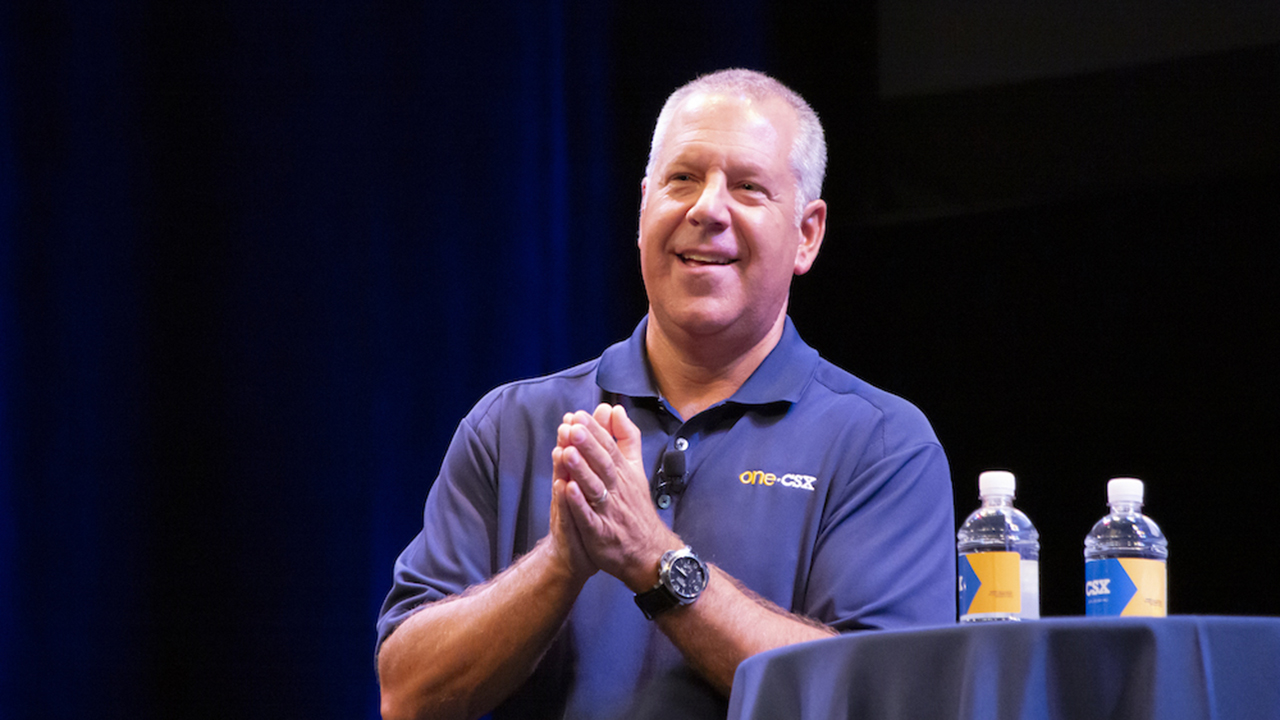
CSX photo.
FROM THE EDITOR, RAILWAY AGE JULY 20224 ISSUE: When CSX President and CEO Joe Hinrichs joined us last month for our annual Rail Insights conference, I wanted to take the discussion in a somewhat different direction. Hinrichs, in the top post at CSX just under two years, is in many ways unlike those who became CEO after many years as railroaders. What has he learned so far? What were his expectations, especially since he was a railroad customer for a long time?
“I’ve learned a lot,” Hinrichs said. “My perspective of the railroads came from being a customer for decades. I managed the relationship with the railroads as part of running the transportation logistics side of Ford. Much has changed in that timeframe. I learned, first of all, that the railroads, especially CSX, have made a lot of improvements in efficiency and safety. The margin structure of the business has changed dramatically over the past 10 years or so.
“When I got the job—and I’ve been outspoken about this—our relationships with almost all key stakeholders were pretty strained. I’ve learned how important it is to keep working on those, whether it’s with regulators, government officials, union officials, our employees, customers, Amtrak, short lines. All are key. I’ve learned much about how to manage those stakeholder relationships, how critical they are to our success.”
Hinrichs is making his mark as a visible, accessible leader. He’s “out on the property” frequently. “We’ve got great people with a lot of history and experience,” he told me. “Out in the field every week, I’ve seen just how proud our employees are to be railroaders—the history, the role in society, how critical the industry is to the economy, and how we provide the movement of goods safely across the continent. That’s pretty amazing. Where else would you have Congress step in and not allow for a work stoppage? That wasn’t true in the auto industry.”
When CSX approached Hinrichs, he met individually with board members. He told them the railroad “needed to focus on employees and customers,” he said. “The rest will take care of itself. We already had a good operating model. We had some efficiencies. We’ve got great people. I felt the biggest opportunity was providing more-consistent, reliable, repeatable service, because at the end of the day, we’re a service business. To do that, though, we needed to run better internally. That required our employees feeling like they’re part of the company—everybody on the same team with the same goals, motivated, recognizing that we’re one CSX. Everyone is valuable, contributing, appreciated and respected.”
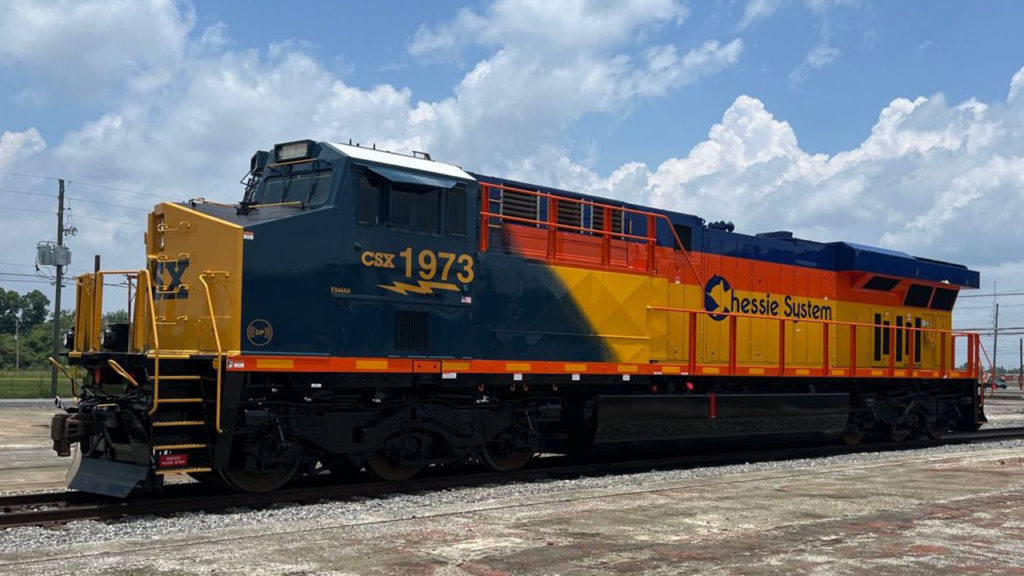
Like many Class I railroads, CSX has a small locomotive fleet in liveries that pay tribute its predecessors. CSX’s approach is different. Looking straight-on at the nose of each unit, you cannot see the heritage scheme. The livery transitions just behind the cab. “Purists” might ask why.
Hinrichs’ answer: “We want our employees to be proud of where we come from, our history. But we also want them to recognize that we’re moving forward. That’s why the front of those locomotives remain CSX.”
Vis unita fortior! Deinceps! Notch 8!


