Commentary
CRRC and the Passenger Rail Conundrum
Written by David Nahass, Financial Editor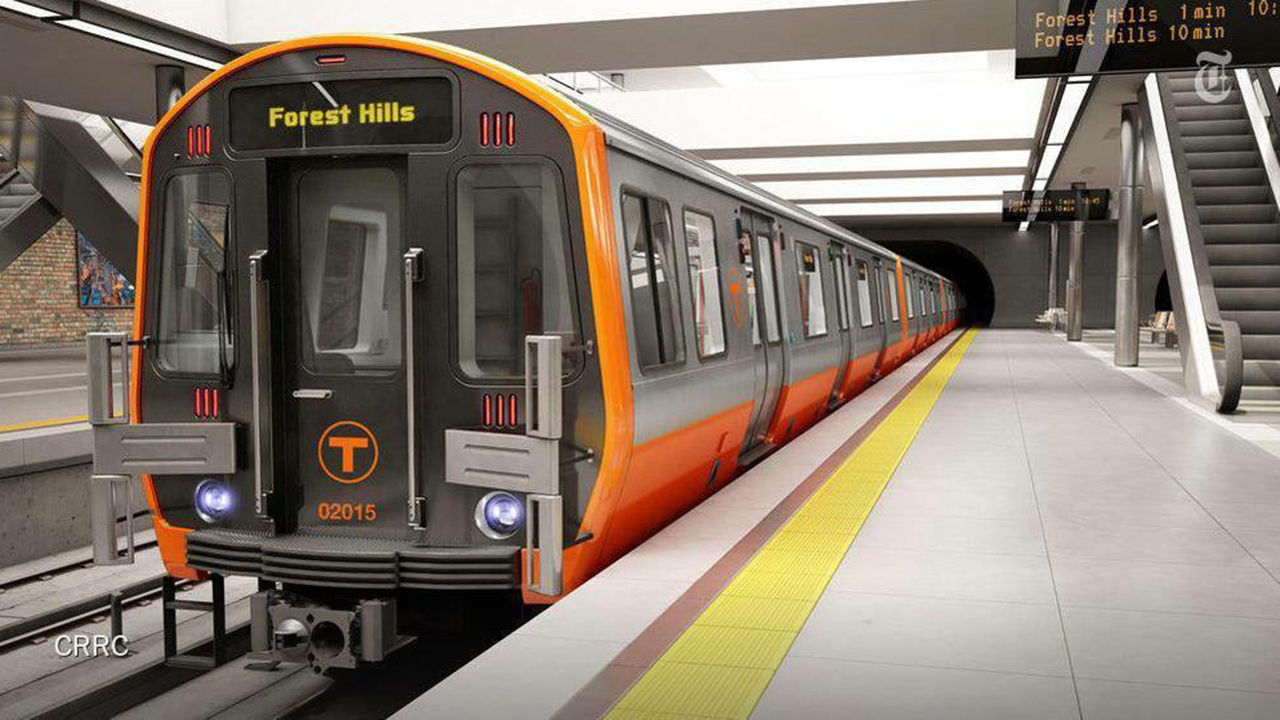
MBTA Orange and Red Line cars being built by CRRC are way behind schedule. Many Orange Line cars have been removed from service for problems including a battery explosion, a derailment, loose brake bolts and faulty wiring. In March, MBTA updated its contract, agreeing to pay $148 million more to speed production. CRRC image.
FINANCIAL EDGE, RAILWAY AGE MAY 2024 ISSUE: Roughly one year ago, in May 2023, a “60 Minutes” report was issued about cost overruns in the defense contracting business. The story details billions of dollars in price gouging by contractors (Raytheon, Lockheed Martin and Boeing) on Patriot missiles, Stinger missiles and the legendary mother of all cost overruns—the F35 fighter jet. The F35 alone has overruns of $90 billion, and ongoing potential future expenses in the trillions. It’s an epic head scratcher and head shaker.
Cost overruns are a bedrock of government contracts (who can forget the Pentagon’s infamous $600 hammer). But really, it’s a problem often connected to municipal or quasi municipal agencies. The problem is a secular one. In transportation agencies, citizens want their local transportation agency to be self-funding, independently operational and surviving only on the farebox (or toll both). They also want those fares (and tolls) to be de minimus. It is a crisis of ideology without hope of reconciliation.
This is a fundamental problem faced by Amtrak that was highlighted in the November 2023 “Financial Edge.” It is also the root of the battle over New York City’s proposed congestion pricing plan.
The New York Metropolitan Transportation Authority (MTA) can’t perpetually raise fares, so the grimy and grabby hands of the state’s politicians move to extort money from commuters and tourists or strong-arm them back to public transportation. The MTA is so underfunded that maintenance is getting neglected, and service (if you’re not pushed onto the tracks first) is sub-optimal. Upstate New York politicians would rather fight with New Jersey than raise taxes to fund downstate infrastructure.
SEPTA’s contract cancellation seemed inevitable. More than two years ago, SEPTA CEO and General Manager Leslie S. Richards cited manufacturing problems including watertightness test failures, poor wiring on interior control panels and other subassemblies, repeated brake test failures, and emergency exit windows that did not meet safety standards.
The contract with CRRC was for $185 million, and the CRRC bid was $34 million below the next bidder’s price (Bombardier, now Alstom). For the SEPTA team, the choice in 2017 was obvious. Delivering those assets for that level of discount would have been a win for SEPTA.
Alas, that’s where the good news stops. The CRRC bid was the song of the siren from Homer’s Odyssey driving those that hear the songs to madness.
Many new Orange Line cars have been removed from service for problems including a battery explosion, a derailment, loose brake bolts and faulty wiring.
But the MBTA took a tack that was more like the Pentagon and the F35 than SEPTA. In March 2024, the MBTA agreed to pay an additional $148 million (on top of the original $870 million order) to CRRC to improve the pace of the project—effectively subsidizing CRRC’s failures with additional taxpayer money. The new total is more than $1 billion. That’s wickedly high.
That strategy might have just been a news item prior to SEPTA’s CRRC order cancellation, especially considering that the Los Angeles Metro took delivery of its first series of CRRC railcars—albeit a year late. (LA Metro also cancelled an option, one for an additional 218 railcars.) $148 million buys a prodigious number of egg facials.
All railcars, including passenger cars, are supposed to be long-lived assets. The inflationary economy has driven railcar costs higher. They are likely to remain higher than to gravitate to pre-COVID nominal means. SEPTA is likely to pay more rebidding the replacement order. This does not include the temporal delays of placing an order in 2017 and then needing to re-bid that order in 2024.
SEPTA’s escape from the CRRC contract is a win. It represents a new opportunity to source the equipment from a reputable supplier who bids to win a project and delivers based on the contractual terms. It is a preferable result to the MBTA strategy of throwing good money after bad.
Unlike the Pentagon, municipal transit agencies can choose from several reputable manufacturing firms. It helps avoid price gouging. It doesn’t address the issue of budgets and the farebox. Picking a side in the budget vs. quality battle is every purchasing department’s nightmare.
The money the federal government is throwing at infrastructure won’t change the secular nature of this tension if there aren’t enough riders to fill the farebox after government funds have been spent. Until then, the siren’s song will continue to be sung.