VISIBILITY
Written by Joanna Marsh, Contributing Editor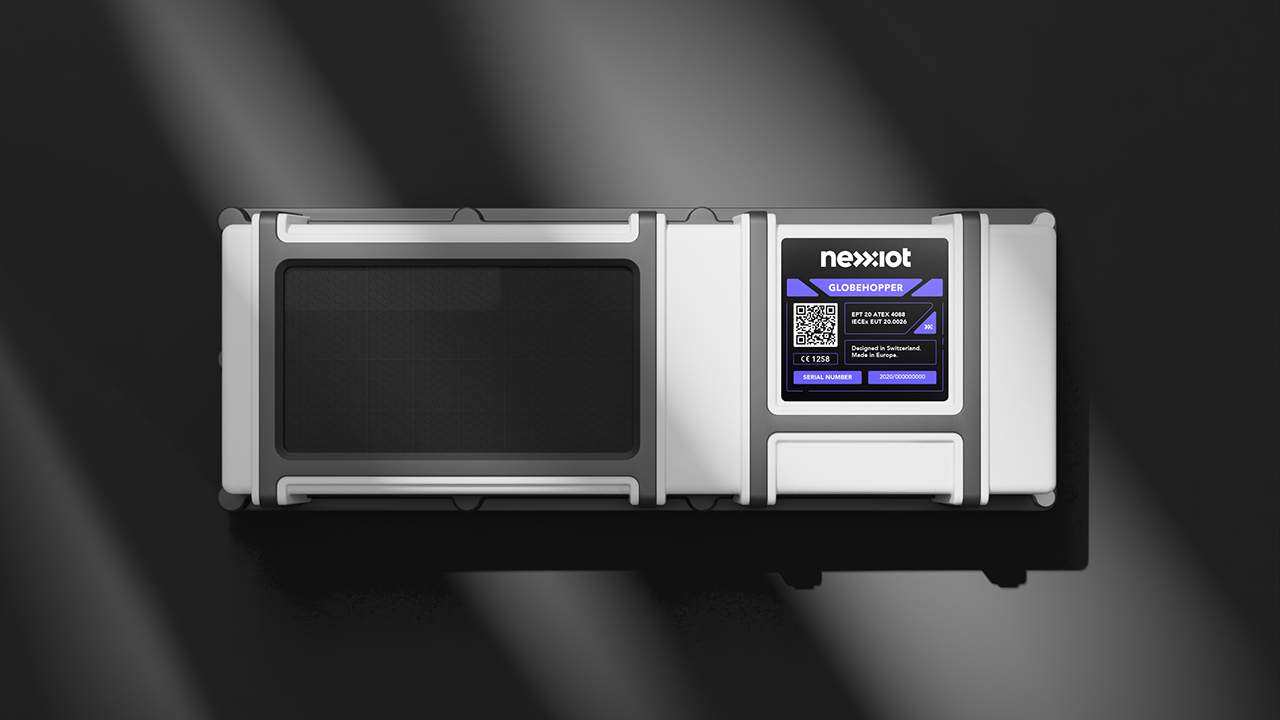
Nexxiot photo.
RAILWAY AGE JUNE 2024 ISSUE: If you’re in the industry long enough, chances are that eventually you’ll come across a story about a wayward railcar—not necessarily an anecdote about a railcar ending up in North Dakota when it should have been in Alabama, but a story about coffee beans turning rotten because the temperature-controlled railcar wasn’t functioning properly.
While companies might label that incident as the cost of doing business, situations like this were what motivated Daniel MacGreggor to co-found Nexxiot, a European and American tech provider. “The issue is that we still live in a physical world. My core belief or passion for Nexxiot was to address this wastefulness that’s going on,” he said. “Instead of relying on insurance payouts, companies should use technology to keep track of shipments’ location and their condition to help prevent this wastefulness.”
The idea of enabling railcar owners, railroads, shippers and other supply chain stakeholders to keep track of where their equipment is located on the North American rail network has gained a groundswell of support in recent years, particularly as competing freight transportation methods have developed tools to provide shippers with network visibility. One solution to the overall lack of visibility in the rail network is rail telematics, or the ability for stakeholders to monitor assets via telecommunications and information technology. While the field is still relatively young, dozens of companies have already developed sophisticated tools to address the visibility problem. Companies like Nexxiot, Amsted Digital Solutions, TrinityRail, Wabtec, Railinc® commercial products unit TransmetriQ and ZTR have begun offering their own telematics products, while partnerships like RailPulse™—the coalition established in late 2020 to “facilitate and accelerate the adoption of GPS and other telematics technology across the North American railcar network”—seek to encourage rail stakeholders to work together to promote visibility of the North American rail network. Amsted Digital Solutions has signed a multi-year agreement allowing RailPulse™ to act as a non-exclusive reseller of its IQ Series telematics technology.
“Today, there is no real-time visibility into the status and health of more than 90% of the estimated 5.2 million railcars worldwide. Equipping these freight cars with telematics, GPS and sensor technologies enables customers to capture that hidden information and turn it into actionable data. The result: freight visibility, increased safety of rail assets and new levels of operational efficiency,” said Wabtec. “The challenge today is that it is difficult to see across different modes. Telematics solves this problem by providing real-time railcar visibility. Through this visibility, telematics integrates the transportation network to provide more efficient execution and a seamless shipping experience.”
Rail Telematics Defined
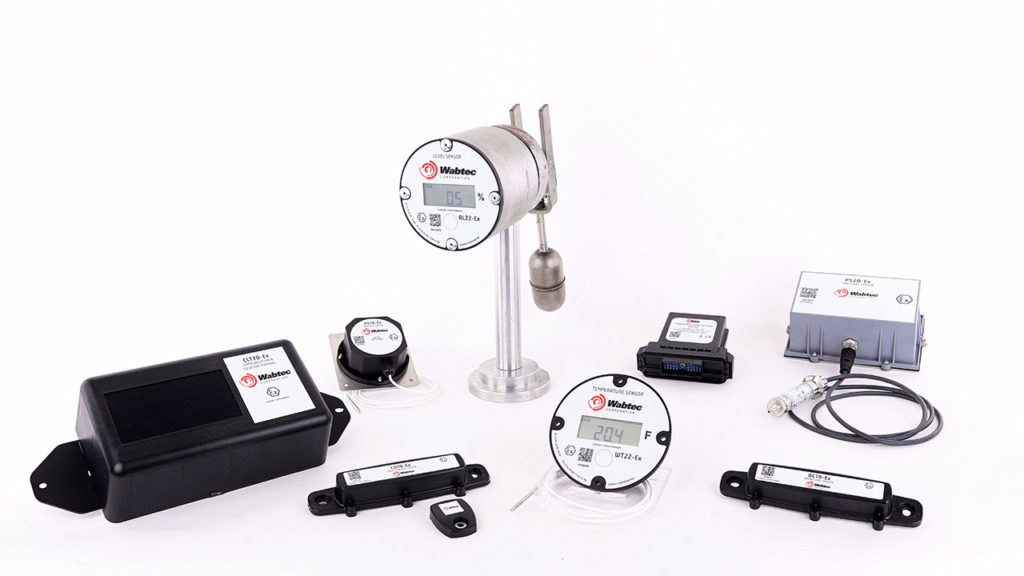
Wabtec is working with Dutch company Intermodal Telematics to develop a railcar telematics platform for railcar and tank container owners and operators. Wabtec photo.
Rail telematics nowadays often consists of installing devices on railcars that monitor their condition. There have also been devices available for monitoring the fuel efficiency of locomotives. Some telematics offerings, like those of Amsted and Nexxiot, consist of one device that might aggregate various bits of information and send them to the cloud for shippers and other stakeholders to download and process.
The technology is for the benefit of railcar owners—the Class I railroads and the short line operators, and the lessors and large manufacturers, with this latter group owning the lion’s share of the U.S. railcar fleet.
While rail telematics might be a buzzy concept now, the idea of using technology to monitor railcars and locomotives has been around for several decades.
In the mid- to late-2000s, the North American rail market became interested in being able to locate railcars containing hazardous materials with a higher degree of accuracy beyond updates received from the trackside network, according to Brad Myers, Chief Operating Officer for Amsted Digital Solutions, which is affiliated with Amsted Rail.
Companies also used radio frequency identification (RFID) for some assets, enabling railcars to gain access through a gate or to a port, according to MacGreggor. But the RFIDs were passive devices that had the potential to stop working. Another tool was wayside detectors that could take photos of passing trains, but those detectors could get damaged or could miss an issue with a railcar, he noted.
But recent events revealed the attractiveness of having access to real-time data that can inform stakeholders of where their shipments are. One catalyst was the U.S. government’s mandate calling for the installation of electronic logging devices (ELDs) be installed on trucks. The ELD data opened much more rich data streams, Myers said. Another catalyst was Amazon’s approach to visibility, where customers could see how far away their packages were from their front door.
“The newer generation of people working in logistics have an expectation of such real-time updates. We need to broaden how we can provide the same or close-to-same level of location data,” Myers said.
While rail telematics is usually associated with the ability to locate railcars on a rail network using global positioning systems or other trackers, telematics offerings extend beyond keeping tabs on railcars’ whereabouts. There are products that can monitor load, door and hatch and handbrake status to ensure the integrity of the railcar and that its contents are safe and contaminant-free. There are also devices that can conduct onboard acoustic bearing detection.
These devices enable railcar owners with insight into railcar utilization and how equipment is being used or misused during events such as coupling or switching. By knowing railcars’ mileage and keeping track of when they are loaded or empty, railcar owners can also learn how to improve the turnaround times for those railcars.
“The ability to highlight outliers when they occur as to the degree of difference from say the rest of the fleet provides car owners an opportunity to target physical inspections of a railcar to ensure there are no signs of unusual or concerning damage that may affect the integrity of a railcar,” Myers said.
The benefit of receiving data on a railcar’s condition is significant for several reasons. For starters, the data can be shared with others in the supply chain. “Telematics as a whole enables field industry to collaborate with other transportation modes by providing APIs’ seamless integration and interoperability with other systems,” said Shubham Srivastava, ZTR Senior Product Marketing Manager. “For example, data collected through telematics can be shared with other stakeholders in the supply chain such as shippers and logistics providers to optimize the multimodal transportation solutions.”
Rail safety can improve from deploying telematic tools because they enable railcar owners to shift from time-based maintenance to condition-based maintenance. For instance, an owner might have visibility into whether the railcar has seen an excessive impact or whether the handbrake has been released before it moves. Having this insight can provide assurances that the railcar is being properly maintained and safely used.
“These railcars are being passed from different people to different locations. How do we understand what happened, resolve the issue, resolve the cost and then do better so that we can avoid that in the future,” said Kurt Rohmann, ZTR Chief Commercial Officer.
In addition to safety, rail telematics can result in cost savings for the user if deployed and used effectively. Ensuring the railcar is in good shape means the owner is getting value from the capital expenditure, according to Rohmann. A railcar owner, once aware of a problem, can buy components, allocate resources and prioritize maintenance and repair work ahead of its arrival at its next rail yard.
“There’s a lot of knowledge that should help the rail industry be able to compete with over-the-road without that unending pressure to improve operational and cost efficiencies,” Rohmann said. “As quickly as people can learn and adopt these applications, they can then figure out how to take the data and change their operational procedures to maximize value.”
Industry-Wide Approach
As numerous companies are each developing their own rail telematics solutions, there are also broader efforts to take an industry-wide approach to better integrate telematics into existing operations.
One prominent effort is RailPulse™, which, as General Manager David Shannon describes, is “dedicated to bringing telematics digitization into the rail industry while taking into account the structured nature of rail.”
The consortium—which includes three Class I railroads, two short line operators, three railcar lessors and manufacturers, one shipper and one institutional investor—has developed a shared platform that it expects to launch sometime this summer. The platform, which RailPulse™ created with help from a federal grant from the Consolidated Rail Infrastructure and Safety Improvements (CRISI) program, tracks railcars that have telematics installed on them as they travel through the U.S. rail network. The data collected informs owners on the location, condition and health of each railcar.
“Traditionally, telematics has been delivered in this industry on siloed levels. A customer says it would be valuable for me to put some stuff in railcars, or maybe a railroad or a leasing company might play with something on their own,” Shannon said. “But these are siloed solutions where only a small part of the industry might get some benefit. The goal of RailPulse™ is to have an industry platform where the data comes into the RailPulse™ platform, and then we can share that data out back to the company that owns the railcar but also to shippers, consignees, lessors, railroads, etc.—anybody that has the right to know.”
Shannon, who has been working in the telematics space since it was in its infancy in the late 1990s, says RailPulse™’s goal isn’t to make money. Rather, “you join because you have a belief in the value of rail and the fact that telematics can help improve the value of rail regardless of where you sit in that ecosystem.”
Indeed, the benefit of having a consortium is that the companies involved must put their competitive requirements aside and “focus on what’s good for the industry,” Shannon said. “It is all a self-reinforcing set of drivers that ultimately go toward, how do we serve the needs the rail market better so that more companies will want to use rail or that those who already use rail will move a higher percentage of their freight on rail.”
RailPulse™ has also been working with other telematics providers to enable network visibility. Nexxiot noted recently that railcar owners using Nexxiot’s products would be able to join the RailPulse™ platform and that RailPulse™ will act as a non-exclusive reseller of Nexxiot’s hardware devices, software and services. The agreement isn’t meant to generate profit for RailPulse™ but rather to simplify the process of procuring telemetry solutions, Nexxiot said.
Separately, Wabtec announced in December 2023 that it would be working with Dutch company Intermodal Telematics to develop a railcar telematics platform for railcar and tank container owners and operators.
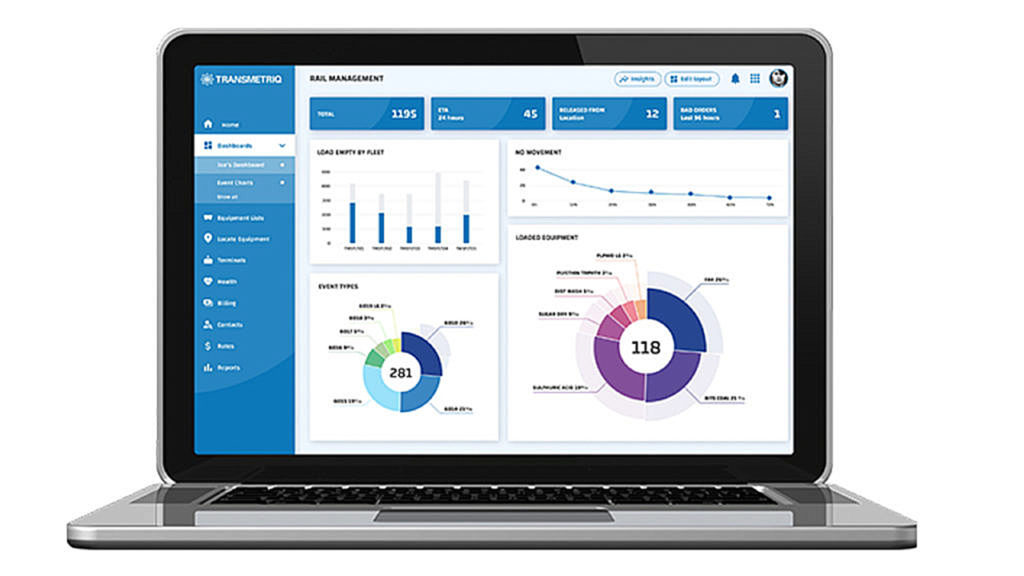
TransmetriQ recently launched Reporting & Analytics, described as “a new comprehensive railcar fleet reporting tool that synthesizes asset location, health and repair data to provide deeper fleet insights. With customizable, interactive dashboards and configurable alerts, Reporting & Analytics makes it easier than ever for fleet managers to recognize areas of concern and optimization opportunities.”
Shippers and railcar owners can customize the data viewed in Reporting & Analytics “based on their needs, choosing to view tracing reports, health and repair insights, or both,” TransmetriQ noted. “The tool translates and synthesizes numerous data streams into dashboards the user can customize—empowering them to quickly make strategic decisions for more efficient railcar maintenance and fleet utilization.
The dashboards created by TransmetriQ’s Reporting & Analytics tool give users critical information, including:
- • Fleet Health Reporting.
- • Component Performance Analytics.
- • Remaining Wheelset Life.
- • Cycle & Dwell Times.
- • Equipment Characteristics.
- • Other Key Car Insights.
“These dashboards leverage direct access to trusted Railinc fleet health and movement insights,” the company said. “Designed with the input of fleet managers, Reports & Analytics provides out-of-the-box reports and fully customized reporting capabilities.”
“Gaining insight into asset repair trends has historically been difficult due to the complex nature of railcar repair data,” said TransmetriQ Product Manager Gregg Phillips. “With Reporting & Analytics automatically translating repair data into user-friendly insights, railcar managers can easily see where repair dollars are being spent, what’s driving that spending, who is performing repairs, and where they are occurring.”
Similarly, shippers who manage their own fleets “can use the cycle and dwell analytics to identify problem areas and drive performance improvements such as shorter facility turn times,” said TransmetriQ Product Manager Danny Dever.
“Through our voice of the customer program, we worked closely with railcar fleet managers and learned they were seeking better ways to analyze operations to keep equipment moving in revenue service and to control repair costs,” noted Railinc Vice President of Product Management and Strategy Mika Majapuro. “The tool they created does that, and it can be readily toggled between fleetwide and specific equipment or lane analyses. With reports built for rail-specific scenarios, it’s easier than ever for fleet managers to recognize areas of concern and adjust accordingly.”
Ramping Up Integration
As railcar owners grow accustomed to the benefits of deploying telematics solutions, they should expect even more sophisticated capabilities on the horizon, in part brought about by advances in telematics hardware. Research teams within these companies and others are working to use artificial intelligence and machine learning to further enhance capabilities and drive innovation. Creating digital twins and utilizing edge computing and IoT (Internet of Things) could also bring about a future where operations pivot to predictive maintenance.
“Picture a railcar right now. It’s got nothing on it. No power, no sensors, no information whatsoever. Now picture a car [loaded with number of sensors],” Rohmann said. “The locomotives are moving that way, and we’re just getting to a world where railcars [are also]. So as you picture more and more data coming off them, each data point can be further analyzed with algorithms that understand different concerns, risks, behaviors and operational efficiency improvements.”
It’s also the goal of rail telematics companies to integrate the various telematics systems within a train so that not only are different systems and products working with each other on a railcar, but also that different systems are working in tandem on the railcars and on the locomotive.
On interoperability between telematics products functioning on locomotives and railcars, Srivastava said, “While these two are in isolation right now, going forward we see them combined so that you can make intelligent decisions all the time. The telematics systems we speak of could ultimately be designed to seamlessly integrate with onboard control systems and the signaling network, back-end management platforms and other control systems to enable real-time data exchange and coordination across the entire network.”
“Collaboration with railroads and locomotive OEMs would be required to evolve an in-train network, and this would require various operating rule changes that would require a broad, unanimous approach. There are technologies that can certainly advance intra-train opportunities,” said Amsted’s Myers. “As an industry, if we can begin the migration and continue to validate the advances in digitalization using onboard telematics, it will only aid in how much further and faster we can go as an industry.”
Even individual stakeholders within the supply chain might find benefits from working on shared data, as needs differ between supply chain managers, shippers and purchasers. “The exciting thing is we’re getting to the point now where we are digitally equipping railcars, which is at the very, very early stages of figuring out how we can further improve our safety, operational efficiency or environmental impact of all of these assets,” Rohmann said.
These telematics tools can “restore confidence” to shippers and regulators, especially at a time when the rail industry has received negative press over concerns about safe operations, according to MacGreggor. “There’s a huge pressure to address and show demonstrable actions,” he said. “And the way to do that is with hard facts and working with data empirically to address problems and reduce the industry’s risk profile. We’re living in a data-hungry age where the more visibility we have and the more interesting things we can discover, the more we can adjust
and improve.”