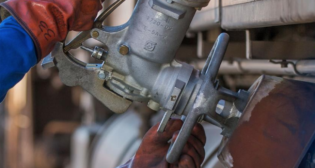
UP: Third Consecutive Year of Fuel-Efficiency Gains
Union Pacific (UP) is utilizing technology and mobilizing its workforce to reduce fuel consumption and its carbon footprint.
Union Pacific (UP) is utilizing technology and mobilizing its workforce to reduce fuel consumption and its carbon footprint.
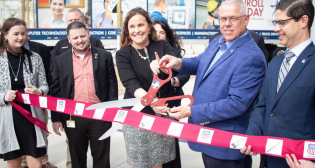
The first time a truck-driving student at Lone Star College in Houston, Tex., encounters a railroad crossing will be on a training course—not a public highway.
If you’re like most consumers, you probably don’t visualize that gaming console or gym equipment you purchased last night on your cell phone as traveling on a Union Pacific (UP) train en route to your porch.
Handheld mobile devices equipped with DigiCrew are making their way into the hands of Union Pacific (UP) conductors and locomotive engineers, boosting efficiency.
You’ve heard of self-driving vehicles. How about self-operating cranes?
Most locomotives departing Jenks Locomotive Shop in North Little Rock, Ark., fit a mold: polished, armor-yellow titans ready to haul freight across Union Pacific’s 23-state network. But there are others. Here’s the story of two carmen who paint complex commemoratives like the UP No. 1979 We Are ONE Employee Resource Group (ERG) Locomotive.
Editor’s Note: Due to recent forest fires in Northern California, Union Pacific’s (UP) Dry Canyon Bridge and nine miles of track sustained damage. Here is the story of how the railroad’s team fought the fires and is now rebuilding infrastructure; it was originally posted on the Class I’s website. UP estimates that the bridge will reopen Sept. 1.
Editor’s Note: As a polar vortex gripped much of the U.S. in February, railroad field employees braved harsh conditions to keep trains running and workers safe. Here are a few examples from Union Pacific, originally posted on the Safety section of the Class I’s website.
An explanation of Precision Train Builder, developed by Union Pacific subsidiary PS Technology.
It’s not the plastic water bottle that causes the most harm to sea birds, but the cap, which is mistaken for food. A non-profit in Hawaii ensured that more than 1.2 million plastic caps and lids will never get into the environment and harm sea birds by taking action to collect and recycle them. But this is no ordinary type of recycling, which aims to turn a plastic product back into another plastic product with the addition of more plastic.