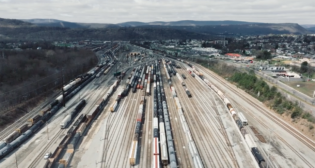
CPKC IT Cutover Update
Some better data this week suggests that Canadian Pacific Kansas City’s southern U.S. operating problems related to its May 3 IT systems cutover might be starting to correct, which is good news.


Operating data for the week of May 26 highlighted the first of the four big public holidays that typically accelerate the U.S. Class I networks, due to the temporary reduction in volume
We’ve now seen three weeks of suppressed intermodal volumes at Union Pacific and BNSF due to the China air pocket effect, which is a lagging consequence of the 145% U.S. tariffs on
In the two weeks through May 17, the “China air pocket” in imports hitting the West Coast has become very visible. The trade war rhetoric between the U.S. and China culminated in
More good progress from CSX, as it continues to rebound from the early April trough in operational efficiency. Operating car inventory has now fallen in four consecutive weeks, from its peak of
Following the Feb. 1 closure of the Howard Street tunnel in Baltimore and CSX’s subsequent collapse in operational efficiency through early April as it struggled with the associated reroutes, we’re now seeing
The past couple of weeks you may have noticed that BNSF and Union Pacific have been running an increasingly tight ship as they shake off the last vestiges of winter and some
As the flooding effects in Tennessee and Kentucky dissipated, CSX was able to get the network moving in the right direction in the week ending April 18. Average train speed, which had
The Long Tail of Car Inventory Normalization: Last week we highlighted CSX’s battle to overcome significant flooding in Tennessee and Kentucky, due to storms from April 2-6. Last week’s data captured the
CN Rebounding Quickly from Winter Over the past couple of weeks, we’ve discussed CN’s network fluidity “mini-crash” that occurred in the week ending Feb. 21, due primarily to the compounding effect of