Flashing green for productivity
Written by AdministratorWhile signaling and communications is most often associated with safety (and rightly so), its role goes far deeper. “Wayside signals have been a familiar feature of railroads ever since the industry’s beginnings,” according to the Encyclopedia of North American Railroads. “In essence, signals are communication devices designed to inform locomotive engineers of track conditions ahead of the train and tell them to react to these conditions.
Thus they are, first of all, safety devices that help trains avoid collisions, but they are also tools for maximizing the efficiency of both train operations and track use.”
In effect, they are productivity tools.
A railroad cannot operate safely—or productively—without some form of traffic and/or train control system. Dark territory or CTC, TWC or ABS or PTC—without some form of control, trains cannot (or should not) move at all. A railroad can have the best track structure, the best power, and the best rolling stock, but without at least a basic signaling and communications system, nothing can move.
We asked some of the key suppliers in the C&S field to tell us how their products or systems can improve productivity. Here’s what they had to say:
Ansaldo STS USA
The Optimizing Traffic Planner (OTP) is Ansaldo STS USA’s next generation system for planning the movement of trains across a rail network. The concept of Optimized Traffic Planning works toward achieving one or more business goals, and then measuring how well the objectives were achieved through the generated traffic plan. The execution of the optimized traffic plan can happen in two different sequences, either suggest the train operation to a human operator or automatically deliver to a dispatching system.
The OTP interfaces to a computer aided dispatching (CAD) system, through which it communicates its plans to the railroad. The OTP plans the movement of trains to best achieve a set of railroad business objectives, such as maximizing average velocity of all trains or ensuring on-time arrival of high-priority trains. It accomplishes this optimization by scoring the train movement plans it generates according to how well they satisfy those objectives. The most highly rated plan generated during an initial planning period is “published.”
The OTP continually generates plans for two reasons. First, it tries to find an even better plan than the published one. Second, because the state of the railroad is continually changing in ways that are not anticipated, the OTP must account for such changes and re-plan when it receives updates from the CAD system.
Two key entities at the heart of the OTP problem-solving architecture allow OTP to generate optimized plans in a short period of time: agents and a business objective scoring function (a means for scoring plans based on the objectives). To provide customers with virtually unlimited means for tailoring the movement planning to their business operations, these two entities work in concert as follows:
• Agents: Besides implementing the cooperative computation method of problem solving, which is necessary for successful optimized train movement planning, agents enable customers to add very specific business rules reflective of their operations. For example, some agents allow the OTP to customize operations for staging trains for entering yards. There could be one or more agents per yard (if each yard is to operate differently) or one agent for all yards. In reality, both types of agents will be used because there will be global yard rules as well as rules specific to each yard.)
• Business Objective Scoring function: The business objective scoring function (BOS) implements the cost function that relates the business objectives provided by the customer. In addition to overall business objectives, it provides a means for prioritizing trains. Prioritization can be at the individual train level and/or at the train category level. For example, a railroad may sign a business deal that expedites all trains for a particular customer or trains of a particular type (such as Amtrak trains or trains carrying refrigerated products). Likewise, a railroad may want to prioritize individual trains, such as a local that hasn’t been able to operate for a period of time or a one-time train carrying important cargo. Note that the business objective can change from region to region for a given train.
Alstom Transport
The “i” in Alstom’s iVPI vital processor interlocking stands for integrated, which represents the high degree of technological integration this solution offers, resulting in space, costs and time savings. iVPI provides an integrated platform based on proven VPI technology for use with any size interlocking, from a single, remotely controlled switch machine at end of siding to a large interlocking plant. With the new and improved iVPI customers can also achieve track circuit functionality by adding just one board.
iVPI’s wide range of scalability and interconnectivity, compared to other solutions, provides greater flexibility to deploy signaling components. This ranges from smaller room arrangements, to the use of small cases where larger rooms were once required, to the placing of the control functions closer to the device being controlled thus minimizing cable costs.
This new approach, made possible by reducing the form factor of the vital and non-vital hardware and the use of network connectivity, makes it possible to provide a “best fit” solution to all types of signaling applications. Despite the smaller form factor, the system is expandable to 320 vital inputs and 320 vital outputs in one system; other solutions would require multiple systems to achieve the same number of vital inputs and outputs.
In addition, Alstom offers all of the necessary tools to apply the product providing the ability to enter the application logic graphically and in three different representations (ladder-logic, drop-line, or straight-line). The iVPI tools are easily configurable to match the format that best suits our customers’ need.
Balfour Beatty Rail, Inc.
Balfour Beatty Rail, Inc. has responded to our customers’ calls for increased productivity by reviewing our operations, equipment, and policies to ensure that we maximize our customers’ available track time, and reduce the time it takes us to respond to and perform work for them. These requests for improved productivity have led to the development of our centralized surfacing concept. They’ve also changed the way we communicate with our crews while in the field, using state-of-the-art portable computing and communication devices. As a result, we’ve improved the way we work, helping ensure that we meet our customers’ needs for maximum productivity.
Invensys Rail
One of Invensys Rail’s most important efforts on improving railroad productivity is remote health monitoring of such systems as grade crossings and interlockings. Regular manual inspection of this equipment is a necessary but time consuming task that can occur at the expense of a signal maintainer putting off a critical repair needed elsewhere. When components fail, they can drastically slow down or even halt railroad operations. Remote health monitoring increases productivity by freeing up signal maintainers to attend to equipment failures much faster, as well as avoid them by detecting potential problems before they impact operations. We offer remote monitoring for crossings, for example, that will automatically send a message to the main office and contact a signal maintainer’s cell phone that there is a problem, or a potential one brewing. At present, we and some of our customers are working with the Federal Railroad Administration to reach agreement on a method of allowing this remote monitoring technology to replace required manual inspections—thereby freeing up signal maintainers to perform other critical tasks.
RailComm
RailComm’s wireless remote control Blue Flag Indication (BFI™) systems boost productivity by eliminating the need to drive out to both ends of the train to manually place the blue flag, and later drive out again to remove them. With Blue Flag Remote Control and RailComm’s Blue Flag automation system, once a train pulls into the assigned location, the blue flags are remotely turned on using RADiANT data radio technology and control cabinets on each end of the blue flag zone. Remote control of blue flags can be achieved through a central PC located in the yard tower or using a control panel in the yard area. RailComm’s DOC® (Domain Operations Controller) software also provides the option to control the blue flags.
Blue Flag Indicator Wireless remote control of blue flags boosts productivity., utilizing wireless communications for remote control of blue flags and saving time driving to each end of the train to manually apply/remove blue flags. Flexible control options include a central PC or control panel in the yard. Log the name and trade of each craft controlling the flag along with date and time. Information can be used in FRA reporting and eliminate the need for a manual logging process. LED light indicators are visible in daylight or night time conditions, and configurable for uni-directional or bi-directional operation
The BFI™ provides blue LED light indicators for remote controlled flagging protection of mechanical maintenance, repair, and fueling operations. Using RailComm’s Blue Flag Automation System, you can control blue flags from a Central PC using our DOC® (Domain Operations Controller) software and/or a control panel in the yard area. Flexible Options for Controlling Blue Flags to log the name and trade of each craft controlling the flag, along with the date and time of blue flag activity. This information can be used in FRA reporting, and eliminate the need for a manual logging process.
BFI™ uses blue LED indicators to indicate protection for any mechanical, repair, or fueling operation. Radio remote control activates blue LED light indications installed adjacent to the protected track. The BFI™ can be configured as a bidirectional indicator, utilizing two blue LED indicators, or as a unidirectional indicator using one blue LED indicator. The RailComm blue flag system provides flexible system options, controlling blue flags from a Central PC and/or using a field control panel. Field control panels use LEDs to visually display status of blue flags. Keypad on the control panel provides option for data entry, and security for turning the system on and off using a password. Keylock offers a method for security.
Railroad Controls Ltd.
In order to make construction productivity goals and expedited timelines of our customers we have put together a construction model that allows our company to “ramp up” quickly. In approximately 14 months using that model we have increased the construction headcount a multiple of 5 times our year ending 2009 headcount. We communicate with our customers on a daily, weekly and monthly basis as the demand increases. This allows ample time to “right size” our construction manpower and equipment needs and load both manpower and equipment resources against the approved project workload.
Concerning RCL Wiring Material Integration and Logistics: In an effort to meet the new demands customers are placing on us we have increased our on hand inventory levels to 2.5-3 times the levels we had 12 months ago. In addition, we are increasing the capacity to move this inventory through the hiring of new employees, adding additional work shifts and expanding our physical plant.
This increased demand from our customers has resulted in the development of new work procedures and joint work improvement teams.
These teams consist of members from all disciplines to ensure we minimize the projects critical path and meet the customers’ expectations. Team members include, but are not limited to members from Supply, Design, Engineering, Track, Telecom and Logistics.
This improved communication between work groups has reduced the time required to get a project from inception to cutover.
Wabtec Railway Electronics
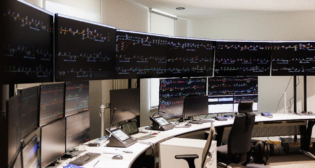
Wabtec’s Train Management and Dispatch System (TMDS) has become one of the most successful Computer Aided Dispatch (CAD) systems in North America for a variety of reasons, but primarily because it provides a complete train control solution that is highly configurable to its customer’s needs, including Positive Train Control support, at a competitive price.
Of the seven Class I railroads in North America, four have chosen Wabtec’s TMDS solution to fill their CAD needs within the last five years. TMDS currently controls more than 70,000 route miles on 200+ dispatch desks in North America.
In addition to a complete range of train control features and functions, TMDS has real-world experience integrating with PTC solutions. TMDS’ primary user screens provide a fully integrated display of all Methods of Operation, including CTC, TWC, and PTC. This integrated method of operation provides a more efficient work environment for the dispatcher.
Since 2003, TMDS has provided integrated track displays that resolve GPS position provided by communicating vehicles (locomotives and/or hi-rails) and places the vehicle symbol at the corresponding track location. The initial use of these integrated displays was in support of BNSF’s Hyrail Limits Compliance System (HLCS). The same integrated displays currently track ETMS- equipped trains on several BNSF subdivisions. Other TMDS customers are now using the same displays to track their GPS equipped on-rail vehicles as well, giving their dispatchers precise information as to vehicle location, direction and speed.
The original TMDS Back Office Server has been supporting daily PTC train operations since 2007. The primary role of the Back Office Server is to provide data interchange and synchronization between PTC equipped locomotive and mobile devices and the customer’s internal back office systems and CAD. It has been designed with the same inherent flexibility and scalability as the core TMDS CAD solution, utilizing commercial-off-the-shelf solutions to provide a highly available yet cost effective solution suited for mission critical railroad operations.
With a single vendor in the back office, the entire Systems Integration process is simplified, lowering the customer’s overall costs and development timelines.
In addition to Method of Operation Integration, Wabtec has integrated GPS vehicle position information into TMDS’ Movement Planning capabilities, including the TMDS String Line Display, AutoClearing, and AutoRouting capabilities.
By incorporating GPS data into the Movement Planning process, TMDS can now provide the same level of Movement Planning capability for any territory, not just for CTC.
While the integrated TMDS track displays are the most obvious indication of TMDS’s support of PTC operations, all of the underlying TMDS database support structures have long supported the operation of PTC equipped trains and vehicles. For example, the TMDS Train Sheet includes specific information with respect to the PTC-equipped status of locomotives and hi-rail vehicles, as well as specific consist information including Hazmat status, that impact the operation of the train relative to train route and mandatory directives that are required to be acted upon under PTC control.
TMDS has been supporting the processing and communications of FRA Mandatory Directives to ETMS-equipped trains for the past few years. These Mandatory Directives now include Track Warrants, Train Bulletins, Track and Time, Track Tags (Restrictive, including Highway Crossing information), Permission to Enter Main Track, Permission to Pass Signal at Stop, and Weather Alerts.
In addition, TMDS supports bilingual operations, and thus can provide Mandatory Directives in multiple languages (TMDS has been deployed in English, Spanish, Portuguese, and Arabic).