


BNSF 2Q24: ‘Higher Volumes, Improved Productivity, Lower Costs’
Written by William C. Vantuono, Editor-in-Chief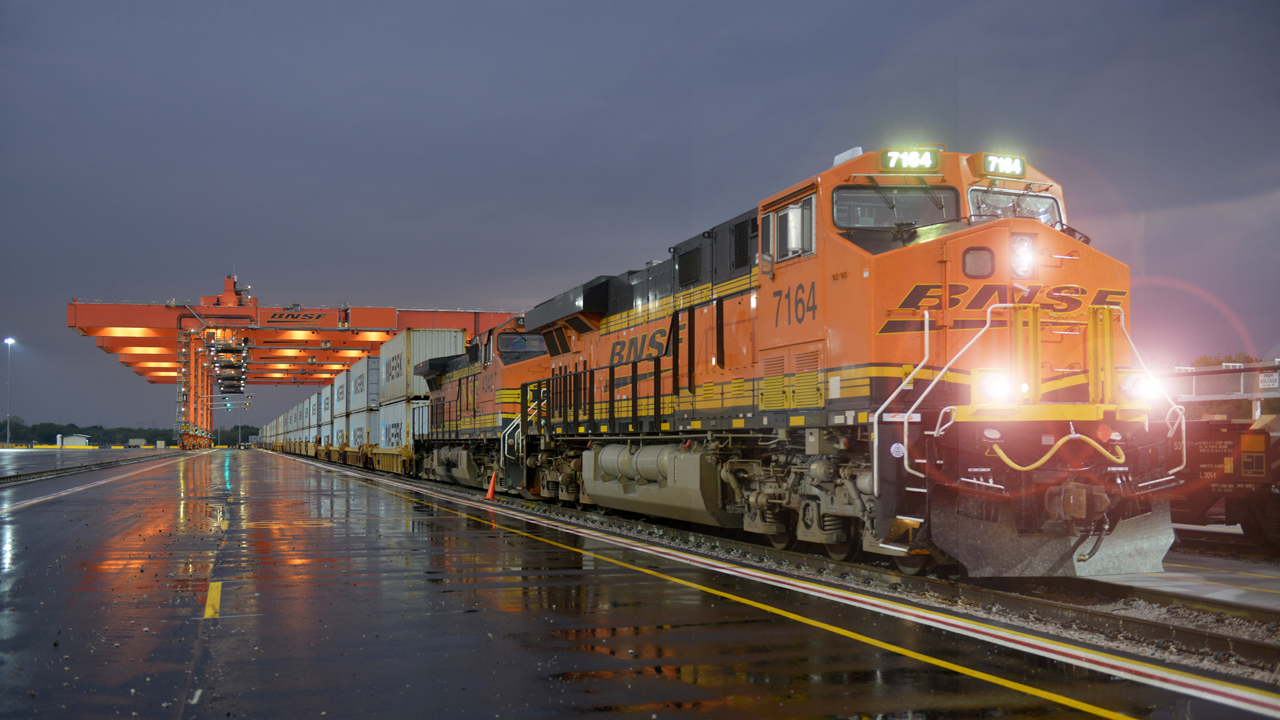
BNSF Logistics Park Kansas City. BNSF photo.
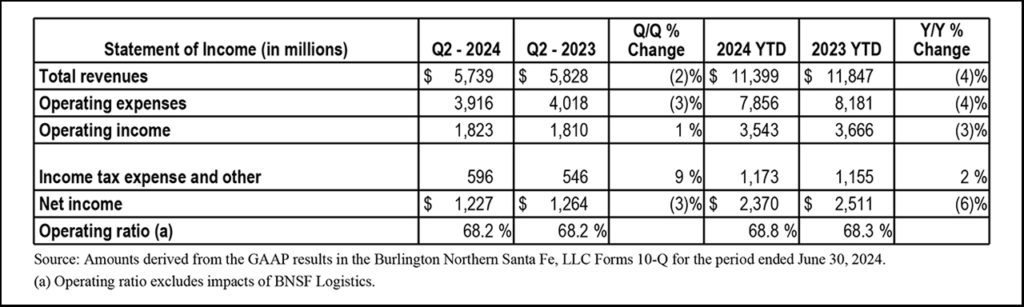
Excluding the impact of litigation costs stemming from a civil suit filed by the Swinomish Indian Tribal Community in Washington State, BNSF’s earnings and operating ratio “showed solid improvement,” the company said in reporting second-quarter 2024 results.
Operating income for the second quarter and first six months of 2024 was $1.8 billion and $3.5 billion, respectively, an increase of $13 million (1%) and a decrease of $123 million (3%), respectively, compared to the same periods in 2023. The operating ratio for the second quarter of 68.2% was flat compared to the prior year, while the operating ratio for the first six months of 68.8% was an increase of 0.5% compared to the same period in 2023.
“Earnings in the second quarter were negatively affected by cost accruals primarily related to a recent judgement in an ongoing legal case, which BNSF has appealed,” the company noted. “However, earnings benefited from higher volumes, improved productivity, and lower costs. Likewise, materials and other expense were negatively impacted in both the second quarter and first six months of 2024 as compared to 2023. Otherwise, materials and other expense in the 2024 periods declined compared to 2023.”
Volumes and Revenues
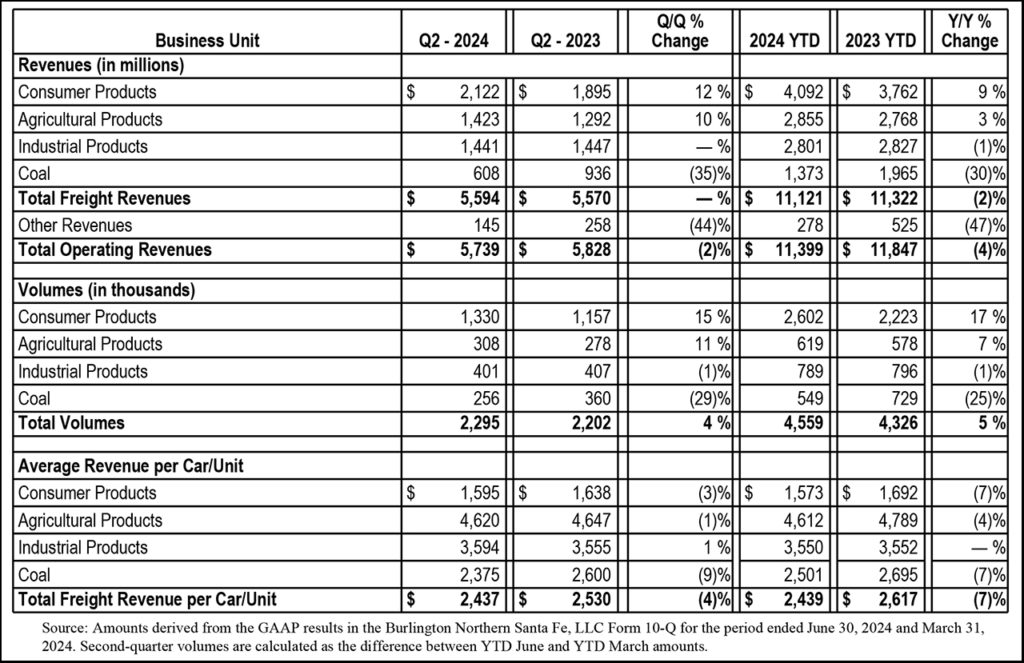
- Total revenues for the second quarter and first six months of 2024 decreased 2% and 4%, respectively, compared with the same periods in 2023. The decreases reflected lower average revenue per car/unit for the second quarter and first six months of 2024 of 4% and 7%, respectively, resulting from lower fuel surcharge revenue and business mix changes. Volumes increased 4% and 5% in the second quarter and the first six months of 2024, respectively. Revenue changes also resulted from the following:
- Consumer Products volumes increased 15% and 17%, respectively, in the second quarter and first six months of 2024 compared with the same periods in 2023 primarily due to higher intermodal shipments from west coast imports and volumes from a new intermodal customer.
- Agricultural Products volumes increased 11% and 7%, respectively, in the second quarter and first six months of 2024 compared with the same periods in 2023 primarily due to higher grain exports, renewable fuels and fertilizer shipments, partially offset by lower domestic grain volumes.
- Industrial Products volumes decreased 1% in both the second quarter and first six months of 2024 compared with the same periods in 2023 primarily due to lower aggregates, taconite, minerals and waste shipments, partially offset by higher volumes in petroleum products and plastics.
- Coal volumes decreased 29% and 25%, respectively, in the second quarter and first six months of 2024 compared with the same periods in 2023 primarily due to lower natural gas prices, which displaces coal as a fuel used by utilities.
Listed below are details by business units, including revenues, volumes and average revenue per car/unit:
Expenses
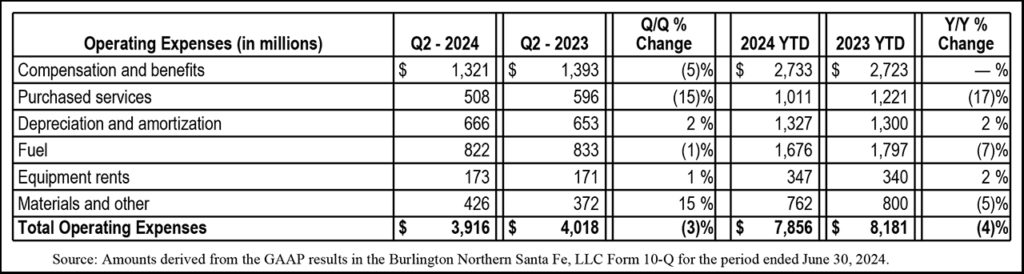
Operating expenses for the second quarter and first six months of 2024 decreased 3% and 4%, respectively, compared with the same periods in 2023. BNSF attributed a “significant portion of the decline“ to the following factors:
- Compensation and benefits expense decreased 5% and increased slightly in the second quarter and first six months of 2024, respectively, compared to the same periods in 2023. The decrease in the second quarter was primarily due to increased employee productivity, partially offset by wage inflation. The increase in the first six months of 2024 was primarily due to higher volumes and wage inflation, partially offset by increased employee productivity.
- Fuel expense decreased 1% and 7% in the second quarter and first six months of 2024, respectively, compared to the same periods in 2023, primarily due to lower average fuel prices, partially offset by higher volumes. Locomotive fuel price per gallon decreased 3% and 9% in the second quarter and first six months of 2024, respectively, compared to the same periods in 2023.
- Materials and other expense increased 15% and decreased 5% in the second quarter and first six months of 2024, respectively, compared to the same periods in 2023. Expenses in the second quarter and first six months of 2024 included litigation costs primarily related to a recent judgement in an ongoing legal case, which BNSF has appealed. Otherwise, materials and other expense in the 2024 periods declined compared to 2023.
- Purchased services expense decreased 15% and 17% in the second quarter and first six months of 2024, respectively, compared to the same periods in 2023, primarily due to lower purchased transportation driven by the sale of brokerage operations of BNSF Logistics, LLC and lower purchased services expense from MRL effective April 7, 2023.
- There were no significant changes in depreciation and amortization, equipment rents, or interest expense.
In the lawsuit, a federal judge ruled in March 2024 that BNSF “intentionally violated the terms of an easement agreement with the Swinomish Indian Tribal Community in Washington state by running 100-car trains carrying crude oil over the reservation,” the Seattle Times reported. “The ruling in the civil case comes after two BNSF [locomotives] derailed on Swinomish land earlier [in March], leaking an estimated 3,100 gallons of diesel fuel near Padilla Bay. BNSF operates a rail line through the Swinomish Reservation under a 1991 easement agreement that allows trains to carry no more than 25 cars per day. It also required BNSF to tell the tribe about the ‘nature and identity of all cargo’ transported across the reservation. In his written order U.S. District Court Judge Robert Lasnik said the railway made a unilateral decision in increasing the number of trains and cars crossing the reservation without the tribe’s consent.”


