Moving More With Less
Written by David Nahass, Financial Editor
William C. Vantuono photo.
GUIDE TO EQUIPMENT LEASING, RAILWAY AGE JUNE 2024 ISSUE: The battle for the soul of Norfolk Southern concluded with more whimpering than expected. Together, Ancora’s three-board-seat-limited victory and its highly scripted vow to “fight on” suggest that the wind has been let out of the pricing model for expected stock gains that were anticipated by the promised return to a hard-core PSR strategy. As reported in Railway Age, Ancora announced its $1 billion stake in NS stock on Jan. 31. By early March, NS stock, on the heels of an Ancora suggestion that they could “drive NS’s share price up by about 65% to $420,” had risen about 10%.
Markets are funny things: After peaking in early March, NS stock started a march back to pre-Ancora levels and dropped another roughly 3% after the May 9 vote. Wall Street had already backed off on the deal, as NS stock was on a slow but steady decline after the March 12 peak. Clearly, the Street, after seeing the opposition from the NS management team, the very well-timed and important hiring of John Orr, and the regulatory backing of Alan Shaw’s team and NS’s operating strategy, began to lose faith in the possibility of Ancora’s success in the vote. While the stock has recovered a few dollars per share, the onus on Shaw, Orr and team to perform is square and heavy.
Boardroom theatrics are always exciting, but the end to the current chapter of the activist investor and the railroad won’t leave anyone disappointed. The Ancora soap opera is in many ways just another instance of the level of disrespect put to railroads and their management.
The battle for Norfolk Southern so pitiably lacked the aura of positivity surrounding the chase for Kansas City Southern from 2021-2023.
The timing of Ancora’s pursuit is somewhat sketchy. It follows a few weeks after John Oliver’s attack on NS on his show Last Week Tonight. (The Oliver show was covered in the January 2024 “Financial Edge”; the episode of the show was issued in December 2023.) It was as if Ancora saw the broadcast (such as it were), saw NS as a wounded animal and thought they could pounce.
Call it the ongoing hangover associated with the legacy of Hunter Harrison. There are no more divisive sets of words in railroading today than Precision Scheduled Railroading, operating ratio and Hunter Harrison. Put together, they raise hair on the back of necks, cause people to get flustered and incite vindictive about how Harrison ruined railroading. That makes the NS triumph over Ancora all the more important.
The Ancora soap opera is in many ways just another instance of the level of disrespect put to railroads and their management.
Ancora’s belief that it could squeeze, knead and massage NS into a stock market ATM does highlight what continues to be a fundamental issue plaguing North American railroading. Is rail an industry interested in volume growth or margin growth? One-third of the way through 2024, general freight loadings (except coal) are up 0.5% over the first four months of 2023, and intermodal is up 9% over the same time frame.
Coal is another story. Coal loadings are down 17.7% YOY for the first four months of the year. This is a demand and consumption driven change. As the pace of coal-fired generating station retirements in 2024 is relatively modest, it begs the very interesting question of what the impact on coal loadings will be in 2025 when a whopping 12 gigawatts of coal-fired generation is slated for retirement or decommissioning.
Even with the 2.1% increase in total (general freight, coal and intermodal) loadings, system-wide velocity has been maintained at a robust 25 mph in early 2024. While the increase in intermodal and general freight (again excluding coal) is a positive, we continue to lag far behind the bell-weather touch point of 2018’s loadings levels.
As intermodal loadings have increased, so have the dwell times of containers being moved by rail out of the ports of Los Angeles/Long Beach with rail container dwell times 40% higher than they were at the beginning of 2024. This remains something to watch to see if a late upswing negatively impacts service levels.
What continues to be a fascinating part of the overall rail network is the leasing market and the railcar supply picture. Let’s start with a few quick facts. According to the AAR publication Rail Time Indicators, (RTI) the North American railcar fleet has reduced YOY (again through the end of April) by roughly 5,000. Over the same 12 calendar months, the number of cars in storage has increased by 20,000. The stored car increases come from cars used to transport coal (with increases of roughly 30% in storage) and, more surprisingly, boxcars (also up 30%). Note also that as the gondola fleet in storage has increased, the total number of gondolas in the national fleet has also increased (the gondola segment includes gondola cars used to haul coal, scrap, aggregates and finished steel). So, the national fleet is shrinking (albeit slightly) even as loadings are increasing. What about new cars? For the past six months, 4Q23 and 1Q24, new cars orders have totaled 10,028 while deliveries have totaled 22,081. The backlog, on the heels of the weak order numbers, has decreased over six months by 12,000, from 58,680 to 46,413.
The industry is therefore moving more with less, and the order book for new assets continues to be weak. As RTI points out, there has been a generalized slowing of GDP. Additionally, manufacturing indexes show continuing slowdowns. A slowing economy and high interest rates continue to exert slight downward pressure on the economy.
The weakness in the new car market is particularly consternating. Word on the street is that there remains ample capacity for railcar deliveries in the latter part of 2024. Projections that new car production could end 2024 at some number near 45,000 units almost seem optimistic. The ongoing cocktail of challenges for new car prices of higher labor along with the higher interest rates continues to de-motivate the market to invest in new railcars. But it raises a question about the preparedness of the industry to respond if increases in demand for freight cars happen while manufacturing has slowed to levels at less than the level of replacement.
How is this impacting the lease marketplace? (For a discussion on current lease rates and the market, see the “Around the Market” section, below.)
Concerns about the new car market might all be apropos of nothing. If loadings growth stays within a narrow range, the need for additional new cars in the national railcar fleet would be limited. The EIA forecast for natural gas pricing remains at the bargain basement level of $2.20 per MMBTU for 2024, making any tangible rebound in coal traffic unlikely (and let’s face it, the EIA is never wrong).
Furthermore, it would be unreasonable to expect an additional increase in intermodal loadings over the already present 9% upswing vs. 2023. The general consensus, whether reading publicly available information from Bank of America or looking at the Federal Reserve’s Inventory to Sales Ratio, suggests a normalization of the inventory cycle. While there might be some additional (and traditional) holiday buildup, an additional increase in intermodal loadings of material amounts seems unlikely.
Neither does a dramatic shift in consumption based on potential decreases in interest rates by the Federal Reserve. Although core inflation continues to modulate, the Fed’s messaging has been consistently moderate and trepidatious about too many reductions too soon. Clearly, the Fed wants to ensure it does not provide any impetus that flips the apple cart and causes inflation to increase after a long and tense period of trying to reduce it. Even the lowest CPI since April 2021 will not be enough to motivate the Fed to take quick action. Plus, in case you’re a little behind on the news cycle, there’s a Presidential election in the fall. There is already a plan in the works to make the Fed more subservient to the Executive Branch. The Fed is going to try to seem like the most powerful person in the room while keeping schtum (quiet) about its role in the economy—just a typical solitary thinker holding up the Walls of Jericho before they crumble.
Slow and steady might be the rule for 2024. For people hoping for lower railcar prices (and lower lease rates) as a reflexive response to a re-populating fleet that has been modestly shrinking, this might not be the news for which you are waiting. The good news is that if we’ve learned anything about predicting the trajectory of the economy, there are always surprises. In any case, you always have hope. Hope is an awesome strategy. Just ask Rudy Giuliani.
Around the Market
It’s beginning to sound a bit like a broken record, but (again maybe with the exception of coal, as further described below) this is an historic run of rental stability at higher prices for railcar owners/lessors. This is not to say that rates are not fluctuating or that in some markets they haven’t drifted down, but by and large rates remain stable and lessors continue to hold the high hand at the no-limit poker table.
The drivers are still the same—railcar prices are higher and so are interest rates. Without a destination for the air in the balloon to release the upward pressure on pricing, rates will stay at lofty levels while car supply and demand remain relatively stable. One can imagine a scenario where, when the Fed begins to reduce interest rates, buyers rush into the market and buy cars to capture the uplift in rates and terms before interest rates drop and lease rates decrease. This could create some oversupply shocks. That would be so, well, traditional. But it hasn’t happened yet.
Last year’s El Niño looks likely (50% chance by August and 69% chance by September) to convert to a La Niña weather pattern, and a heavy hurricane season seems likely. That could make for a weather-disrupted summer and fall around the rail-service-heavy Gulf of Mexico. Residents of Houston are already fretting after May’s almost spontaneous 100 mph hit and run series of thunderstorms.
It bears remembering that a decade ago, railcar builders and buyers, over the space of two calendar years, in the incredible build years of 2014 and 2015, pumped 135,000 railcars (9% of the national fleet at the time) into the market. That build pace has almost been cut in half since the “end” of COVID. History’s finer lessons often bear repeating.
In general, lease term lengths continue on the longer side. Even at some of today’s (occasionally and slightly) lower rates, lessors are looking to lock cars up with term.
Here’s what’s happening around the market:
Covered Hoppers (Grain): Rates have dropped off from some recent highs but maintain stability and strength. For jumbo cars, look for high $500s to low $600s full service (FS), with a decrease of about $100 per car, per month for net deals. For 4,750s, expect those numbers to be in the high $300s to low $400s FS.
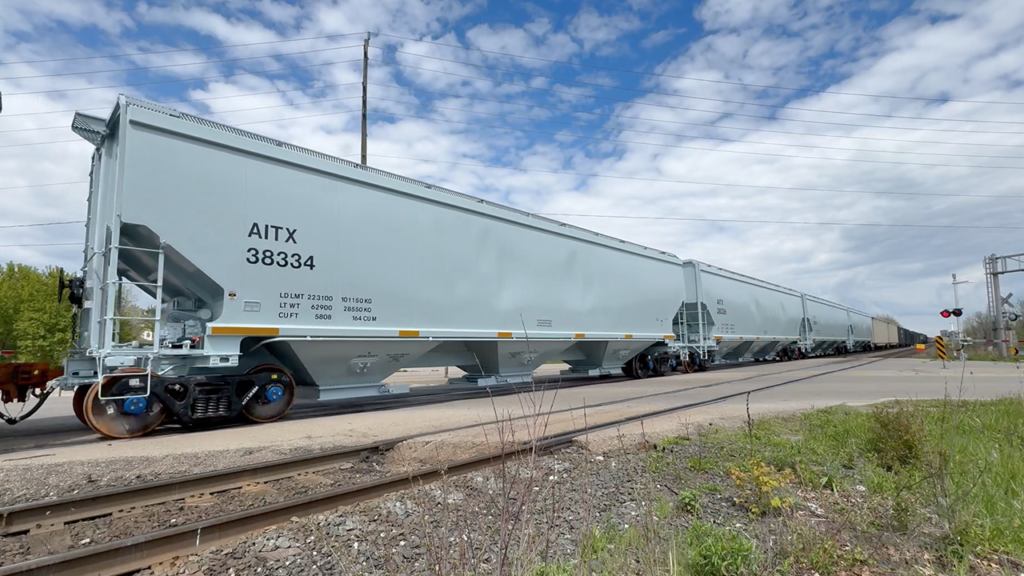
Covered Hoppers (Plastics): Similar story—rates are off their highs but not in a pattern of decline. For 6,200 cf cars, look for rates in the mid $600 FS. For smaller 5,800 cf cars, expect rates in the low $400s.
Covered Hoppers (DDG): These continue to be a premium with limited availability. Look for prices in the low to mid $700s for 6,300 cf cars. Cars remain scarce.
Covered Hoppers (Cement): Some ongoing strength here despite remaining inventory and cars still being returned to investors. Renewal rates are in the high $200s FS as these cars are rather sticky. Expect a lower price for an initial lease. About 32,000 small cube hoppers were built in 2014 and 2015 and some of those have yet to cycle back into inventory.
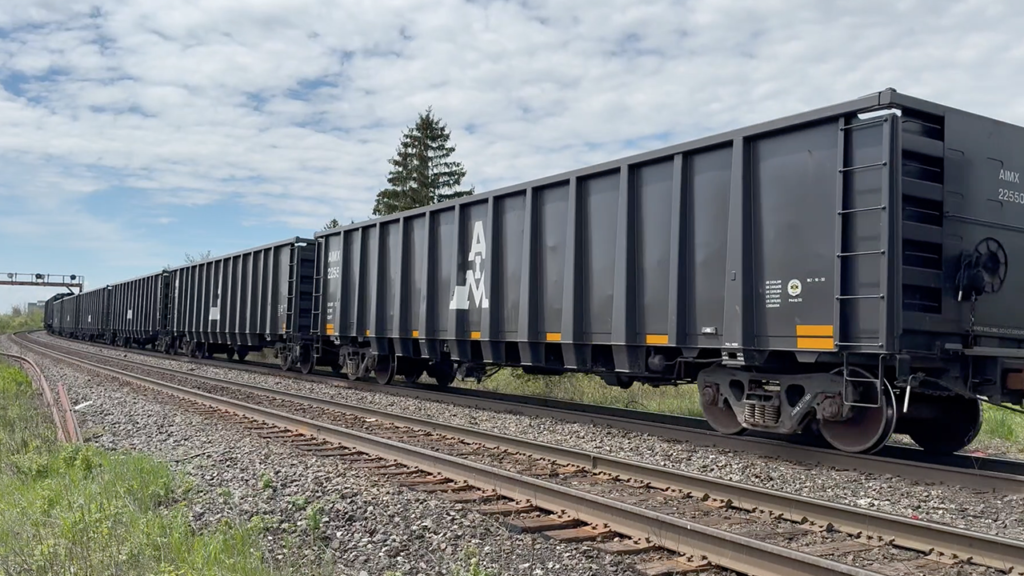
Mill Gondolas: Scrap loadings are off YOY, but you wouldn’t know it from the tightness of the market for these cars. Mill gondolas for hauling scrap are one car type continuing to be built. If you can find them, 52-foot mill gons are pricing in the low to mid $600s FS. For cars being operated west of the Mississippi, 66-foot gons will run in the mid $700s FS. This is a rapidly aging fleet. According to Railinc’s David Humphrey, almost 20,000 cars will require replacement over the next seven years after hitting their 50-year interchange life maximum, so expect the mix of high-priced new cars and supply tension to provide support here.
Coal Cars: The additional movement of coal cars into storage (a trend likely to continue through 2024) will continue to put downward pressure on rates. Expect rates on coal gons to be in the mid $200s FS. For rapid discharge cars, expect rates in the mid $300s, also FS. Hoppers remain more difficult to find of the two groups. Don’t expect 2025 to be an improvement. Just sayin’.
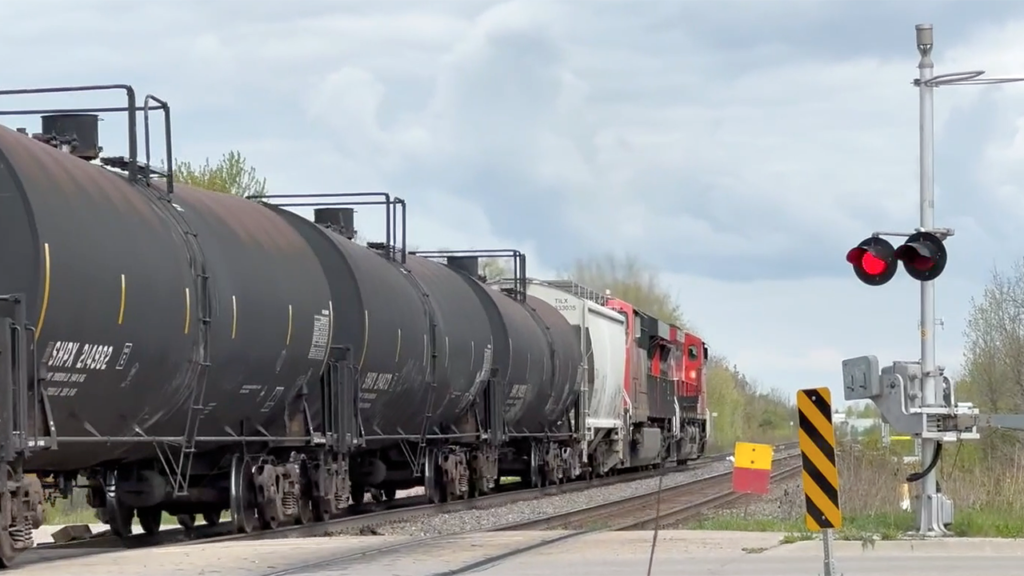
Tank Railcars: The fleet has stayed roughly the same size YOY while increased loadings in chemicals (up 4% YOY) and petroleum products (up 9% YOY) continue to pressure the market. For tank railcars being used in energy and chemical products, there is not an overabundance of tanks available in the market, and lease rates remain high. There is excess capacity in the 30,000-gallon non-coiled, non-insulated market, but that is to be expected. Lease rates for these cars are all over the map and dependent on recertification status. Some rates are trending down into the low $300s FS and up into the $400s. For 30,000-gallon coiled and insulated 117Js (new), look for pricing in the low $1,000s FS. For 117Rs (rebuilt) for crude oil, expect pricing in the low to high $700s FS. For 25,000-gallon tank railcars, look again for numbers in the high $800s to low $900s if it’s a 117J and in the mid 700s if it’s a 117R. For pressure tanks, look for rates in the $1,100 to $1,200 range.
Tank Railcars (Food Grade): This market has remained robust, and lease rates reflect the balance of supply and demand, with rates in the high $700s to low $800s FS. HM-216 costs continue to be a stress point for lessors and operators. In the 2014-2015 boom, there were more than 60,000 tanks built, so expect that stress to continue.
Boxcars: As noted in the primary piece, boxcars are one of three railcar groups (and the only one not related to coal) whose number in storage has increased materially YOY. The market has recently resurged a bit and prices have risen accordingly. There is still a continued pressure to shine a brighter light on the impending boxcar cliff. Looking for 60-foot boxcars? Expect those to price in the low to high $700s FS. If you’re in the market where you need a 50-foot boxcar, prices are roughly $100 per car per month lower.
Centerbeam Flat Cars: Housing starts are relatively tepid even though some optimism exists in the market. This market was already a little soft and remains so. Expect rates for these cars to be in the mid $400s to mid $500s FS.