


Crosstie Tech: What’s New, What’s Next
Written by Marybeth Luczak, Executive Editor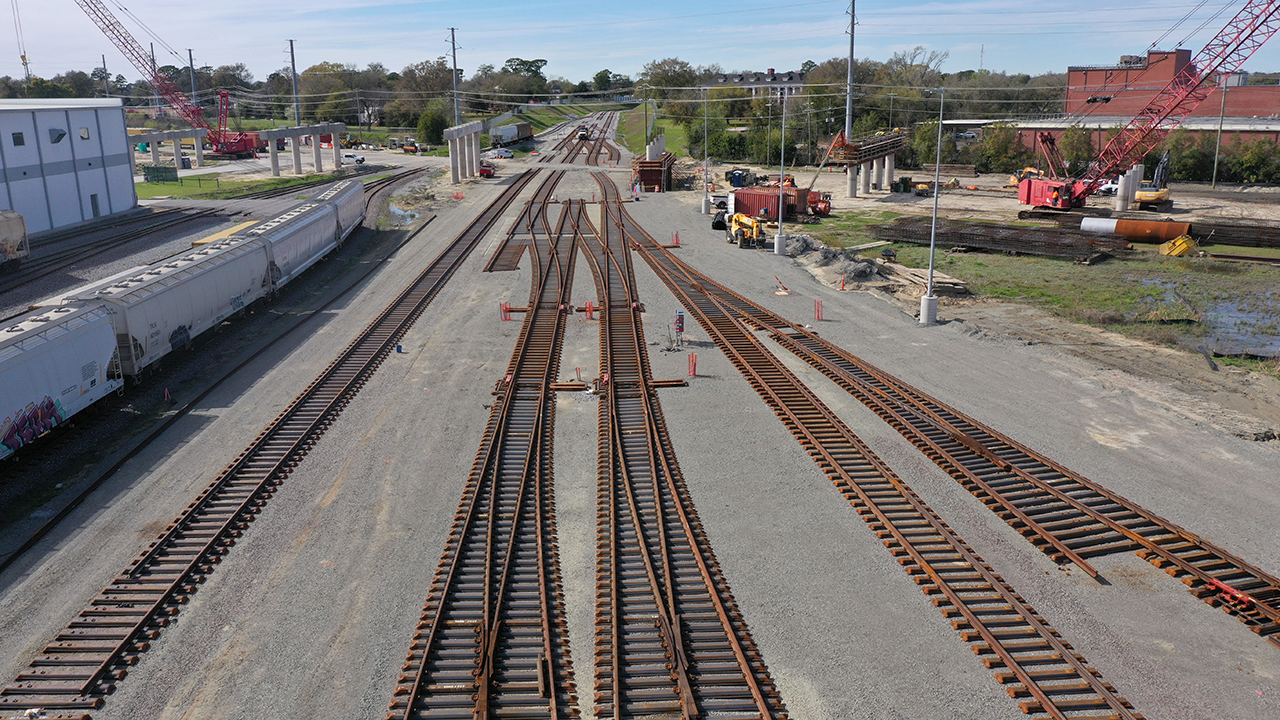
Slated to open in July 2025, South Carolina Ports Authority’s Navy Base Intermodal Facility in North Charleston is implementing NARSTCO’s steel ties and turnouts.
RAILWAY AGE APRIL 2024 ISSUE: Suppliers provide a market outlook on these foundational supports.
What’s the latest in crosstie technology and what new projects are in the pipeline? What is the market outlook? How can railroads best manage the crosstie life cycle and boost longevity? Railway Age explores these topics and more with top suppliers, who are continuously improving their offerings to help railroads—both heavy-haul and passenger—keep traffic moving safely.
Koppers Inc.
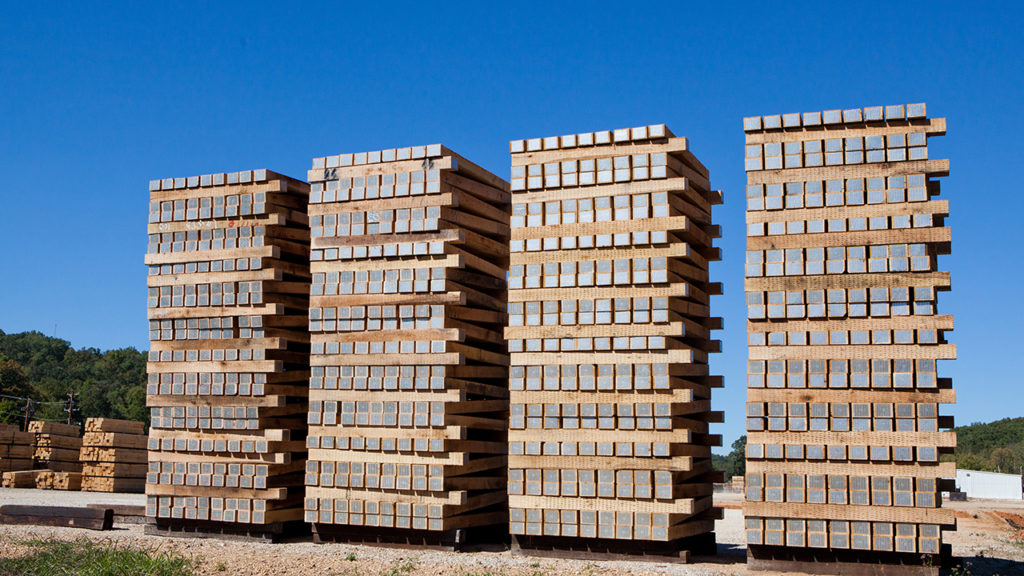
The Federal Railroad Administration (FRA) this past fall provided $1.4 billion for rail infrastructure improvement projects through the Consolidated Rail Infrastructure and Safety Improvements (CRISI) program. Because of this, Koppers has realized an increase of quoting activity, as well as a higher ratio of quotes materializing into projects, according to John P. McDonald, Vice President of Sales and Product Management, North American Operations, Railroad Products and Services. With new funding rounds just around the corner, he says the company is hosting a webinar on April 24 to review what it takes to submit a winning application.
Koppers in 2022 bought Kirkwood, Mo.-based Gross & Janes, and McDonald tells Railway Age that the acquisition has “greatly improved our ability to procure, sort and store green ties.” Ultimately, he says, “this means more dry ties headed to our plants for treating.”
Koppers last year opened a new treating plant in North Little Rock, Ark. With enhanced technology, it allows for greater productivity along with improved environmental and safety performance, according to McDonald, who notes, “We are very pleased with the results and ready to supply treated ties to the southern market.” Koppers also invested more than $180 million over the past five years to improve overall performance at its Stickney, Ill., carbon materials and chemicals facility.
McDonald tells Railway Age that the “increased cost of labor has put the focus back on product life cycle and reducing maintenance and install rates.” The company, he says, is “aggressively pursuing R&D in emerging tech while continuing to provide superior technical assistance, and comprehensive testing services for our customers.” It held its first invitation-only Technical Summit at the Koppers Global Technology Center in Pennsylvania, providing insight into its work around alternative preservatives, end-of-life tie management, the coal tar market and borates, while highlighting the importance of its process controls and data collection. Koppers will host another summit in 2025 at its Stickney plant.
NARSTCO
“The railroad industry, from industrial rail yards to Class I’s, continues to adopt and find more areas of use for NARSTCO’s steel ties, turnouts and recently released ‘e’ clip fasteners,” Vice President of Sales Matt Violin reports. “The superior performance and longevity that NARSTCO products deliver our customers, meets many of their sustainability and safety goals.” Coming off a record 2023, he tells Railway Age that NARSTCO (a RailWorks® company) expects to see continued growth in 2024 for new construction and maintenance.
The company’s latest offering is “e”-type clip fasteners, which are produced in the United States from recycled steel. They are gaining interest from all areas of the railroad industry, Violin says, including Class I railroads and transit agencies.
In 2023, the company secured the largest steel tie and turnout order in its history for a Chevron Phillips Chemical project in Orange, Tex. According to Violin, this has resulted in more opportunities for steel ties and turnouts to be installed in adjacent facilities and other locations in this market, which he says “are racing to build out rail infrastructure to support the high demand for railcar storage and transloading.”
NARSTCO is also working on port projects across the country that Violin says directly relate to improving the supply chain and movement of goods. One example is for the South Carolina Ports Authority’s Navy Base Intermodal Facility in North Charleston, which is implementing a “large quantity” of steel ties and turnouts. Slated to open in July 2025, the facility will provide near-dock rail and inner-harbor barge operation to the Port of Charleston; nearly 80,000 feet of track will create a capacity of one million rail lifts in Phase 1. Additionally, NARSTCO is supporting a variety of projects for the automotive industry, where there is a “major push” to build electric vehicles, Violin reports. “The use of NARSTCO’s environmentally friendly recycled products is a perfect fit for this ‘green’ industry that is poised for rapid growth in the coming years,” he says.
NISUS Corporation
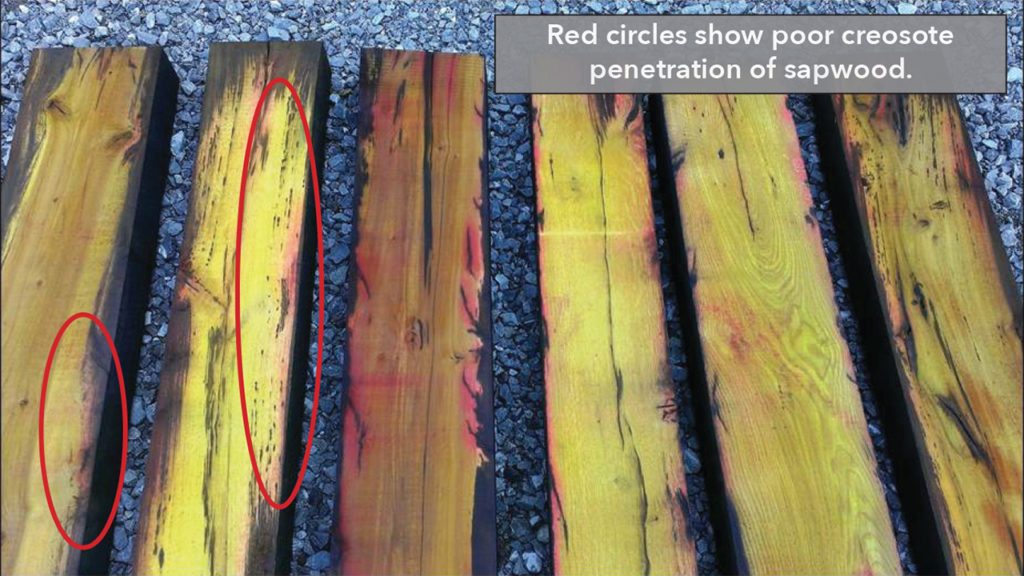
“Railroads have long recognized the advantages of QNAP for bridges but are now starting to adopt them for crossties,” says Dr. Mark Manning, Divisional Vice President of Industrial Wood Protection. “Cleanliness, lower EPA labeling restrictions, improved tie life, ease of quality control, and more disposal/end of life options have all helped. Of course, with steel and aluminum trying to go low carbon, there will also be less creosote availability in the future.”
Extending tie life, especially in high-hazard environments, is important to customers today, according to NISUS. The company has developed “a series of new technology—most of which are readily available with technical support—to achieve that,” Senior Scientist, Wood and Composite Protection Dr. Jae-Woo Kim tells Railway Age.
Customers are also concerned about borate efficacy and ties not lasting as long as expected, notes Dr. Jeff Lloyd, Senior Vice President for Innovation and Sustainability. This has been for a variety of reasons, which could be summarized by quality control (QC) issues, he says. “Poor initial borate retention (less than half what is required by American Wood Protection Association Standard and which could significantly impact tie life), not covering ties during seasoning, improper or no quality control of tie moisture content and subsequently treating ties with creosote at too high moisture content, has led to most of these issues,” explains Kim Kelley-Tunis, Vice President of Regulatory and Technical Services.
On the R&D side, Nisus is looking to improve diluent oil used and focusing on the data required to support the EU registration, as creosote is being phased out; creosote, it says, will be allowed through 2029.
Stella-Jones Corporation
Jim Raines, Vice President, Global Railway Ties Sales, tells Railway Age that Stella-Jones is “noting long-term trends pointing to solid crosstie demand year-over-year.” This demand, he says, “is largely driven by steady maintenance requirements across our Class I, commercial and short line customers, and is further bolstered by government infrastructure mandates that are set to fuel significant upgrades to the North American railway network.” The FRA’s CRISI grants are promising for the company, which Raines says has experienced their impacts as funds have been deployed, and expects more to come.
“On the industrial products front, we’ve noted a rise in demand for bridge timbers and crossings,” Raines reports. “With aging infrastructure and the growing occurrence of extreme weather events, we expect repair maintenance to be an additional demand driver for our business. Stella-Jones’ proven ability to respond quickly to emergency situations through our strong inventory position, logistics capabilities and distribution network, make us optimistic that we will continue to meet this demand.”
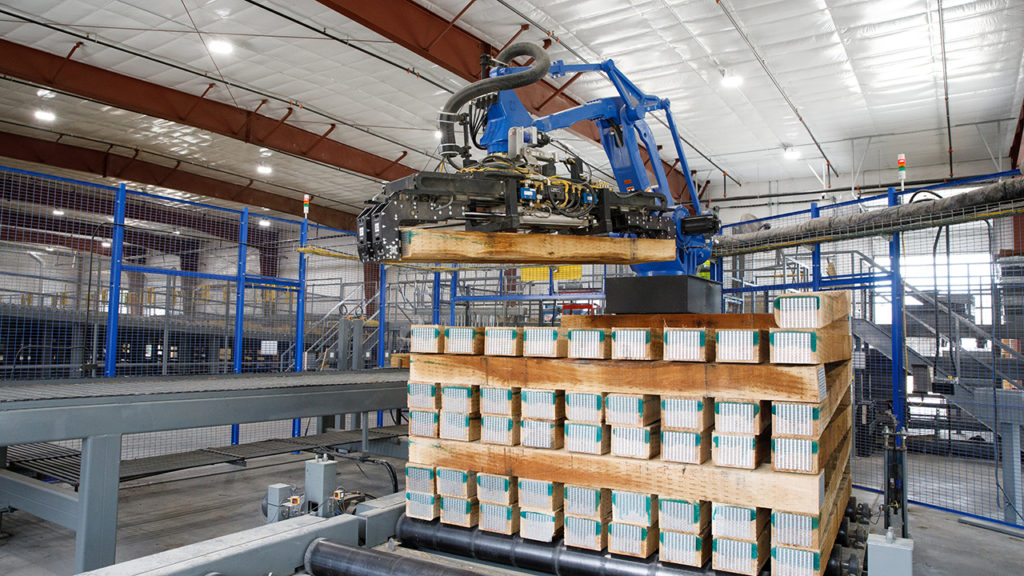
The company is consistently investing to improve its network and operations through technologies that optimize quality, efficiency and safety, according to Raines. For example, it recently installed its sixth robotic railway tie stacker at a manufacturing facility in Fulton, Ky. “By automating the stacking process, we help improve productivity and enhance the safety of our workers,” he points out.
Procurement continues to be a key consideration for the business, according to Raines. “Coming out of 2023 where the industry felt tightness in untreated tie availability, Stella-Jones is pleased to find itself standing at a robust inventory position, thanks to the strength of our sawmill partner relationships,” he tells Railway Age. “We continue to leverage these partnerships while staying abreast of market trends so that we may keep ensuring certainty of supply for our customers.”
voestalpine Railway Systems Nortrak
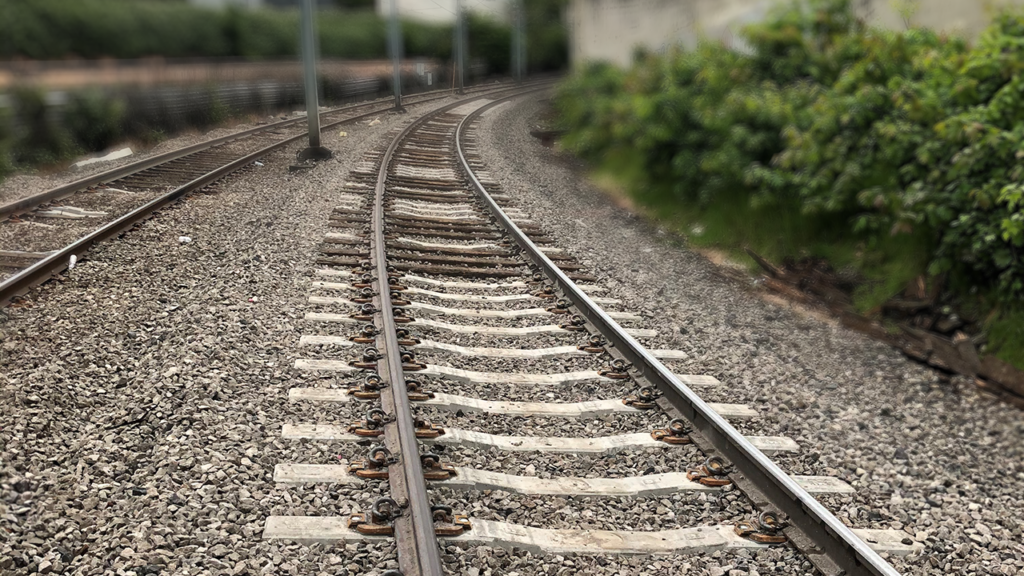
Last summer, voestalpine Railway Systems Nortrak acquired Spokane, Wash.-based CXT Concrete Ties from L.B. Foster Company. The addition “complements our growing rail fixation portfolio and leverages our vertically integrated design and manufacturing approach with our ability to produce concrete ties and fastening components like Safelok I clips, ductile shoulders, plastic rail pads and insulators, and even indented reinforcing wire, all in-house,” Senior Vice President of Strategy and Development Fixation John Stout reports. “Our customers demand the best quality at the lowest cost and by controlling our own supply chain, we wring out inefficiencies to meet customers’ expectations in a very competitive environment.”
voestalpine Railway Systems Nortrak’s newest offering is the Keyway Tie System. This concrete tie is designed to be interspersed with wood ties, and “has continued to gain wider adoption throughout North America in freight and passenger applications,” according to Stout. “Track measurements before and after installation show the Keyway Tie System immediately secured and stabilized the track gauge, and since it has the same dimensions as a wood tie, it allows for a consistent track modulus with adjacent wood ties and can also be installed with typical maintenance-of-way equipment.”
Stout tells Railway Age that the company offers Keyway Ties to accommodate 6-inch and 5-1/2-inch rail bases and has developed a specialized set of Keyway Transition Ties to bridge the transitions from fixed structures to open track. The Keyway Transition Tie Sets minimize the ballast breakdown at approaches to turnouts, open deck bridges, highway/rail grade crossings and other structures, which he says “often lead to a dip in the track surface that results in high impacts on structures with accompanying maintenance and reduced service life of those high-cost assets.”
What is the longer-term outlook for voestalpine Railway Systems Nortrak’s products? “We are seeing a slight pullback in near-term concrete tie demand as Class I’s reconcile capital and maintenance programs with traffic levels,” Stout reports. “However, we remain optimistic about the long-term outlook for concrete ties as freight and passenger railroads look to increase the RAMS (Reliability, Availability, Maintenance and Safety) on their networks to increase revenue-generating traffic and minimize the need to occupy the track for maintenance. In addition, difficulties in hiring and retaining skilled track workers will likely persist making long-life/low-maintenance products like concrete ties a very attractive option.”
voestalpine Railway Systems Nortrak is nearing completion of its work on the BART (Bay Area Rapid Transit) Heyward Maintenance Complex Project in California. It is providing standard concrete ties, turnouts on concrete ties, and rubber bonded direct fixation fasteners, as well as switch machines and project management services. The company is also beginning engineering and production planning for the St. Louis Metro Mid-America Airport Extension Project, which includes more than 15,000 main line concrete ties and eight turnouts on concrete.
WVCO Railroad Solutions
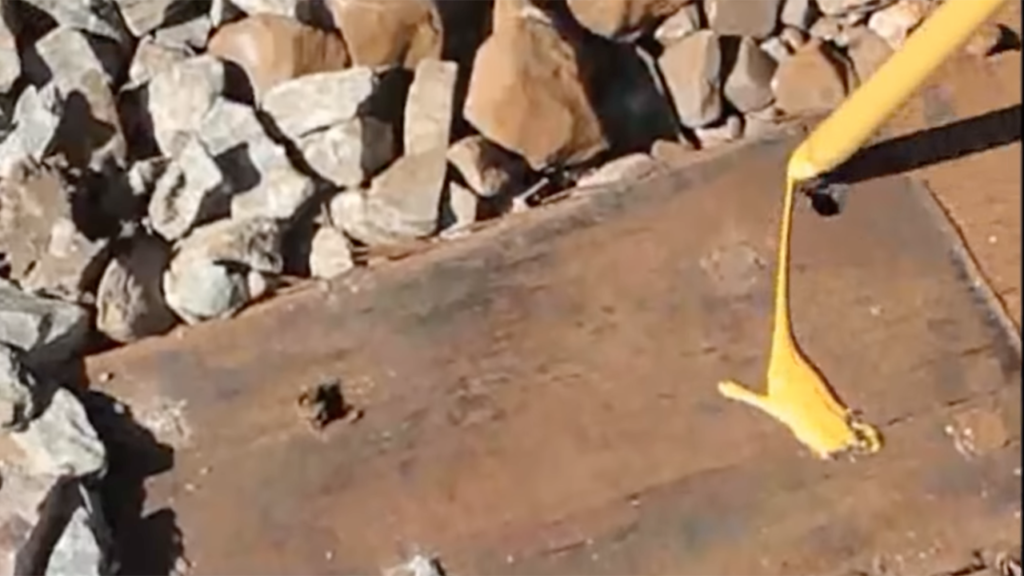
To ensure crossties hold gauge and to extend their service life, WVCO Railroad Solutions offers wood tie plugging compound (above), as well as concrete railseat and shoulder repair products. It also provides low-viscosity high modulus urethane for concrete structures.
The company’s aim is to help railroads reduce downtime, and its latest product, Spike Fast IJ-30, does just that, according to Rob Loomis, Vice President, Performance Products Division. This insulated joint repair material cures in place and keeps the signal isolated, so the track stays open, he says. Among WVCO’s other products are SpikeFast® ES-50, for the remediation of wood and composite railroad ties; anchoring spikes with comparable strength to un-spiked hardwood ties; and SpikeFast® CTR-100, for quick repair of damaged concrete ties, restoring original geometry for proper cant and gauge and reducing head deflection.
A growth area for the company is structural support, and some of the products gaining traction are bearing pad repair, used at bridge approaches, and waterproofing for concrete and steel structures. Additionally, on the transit and rail yard side, WVCO offers a plinth repair product to hold fastener screws in place. It is used by transit agencies such as Dallas Area Rapid Transit, Seattle’s Sound Transit and Baltimore MTA.
While WVCO’s R&D efforts are confidential, Loomis tells Railway Age that the company is constantly working to simplify product application with the fewest possible steps.
Omaha Track
Recycled railroad materials and services provider Omaha Track (OT) remains optimistic about tie disposal markets, President Jeff Peterson tells Railway Age. Most of the wood crossties it processes each year are recycled as biomass, with the remainder repurposed as railroad infrastructure or used in landscaping. The company’s tie-grinding fuel source project, he says, “has progressed positively, with potential end users currently in the testing phase.” Initiatives show promise for both environmental sustainability and economic viability, he reports. OT’s work with universities and other industries to find environmentally friendly tie disposal options—such as biogas, biochar, woodgas and biocracking—also continue. “While these technologies present challenges in scaling economically, we remain optimistic about the potential for additional green alternatives,” Peterson says.
Also ongoing is OT’s collaboration with equipment, engineering and manufacturing companies to develop a new product for improving the tie pickup process. While it is still in the developmental phase, Peterson says the company is “optimistic about the potential to streamline operations and improve efficiency in tie disposal process.”


