


Hydrogen Tenders: Compressed or Liquid?
Written by Graciela Trillanes and Pedro Tomas Santos, HGmotive Inc.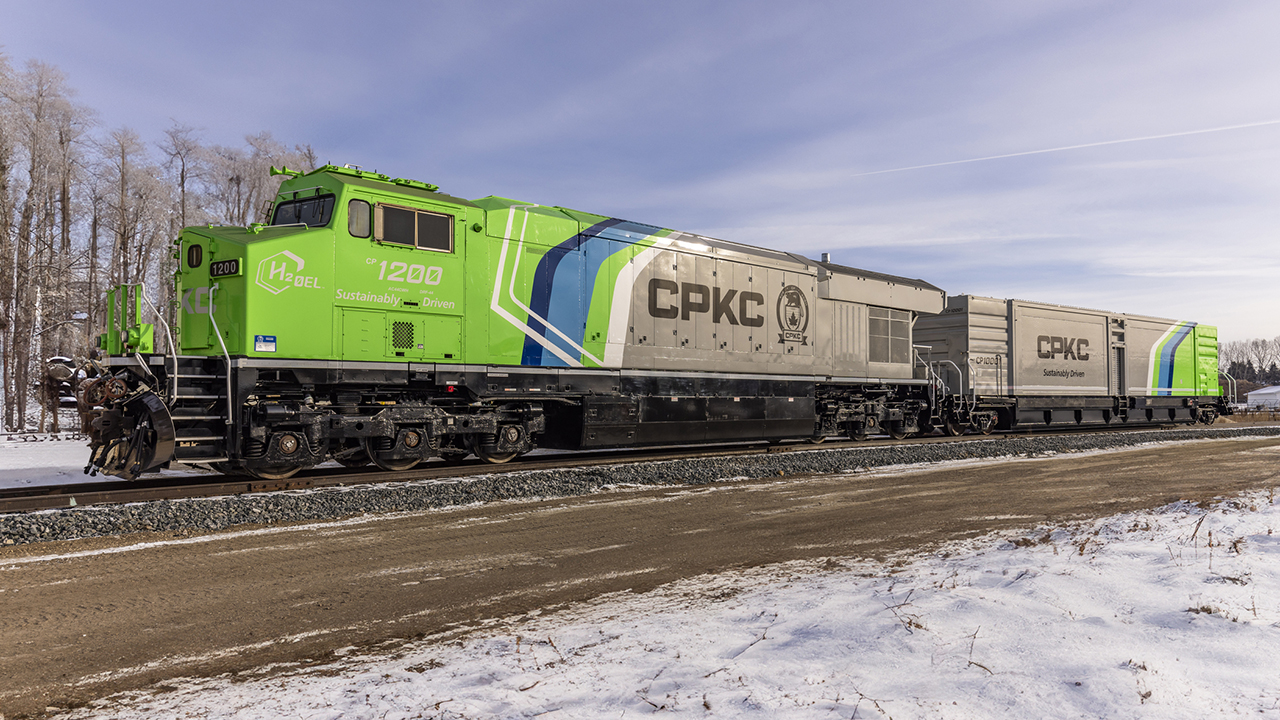
CPKC/HGmotive photo
RAILWAY AGE, MARCH 2024 ISSUE: Hydrogen fuel locomotives will be critical to support zero emission on North American railroads. The HGmotiveTM compressed gas tender is intended to support this initiative.
The global shift toward sustainable transportation has positioned hydrogen as a key player in clean energy, especially for long-haul rail applications where batteries are at best decades away from having sufficient (or economical) energy stored to take a heavy freight train through long distances. The choice between compressed gaseous hydrogen and liquid hydrogen for fuel tenders is a pivotal decision, necessitating a thorough exploration of their respective advantages and disadvantages.
Energy Density
Compressed hydrogen, stored at pressures of 350 bar to 700 bar and ambient temperatures, boasts impressive energy density. Utilizing lightweight, high-strength composite reinforced storage tanks results in a compact, weight-efficient solution. These address critical considerations in the long-haul rail sector, where operating range, stability and overall weight are paramount.
With higher energy density than its gaseous form at ambient temperatures, liquid hydrogen demands extremely low temperatures (–253 degrees C or –423 degrees F, 20 degrees K from absolute zero) for storage. Only helium liquefies at a lower temperature, making subcooling liquid hydrogen generally impractical and/or prohibitively expensive. This requirement necessitates advanced cryogenic systems and highly insulated tanks, introducing complexity and potential challenges for long-haul rail applications.
It’s noteworthy that hydrogen and helium are unique components in nature. When liquified, the density of the liquid is lower than cold temperature pressurized (cryo-compressed) gas. This property, coupled with a melting point at –435 F and a boiling point at –423 F, necessitates a state-of-the-art insulation system to maintain liquid hydrogen and greatly limits the useful time before boiling necessitates repeated uncontrolled venting outside the container. This characteristic dictates a significant amount of tank space to accommodate boiling off and pressure increases within a liquefied gas tender. As they are not designed to hold high enough pressures, liquid hydrogen and natural gas tenders must limit internal tank pressure, resorting to frequent vapor venting. As the liquid warms and vaporizes, periodic bleeding of the boiling gas becomes necessary to limit the inner safety pressure. Venting boil-off is a normal and harmless practice for some cryogens such as liquid nitrogen. However, there are substantial downsides from boil-off gas venting including environmental damage (vented methane is more than 23 times more potent of a greenhouse gas than CO2, and vented hydrogen can destroy helpful hydroxyls in the atmosphere). Furthermore, in the case of vented hydrogen, rapidly escalating safety issues could occur if this venting were to occur during a train stoppage inside a tunnel, for instance.
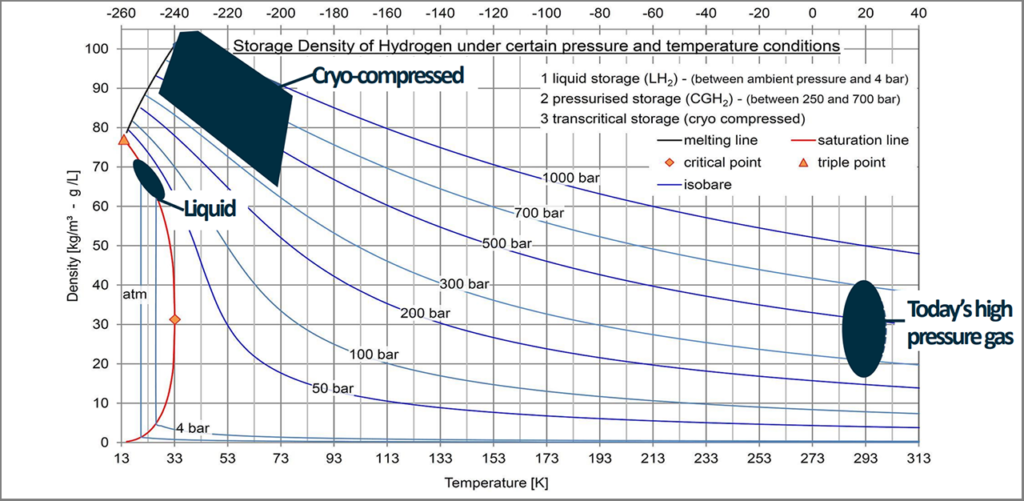
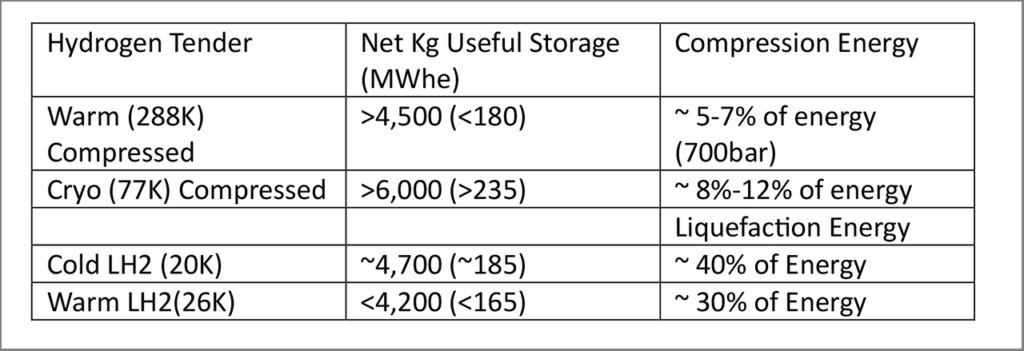
Figure 1 (above) compares the density properties of hydrogen in different storage modes. Hydrogen when cryo-compressed (the state in which the gas is compressed at a mild cryogenic temperature such as ~400% the temperature of liquid hydrogen) has higher density than the liquid form. Future tenders with cryo-compressed gas can provide the highest amount of energy in the same space, better than liquid. The ability to have higher density than liquid hydrogen obviates the “perceived” advantage of liquid storage. As well, the amount of energy to compress the gas for the tender is significantly lower than energy for liquification (Table 1, below).
Infrastructure and Handling
An established and mature infrastructure characterizes compressed hydrogen. High-pressure tanks, compressors, and pipelines, widely used in various industries (in particular, refineries), reduce entry barriers for adopting compressed hydrogen in long-haul rail, leveraging existing systems.
Introducing liquid hydrogen may require specialized infrastructure due to its extreme cryogenic nature, including dedicated storage facilities, insulated containers and transportation systems. This complexity can result in higher upfront infrastructure costs. Furthermore, the energy intensity means very large machinery will be needed. There’s a mixed track record of the performance of liquid hydrogen plants, with some drastically underperforming the daily liquefaction volumes vs. planned.
Safety Considerations
Compressed hydrogen systems have a strong safety track record. Industry standards mandate robust safety features, including pressure relief devices, leak detection systems and durable materials, enhancing storage and transport reliability. There’s substantial experience in hydrogen production for fertilizers and petrochemicals.
The ultra-deep cryogenic temperatures and narrow storage range of liquid hydrogen introduce unique safety challenges. Despite advanced insulation and safety protocols, the potential for leaks and the need for specialized handling procedures underscore the importance of comprehensive safety measures. Liquid hydrogen is used in specialized applications where the cost is not important, and where the increase of internal tank pressure due to liquid vaporization can be eliminated by bleeding or consuming the hydrogen. Due to the unavoidable facts of rail operations, liquid hydrogen tenders will encounter long delays in operations, including breakdowns and derailments, to name but two. In the case of a long delay, unlike compressed gas tenders, venting of the liquid tender must occur. If the venting is inside a tunnel or under an overarching structure, vented gaseous hydrogen will rise rapidly and pool where the local conditions dictate. A pool of hydrogen/air mixture can generate potential detonation, significantly endangering personnel. A compressed hydrogen gas tender never needs to vent and is stable and safe for virtually any length of time.
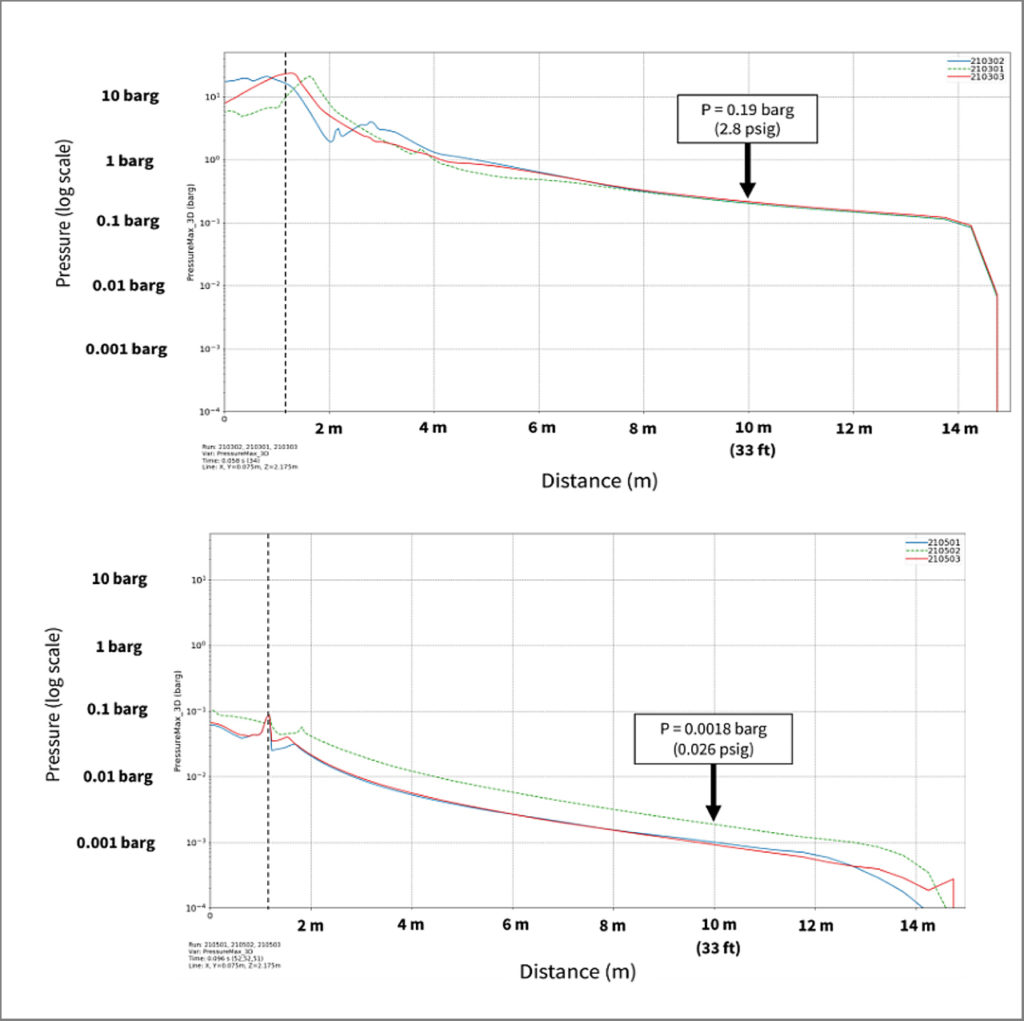
Other considerations: Hydrogen is very explosive and in the case of identifying suitable sources, transportation would be best done via Explosion Proof Certified hazmat drivers. The analysis done for NFPA specifies the human injury cause for overpressure and thus gives a guideline for the design to minimize overpressure (Table 2, below).
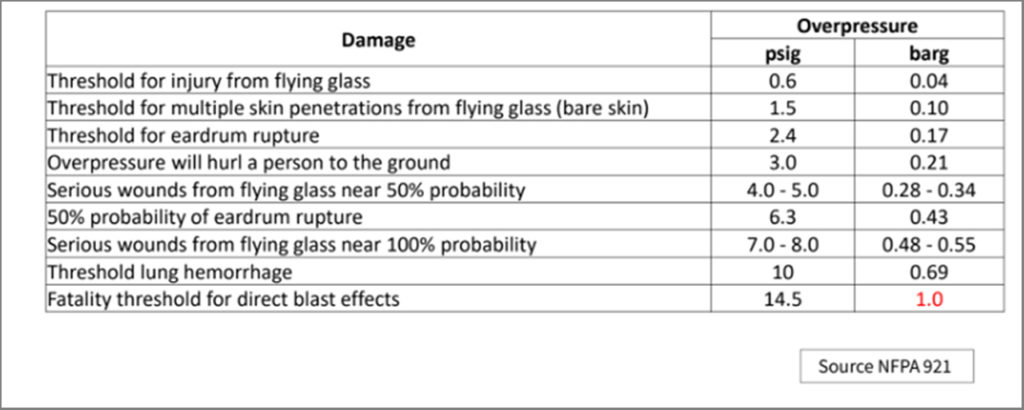
HGmotive™ (formerly CNGmotive), with the support of Exponent Inc., completed an analysis to simulate and understand hydrogen gas dispersion inside the tender housing and spaces and take the actions needed to be done to minimize overpressure in case of a leak. HGmotive™ worked on the design to eliminate any free space that can hold hydrogen gas in the case of a leak and after a deep analysis came up with a design that blocks 95%+ of the free space. Under this, the potential overpressure was significantly reduced to be safe for humans (Figure 2, below).
Cost Efficiency
The simplicity of compressed hydrogen’s infrastructure contributes to its cost-effectiveness. Established technologies and a mature supply chain make it an economically attractive option for long-haul rail operators, requiring normally a small electrical compressor.
Liquid hydrogen’s cryogenic storage requirements and the need for specialized infrastructure can result in higher upfront costs in part due to the exquisite materials to handle cryogenic conditions, as well as the large energy input required for liquefaction per unit of H2. Ongoing advancements and economies of scale may impact cost dynamics over time. As for the production cost of “green hydrogen,” the expectation is that as more and more hydrogen is produced the cost will be reduced, following an experience curve more akin to solar and other now-mature technologies. As well, with new discoveries of hydrogen in the ground, this geological “native hydrogen” will have a price substantially lower than diesel.

Hydrogen cost is influenced by the price of energy. U.S. geography provides wind availability in the eastern areas of the country and solar on the southeastern and central areas. Figure 3 (above) shows the ideal places to produce hydrogen with solar energy. The high winds in the Central U.S. and on the East and West Coasts offer the opportunity to produce lower-cost energy. Figure 4 (below) shows the most favorable locales. In Canada, there are several places under development to produce hydrogen. Because of these wind, thermal and hydro resources, all Class I railroads can source green hydrogen at competitive prices.

Environmental Impact
Compressed hydrogen aligns with global efforts to reduce carbon emissions. It offers a tangible contribution to greening the transportation sector, making it attractive for operators committed to environmental responsibility.
While inherently clean, the environmental impact of liquid hydrogen must be assessed, considering energy-intensive cryogenic processes and potential challenges associated with leaks. Lifecycle assessments provide a holistic view of its environmental footprint. Venting of boiled-off hydrogen could result in substantial emissions penalties.
In the pursuit of a sustainable future for long-haul rail, the choice between compressed and liquid hydrogen stands as a crucial decision. Compressed hydrogen emerges as a leading force in the transition to cleaner rail transportation, boasting robust energy density, an established infrastructure, stringent safety features, cost efficiency and positive environmental impact. However, the landscape is dynamic, with ongoing technological advancements, evolving industry dynamics, and considerations such as the availability and production of green hydrogen demanding continual assessment and adaptability.
The design of our HGmotive™ tender shows our commitment to providing a safe and efficient solution for sustainable transportation. It integrates molecular properties, gas-like pressure considerations and safety features. Yet, in this dynamic landscape, continual assessment remains imperative. Ongoing technological advancements and the ever-evolving industry backdrop necessitate a vigilant approach to ensure that the chosen solution remains in sync with the evolving demands of a greener transportation future.
The maturity and enhanced accessibility of cryo-compressed hydrogen technology are particularly noteworthy, potentially tipping the scales in favor of its widespread adoption. Moreover, a critical factor in this equation is the availability of hydrogen and production of green hydrogen derived from renewable sources like solar or wind power. This adds a layer to the sustainability narrative, amplifying emission reduction efforts within the ecosystem.
The design of our HGmotive™ tender considers molecular properties, gas pressure, flammability, operational conditions (including tunnel, shock and vibration), capacity, standards, and all safety requirements. Developed with long-term railroad experience in North America and leveraging the gas expertise of our team members, this tender ensures the benefits of maintaining internal pressure without the need for bleeding, even during prolonged periods of disuse.
As the rail industry seeks the most efficient and environmentally friendly propulsion solutions, the intersection of technological maturity, energy density and eco-friendly production methods becomes a pivotal focal point for decision-makers navigating the complex terrain of sustainable transportation. This strongly favors the use of hydrogen in the compressed gaseous state.
Any hydrogen tender will need to meet the standards and regulations of different countries. The Association of American Railroads is developing hydrogen tender standards that will be included in the M1004 standard. The HGmotive™ tender is the first on the market and offers all the benefits of compressed hydrogen in compliance with the AAR M1004 standard and what we feel is the best technology. It was delivered to CPKC in September 2023 and is now being validated. Testing will continue during 2024. HGmotive™ has higher-capacity tenders under design that will be delivered in 2025.
The M1004 standard includes crashworthiness in which defined forces of impact in the different directions and conditions are applied to the tender analysis. The required result is, “No part of the fuel tank shall be punctured, split, crushed, or otherwise damaged so as to result in the release of fuel. The only acceptable fuel release allowed is that contained in piping external to the fuel tanks. All fuel tanks on the tender shall be capable of meeting this result.”
The performance of the tender under the specified condition needs to be demonstrated and validated from a computer simulation or a test. The hydrogen tender requirements are under refinement, and it is expected that by the end of 2024 the final version will be published. AAR is also working on standards development for fuel tenders that will work with alternative-fuel locomotives on U.S. railroads and meet all the interoperability rules and safety requirements.
In summary, the choice between compressed gas and liquid hydrogen tenders involves tradeoffs among factors like energy density, infrastructure, safety and costs. Compressed hydrogen excels in established infrastructure, cost-effectiveness and safety, while liquid hydrogen temporarily offers higher energy density with challenges related to cryogenic storage and specialized infrastructure. The optimal choice depends on the specific application, requirements and evolving technological advancements in the hydrogen industry.


